In this guide
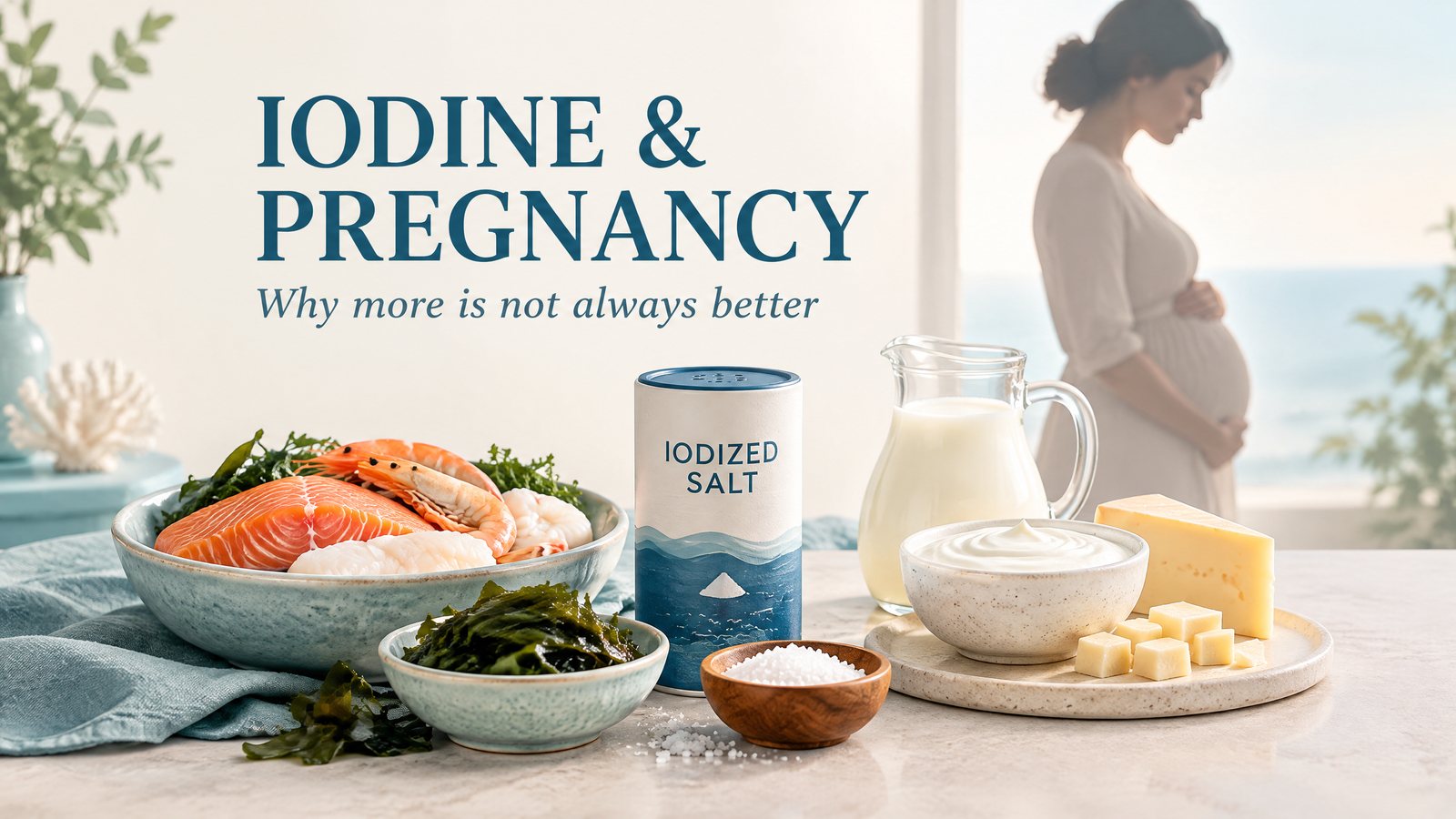
Iodine is an essential mineral needed to make thyroid hormones, which help regulate metabolism and are critical for fetal brain and nervous system development. During pregnancy, the body’s need for iodine increases. However, more iodine is not always better: too much can also disrupt thyroid function in both the pregnant person and the developing fetus.
Why iodine matters in pregnancy
Thyroid hormones play a central role in growth and brain development. Inadequate iodine intake can limit the production of these hormones. Public health measures such as iodizing table salt have reduced iodine-deficiency disorders in many countries, but ensuring adequate intake during pregnancy remains important.
Recommended amounts and safety limits
The U.S. Office of Dietary Supplements (ODS) provides recommended daily intakes and upper limits for iodine. The recommended intake is higher during pregnancy and lactation than for nonpregnant adults. The ODS also identifies a tolerable upper intake level — the amount above which the risk of adverse effects, such as thyroid dysfunction, increases.
Because both deficiency and excess carry risks, aiming for the recommended range is safest. For exact numeric values for your age and pregnancy status, see the ODS fact sheet on iodine listed in References.
Common food sources and why some can be risky
- Fortified foods: In the U.S., iodized table salt is an important source of iodine for many people.
- Animal products: Dairy, eggs, and some fish and shellfish contribute iodine to the diet.
- Seaweed and kelp: These can contain very high and highly variable amounts of iodine. A single serving of some seaweeds can exceed recommended limits.
Because iodine content varies widely in seaweed and some specialty foods, relying on such products during pregnancy can lead to unintentionally high iodine intake.
Supplements: useful but not risk-free
Many health care providers recommend a prenatal multivitamin to help meet increased nutrient needs in pregnancy. Some prenatal vitamins include iodine, typically as potassium iodide. However, not all supplements contain iodine, and the amount can vary.
The U.S. Food and Drug Administration (FDA) regulates dietary supplements differently than prescription or over-the-counter medications. Manufacturers are responsible for ensuring that a supplement’s label is accurate and that the product is safe when used as directed, but supplements are not subject to the same premarket review for effectiveness and safety as drugs. This means product quality and iodine content can vary between brands.
Because excess iodine can cause thyroid dysfunction, it’s important to:
- Check whether your prenatal vitamin contains iodine and at what amount.
- Tell your health care provider about any separate iodine or kelp/seaweed supplements, or high-seaweed diets.
- Avoid taking large-dose iodine supplements unless specifically recommended and supervised by your provider.
Health risks of too much iodine
Excessive iodine intake can cause the thyroid to produce too little or too much hormone. In adults and infants, high iodine intake has been linked to thyroid dysfunction, including iodine-induced hypothyroidism or hyperthyroidism. In pregnancy, these disturbances can affect both the pregnant person and the fetus because fetal thyroid function depends on maternal thyroid hormones, especially early in gestation.
Because iodine content in some seaweed products and dietary supplements can be extremely high, these are common sources of excess intake.
Practical guidance
- Follow a balanced prenatal nutrition plan that includes food sources of iodine such as iodized salt, dairy, eggs, and seafood, unless your provider advises otherwise.
- Use a prenatal vitamin if recommended by your health care provider. Confirm the product’s iodine content so your total intake (food plus supplement) stays within recommended limits.
- Avoid high-iodine supplements (for example, kelp or other seaweed extracts) unless prescribed and monitored by a clinician.
- Discuss any questions about iodine or other nutrients with your health care provider or a registered dietitian experienced in pregnancy nutrition.
When to seek care
Contact your health care provider if you are pregnant or planning pregnancy and:
- Have questions about whether your diet or supplements provide appropriate iodine.
- Are taking iodine-containing supplements (including kelp or seaweed extracts) and are unsure whether to continue.
- Develop new symptoms that could suggest thyroid dysfunction, such as marked changes in heart rate, unexplained weight changes, significant new fatigue, heat or cold intolerance, or swelling in the neck.
If you develop severe symptoms such as fainting, difficulty breathing, severe chest pain, or loss of consciousness, seek emergency care immediately.
Bottom line
Iodine is essential during pregnancy, but more is not always better. Aim for the recommended intake range and avoid high-iodine supplements or diets that could push intake above the tolerable upper limit. Work with your health care provider to choose a prenatal vitamin and a dietary plan that meet your individual needs.