In this guide
- Key takeaways
- Why some product listings are risky
- How regulators track and act
- Red flags and what they may mean
- How to evaluate listings before you buy
- What to do if you’ve already used a suspect product
- When to contact a clinician or emergency services
- Limitations and important cautions
- How to report suspicious or harmful products
- Safety disclaimer
- Safety disclaimer
- References
- Related VitaEvidence reading
Category: Consumer Protection and Product Verification
Online marketplaces make it easy to buy vitamins, supplements, topical remedies, sexual-enhancement and energy products, and even products that look like food (for example, honey-based items). But ease of access can mask real safety risks: some listings contain undeclared prescription drugs, adulterants, or misleading claims. This article explains how risky health products show up on marketplaces, how regulators track them, and practical steps to protect yourself.
Key takeaways
- The FDA has found undeclared prescription drugs and other hidden active ingredients in certain dietary supplements and health products sold online. (See FDA notices and the Health Fraud Product Database.)
- Dietary supplements are regulated differently from prescription drugs: manufacturers don’t get FDA pre-approval before selling most supplements.
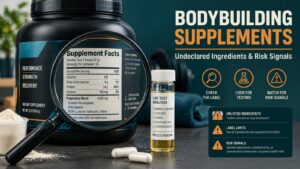
- Look for clear labeling, a verifiable manufacturer, and a Supplement Facts panel; avoid listings with exaggerated claims or secret ingredients.
- Report suspicious products to the FDA and seek medical care if you have a bad reaction or suspect an interaction with medications.
Why some product listings are risky
- Hidden active ingredients: The FDA has documented cases where products sold as supplements, honey-based remedies, or sexual-enhancement products contained undeclared drugs or drug-like chemicals. These ingredients may carry serious risks, especially when combined with prescription medicines or medical conditions (FDA: hidden ingredients guidance; tainted honey products; sexual enhancement and energy notifications).
- Mislabeling and contamination: Ingredients listed on a label may not match what’s inside the bottle. Some products are contaminated during manufacturing or deliberately adulterated to enhance effect.
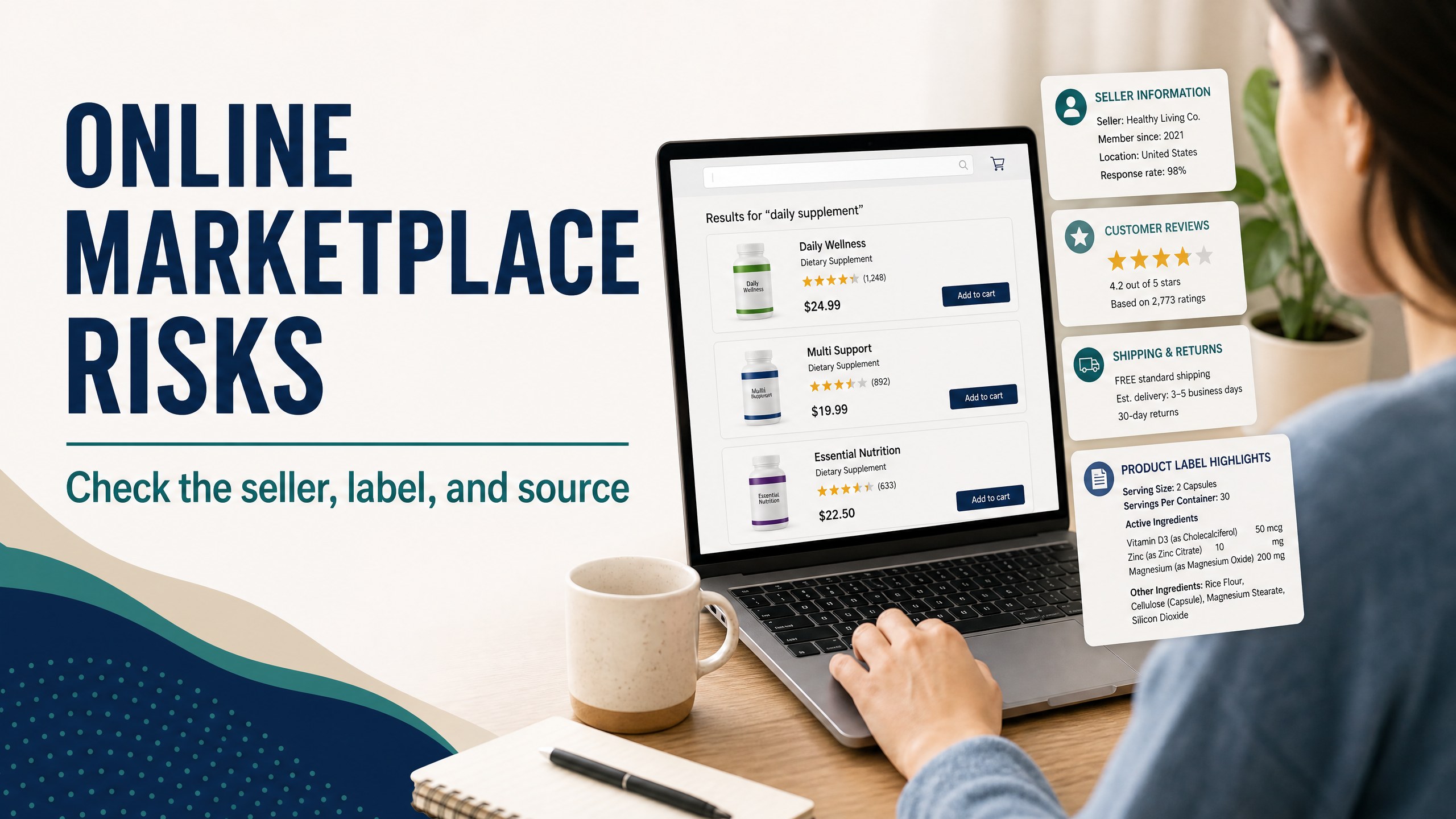
- Rapid, cross-border supply chains and third‑party sellers: Marketplaces can list items from many sellers and countries. This complicates oversight and makes it easier for unsafe products to reach consumers before regulators can act.
- Misleading marketing: Marketing that promises dramatic, “miracle” results, claims to be a “secret” formula, or uses fake approvals or endorsements can be a red flag (FTC guidance on health claims; FDA health fraud notifications).
How regulators track and act
- Post-market surveillance and warnings: The FDA monitors the marketplace and issues warnings or recalls when it identifies tainted products. For example, the Agency has posted notifications about sexual-enhancement and energy products and about honey-based products containing hidden drugs (FDA: medication health fraud notifications; sexual enhancement and energy product notifications; tainted honey-based products).
- Health Fraud Product Database: The FDA maintains a searchable Health Fraud Product Database listing products and actions the Agency has taken related to health fraud and tainted products. It’s a useful resource for checking whether a specific product or seller has been flagged (FDA: Health Fraud Product Database).
- Limits of oversight: Unlike prescription drugs, most dietary supplements are not pre-approved by the FDA for safety and effectiveness before they reach consumers. The FDA relies largely on post-market surveillance and manufacturer responsibility. That means unsafe items can be available until someone reports problems or the Agency tests samples (FDA: dietary supplements; questions and answers).
Red flags and what they may mean
Below is a practical checklist you can use when evaluating a listing on a marketplace.
| Red flag on a marketplace listing | What it may indicate | What to do |
|---|---|---|
| No full Supplement Facts panel or incomplete ingredient list | Product may be mislabeled or intentionally omitting harmful ingredients | Avoid purchase; find products with full labels and manufacturer contact info |
| Claims of “secret” ingredients, “miracle” results, or “clinically proven” with no source | Potential fraud or exaggerated advertising | Treat claims skeptically; check independent sources and FTC guidance on health claims |
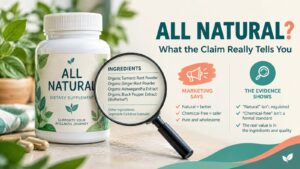
| Products labeled as “all-natural” but advertised to treat or cure diseases | Possible misbranding or hidden drugs | Avoid; check FDA health fraud notices and the Health Fraud Product Database |
| Multiple sellers offering identical images but different brand names | May indicate private-label repackaging or counterfeit products | Verify the manufacturer; prefer sellers with traceable company info |
| Products similar to FDA-notified items (e.g., honey-based items with unusual health claims) | Could be similar to previously flagged products, but don’t assume all similar-sounding products are unsafe | Search the FDA database for specific product names and report suspicious items |
How to evaluate listings before you buy
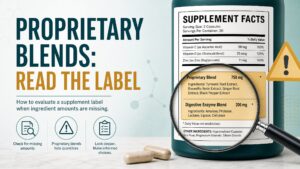
- Look for a clear Supplement Facts label and an identifiable manufacturer or distributor on the package. If the listing has only photos and no readable label, that’s a red flag. See our guide on how to read supplement labels: /how-to-read-supplement-facts-label/
- Avoid claims that sound too good to be true (rapid weight loss, guaranteed cures, “clinically proven” without citations). The FTC and FDA both warn about unsubstantiated health claims (FTC health claims guidance; FDA health fraud notifications).
- Check whether the listing or the seller uses terms like “FDA-approved” for a supplement. Supplements are not FDA-approved in the way drugs are; such statements can be misleading (FDA: dietary supplements).
- Research the product and seller. Search the FDA’s Health Fraud Product Database for the product name or brand and review FDA notification pages related to sexual-enhancement, energy, or other medication health fraud notices (FDA: Health Fraud Product Database; medication health fraud notifications; sexual enhancement and energy product notifications).
- Be cautious when buying from third-party sellers, especially those shipping from overseas. Manufacturing and safety standards can vary widely.
What to do if you’ve already used a suspect product
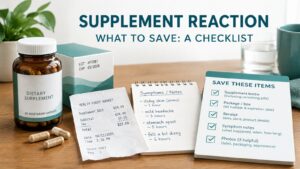
- Stop using the product immediately if you suspect it contains undeclared drugs or if you have concerning symptoms.
- Seek medical care if you experience serious or unusual symptoms. Tell your clinician exactly what you took, where you bought it, and how much you used.
- If you take prescription medicines, contact your clinician or pharmacist to assess possible interactions. For questions about supplements and drug interactions, see: /supplements-medication-interactions-questions/
- Report the product to the FDA. The Agency provides ways to contact them about human drugs and suspicious products (FDA: ways consumers contact FDA about human drugs). You can also report through the Health Fraud Product Database contacts and review related notifications.
When to contact a clinician or emergency services
Contact a clinician promptly if you have severe symptoms (chest pain, breathing difficulty, loss of consciousness, severe allergic reaction, or symptoms suggesting a serious interaction or overdose). For urgent, life‑threatening symptoms, call 911. If you’re unsure whether a reaction is related to a supplement or product, contact your health care provider for evaluation.
Limitations and important cautions
- Warnings about specific FDA‑identified products apply to those products and batches. Do not assume every product with a similar name or packaging is affected; however, exercise caution and check authoritative sources (FDA announcements and the Health Fraud Product Database).
- The absence of an FDA warning does not guarantee safety. Because the FDA does not pre‑approve most supplements, a product may be available even if it poses risks.
- This article provides general information and should not substitute for personalized medical advice. If you have health concerns, speak with your clinician.
How to report suspicious or harmful products
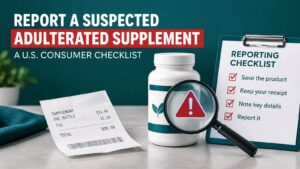
- Use the FDA’s reporting pathways for suspicious products and medication health fraud. Reporting helps regulators identify and remove hazardous items from the market (FDA: ways consumers contact FDA about human drugs; medication health fraud notifications).
- Check the FDA’s Health Fraud Product Database to see whether a product has been previously flagged, and review FDA notifications about sexual enhancement, energy, and other categories (FDA: Health Fraud Product Database; sexual enhancement and energy product notifications).
Safety disclaimer
This article is for educational purposes only and does not offer medical or legal advice. If you suspect you have been harmed by a product purchased online, contact a health care professional right away and report the product to the FDA.
Safety disclaimer
This article provides general information and is not medical advice. It is not a substitute for professional medical evaluation. If you have health concerns, consult a licensed clinician.
References
- https://www.fda.gov/drugs/medication-health-fraud/avoiding-products-contaminated-hidden-ingredients
- https://www.fda.gov/consumers/health-fraud-scams/tainted-honey-based-products-hidden-active-drug-ingredients
- https://www.fda.gov/consumers/health-fraud-scams/health-fraud-product-database
- https://www.fda.gov/food/dietary-supplements
- https://www.fda.gov/food/information-consumers-using-dietary-supplements/questions-and-answers-dietary-supplements
- https://www.fda.gov/food/dietary-supplements-guidance-documents-regulatory-information/dietary-supplement-labeling-guide
- https://www.fda.gov/drugs/medication-health-fraud-notifications/sexual-enhancement-and-energy-product-notifications
- https://www.fda.gov/drugs/medication-health-fraud/medication-health-fraud-notifications
- https://www.ftc.gov/news-events/topics/truth-advertising/health-claims
- https://www.ftc.gov/business-guidance/resources/health-products-compliance-guidance
- https://www.fda.gov/about-fda/cder-contact-information/ways-consumers-contact-fda-about-human-drugs
Last reviewed: August 2026
VitaEvidence Editorial Team