In this guide
Choline is an essential nutrient involved in building cell membranes, making the neurotransmitter acetylcholine, and supporting pathways that contribute to fetal brain development. Pregnant people have higher needs for choline than nonpregnant adults. This article explains food sources, recommended intake during pregnancy, what to know about supplements, and safety limits from official U.S. sources.
Why choline matters in pregnancy
Choline contributes to biological processes that are especially important during pregnancy, including fetal brain and spinal cord development and methyl-group metabolism (a set of chemical reactions that help regulate gene expression). Because the growing fetus uses choline, recommended intake increases during pregnancy.
How much choline is recommended?
The U.S. National Institutes of Health Office of Dietary Supplements (ODS) provides an Adequate Intake (AI) for choline during pregnancy. According to the ODS factsheet, the AI for pregnant adults is 450 milligrams per day. The ODS also lists a Tolerable Upper Intake Level (UL) for adults: 3,500 milligrams (3.5 grams) per day. The UL is the highest daily intake likely to pose no risk of adverse effects for most people; intakes above the UL increase the chance of side effects.
Common food sources of choline
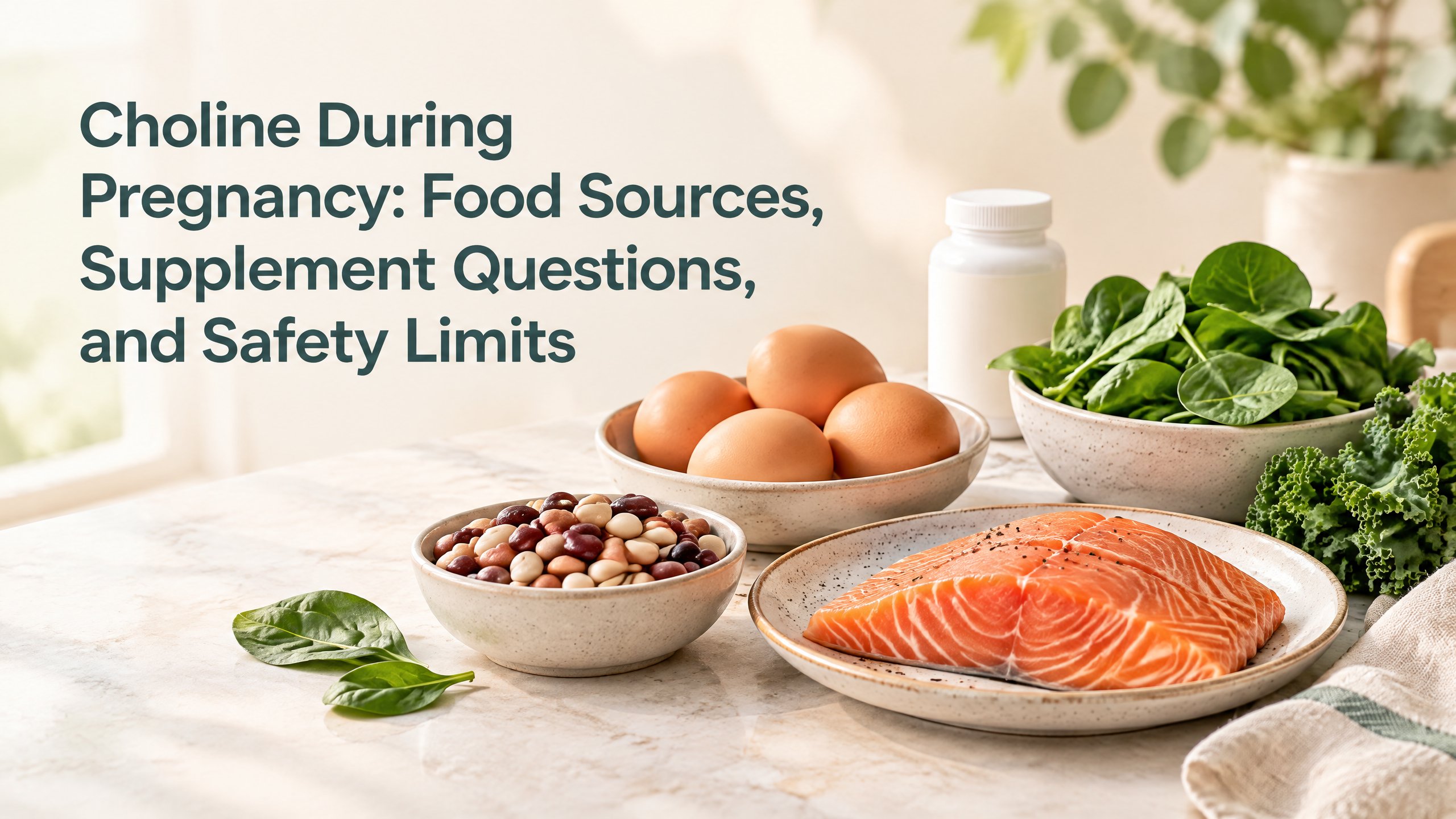
Choline occurs naturally in a range of animal and plant foods. According to the ODS, richer sources include:
- Eggs (especially yolks)
- Liver and other organ meats
- Beef, poultry, and fish
- Dairy products (milk, yogurt)
- Legumes and some nuts
- Some vegetables such as cruciferous vegetables (varies by type)
Including a variety of these foods as part of an overall healthy diet can help meet choline needs. For people who avoid animal products, some plant foods and fortified foods contain choline but total intake from diet alone may be lower.
Choline and prenatal supplements
If you are pregnant or planning pregnancy, discuss choline with your clinician. Key points from the ODS and the FDA to consider:
- Many prenatal multivitamins vary in choline content; some contain little or no choline. Check the supplement facts label for “choline” or ingredient names such as phosphatidylcholine or choline bitartrate.
- The U.S. Food and Drug Administration (FDA) regulates dietary supplements differently than prescription drugs. Manufacturers do not need FDA approval before marketing most supplements. The FDA can take action if a product is unsafe or mislabeled, but the agency does not verify effectiveness before sale.
- Because supplement labels and quality vary, discuss whether a choline-containing prenatal or a separate choline supplement is appropriate for you with your clinician. They can help balance dietary intake, supplement content, and any health conditions or medications.
Safety and possible side effects of high choline intake
The ODS notes that intakes well above the recommended level can cause adverse effects. Reported signs of excessive choline intake include:
- Body odor described as “fishy”
- Nausea or vomiting
- Increased sweating or salivation
- Low blood pressure (lightheadedness)
The ODS lists 3,500 mg per day as the UL for adults. This level applies to the general adult population and is intended to reduce the risk of the side effects above. Very high-dose choline supplements are unnecessary for most people and can increase the risk of adverse effects.
Practical tips
- Focus on food first: a balanced diet that includes eggs, lean meats, dairy, legumes, and other choline-containing foods can provide substantial choline.
- Check your prenatal vitamin label: if it lists little or no choline and you are concerned about meeting the AI, bring this up with your clinician.
- If considering a separate choline supplement, review the dose and product quality with your clinician. Keep total daily choline (from food plus supplements) below the UL unless directed otherwise by a health professional.
- Be cautious with very high-dose products. The FDA does not approve dietary supplements for safety and effectiveness before they reach the market, so product quality and label accuracy can vary.
When to seek care
- Talk to your clinician before starting any new supplement while pregnant or planning pregnancy.
- Contact your clinician promptly if you develop unexplained nausea, vomiting, heavy sweating, a new fishy body odor, or lightheadedness after starting a supplement — these can be signs of excessive choline intake.
- If you have liver disease, kidney disease, or other chronic health problems, check with your clinician about choline—medical conditions can affect nutrient needs and tolerances.
Choline is an important nutrient in pregnancy, and most people can meet needs through a varied diet. If you are unsure whether you get enough, discuss dietary sources and supplement options with your clinician so your overall intake meets pregnancy needs without exceeding safety limits.