In this guide
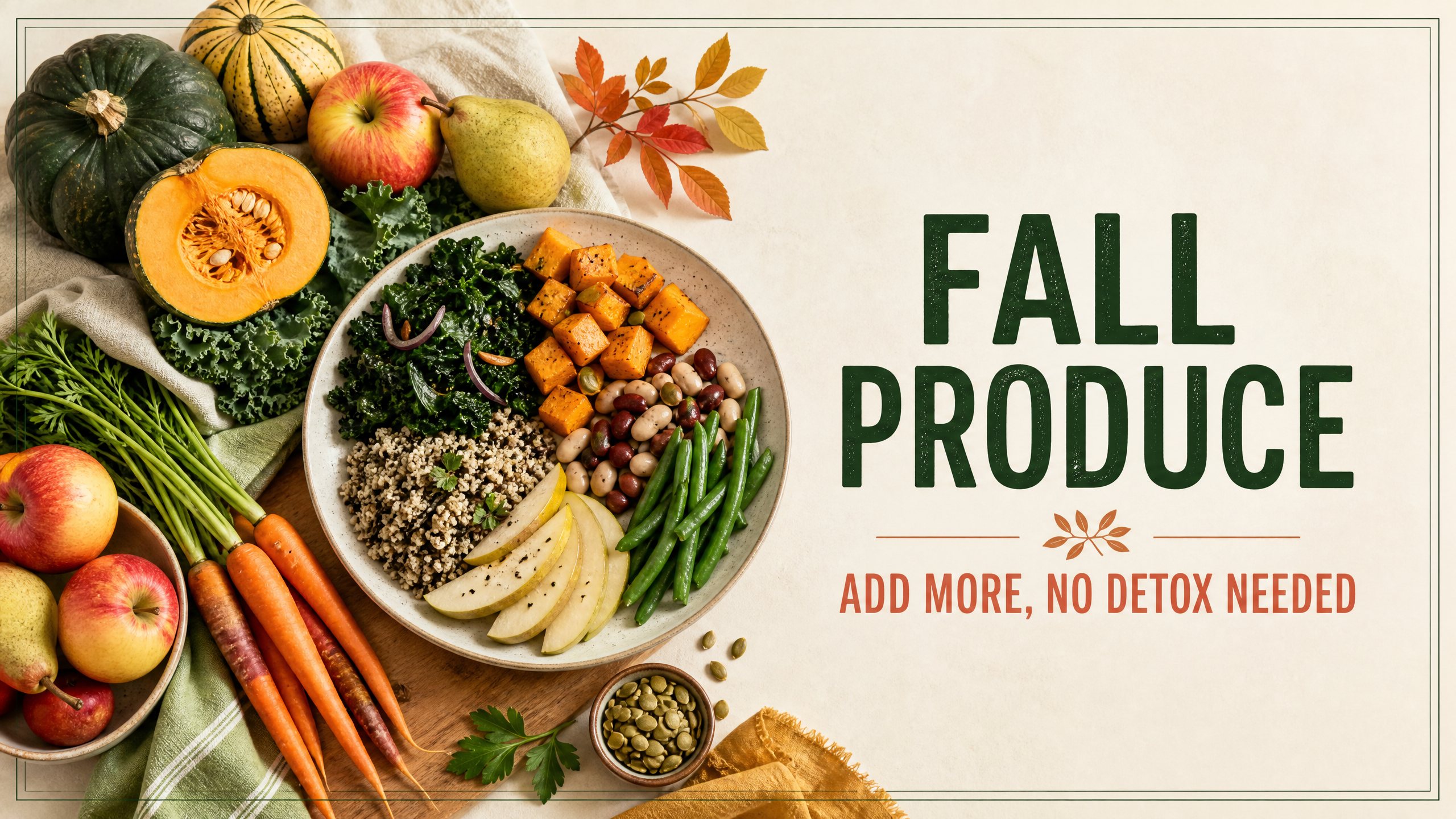
Autumn brings a bounty of fruits and vegetables — apples, pears, winter squash, sweet potatoes, carrots, beets, Brussels sprouts and dark leafy greens. You don’t need a commercial “detox” plan to get the benefits of more produce. Federal guidance encourages making half your plate fruits and vegetables and choosing a variety over time. This article gives practical, safe, and sustainable ways to add fall produce to meals and snacks in everyday life.
Why focus on variety (not a detox)
National guidance emphasizes overall dietary patterns that include a variety of vegetables and fruits rather than short-term cleanses or restrictive “detox” programs. Aim for different colors, textures and forms (raw, cooked, canned in water, and frozen) over days and weeks to get a range of nutrients and fiber without extreme rules.
Simple swaps and meal ideas
- Make half your plate vegetables and fruit: At main meals, fill half the plate with vegetables and a serving of fruit or additional veggies. This follows the MyPlate approach to balanced meals.
- Sheet-pan or roast-and-forget: Roast chunks of squash, beets, carrots or Brussels sprouts with a small drizzle of oil and herbs for an easy side that lasts for several meals.
- One-pan soups and stews: Puree or chop roasted squash, sweet potato, apple or carrot into a warm soup — add broth and aromatics for a filling dish that adds servings of vegetables.
- Breakfast boosts: Stir grated apple or pear into oatmeal, add sautéed greens to scrambled eggs, or top yogurt with stewed fruit and nuts.
- Snack smart: Keep cut apples with a smear of nut butter, carrot sticks, or roasted chickpeas on hand for easy fruit-and-vegetable snacks.
- Bulk up meals: Add shredded cabbage or kale to sandwiches and wraps, toss extra vegetables into casseroles, or mix roasted squash into grain bowls with a protein source for balance.
Shopping and planning tips
- Buy frozen and canned (low-sodium or no-added-sugar) produce when fresh is limited — these count toward vegetable and fruit intake and can reduce waste.
- Choose a few seasonal items you enjoy and plan two to three meals around them for the week. Batch-cook roasted vegetables and use them across lunches and dinners.
- When reading a Nutrition Facts label, check the serving size and % Daily Value for fiber and sodium, and look at the added sugars line on fruit products (for guidance on interpreting the label see the FDA Nutrition Facts resources).
Digestive comfort and fiber
Adding fiber-rich vegetables and fruits can change bowel habits. Increase fiber gradually and pair high-fiber produce with adequate fluids and regular meals. If you experience gas or bloating when increasing vegetables, try smaller portions more often, cook vegetables (which can be gentler than raw), or choose lower-FODMAP options if advised by a clinician. For more on constipation and gas related to diet, consult trusted clinical resources.
Food safety basics
- Wash hands before and after handling produce. Rinse fresh fruits and vegetables under running water; scrub firm produce like apples and squash with a clean brush.
- Store produce properly: keep refrigeration for items that require it and separate raw animal foods from ready-to-eat fruits and vegetables to avoid cross-contamination.
- Follow official safe food-handling advice for preparing, storing and serving produce to lower foodborne-illness risk. When reheating leftovers, do so until they are hot throughout and store per food-safety guidance.
- If you have a food allergy, check ingredient lists and beware of cross-contact during processing or at restaurants; read FDA resources on food allergies.
Practical examples (one-week mini plan)
- Sunday: Roast butternut squash and carrots. Use as side dishes and add leftovers to salads midweek.
- Monday: Breakfast oatmeal with diced apple and cinnamon; lunch grain bowl with kale, roasted squash, and a protein; dinner vegetable-rich soup.
- Tuesday: Snack on pear slices and cheese; dinner sheet-pan salmon and Brussels sprouts (use leftovers for lunch).
- Wednesday: Stir-fry with shredded cabbage, broccoli florets, and tofu or chicken; serve with brown rice.
- Thursday: Smoothie with frozen berries and spinach; dinner baked sweet potato topped with roasted vegetables and a protein.
- Friday: Vegetable-packed omelet and mixed fruit; weekend: sample a local farmers’ market pick for variety.
When to seek care
Seek urgent medical care for signs of a serious allergic reaction after eating (difficulty breathing, swelling of the face or throat, hives, fainting). See your clinician if you have persistent vomiting, severe abdominal pain, ongoing diarrhea, or dehydration. For new or worsening digestive symptoms after changing your diet, discuss adjustments with a clinician or registered dietitian.
Bottom line
Enjoy fall fruits and vegetables using simple, sustainable swaps: make half your plate fruits and vegetables, focus on variety, use frozen and canned options when helpful, and follow official food-safety practices. You don’t need a detox plan — small, consistent changes over time are supported by national dietary guidance and are easier to keep up.