In this guide
This article offers practical, evidence-based guidance for families and school staff on reading food labels, reducing cross-contact, and making a safety plan for children with diagnosed food allergies. It draws on official U.S. government resources about food labeling, safe handling, and balanced eating.
Know the labels: what to look for
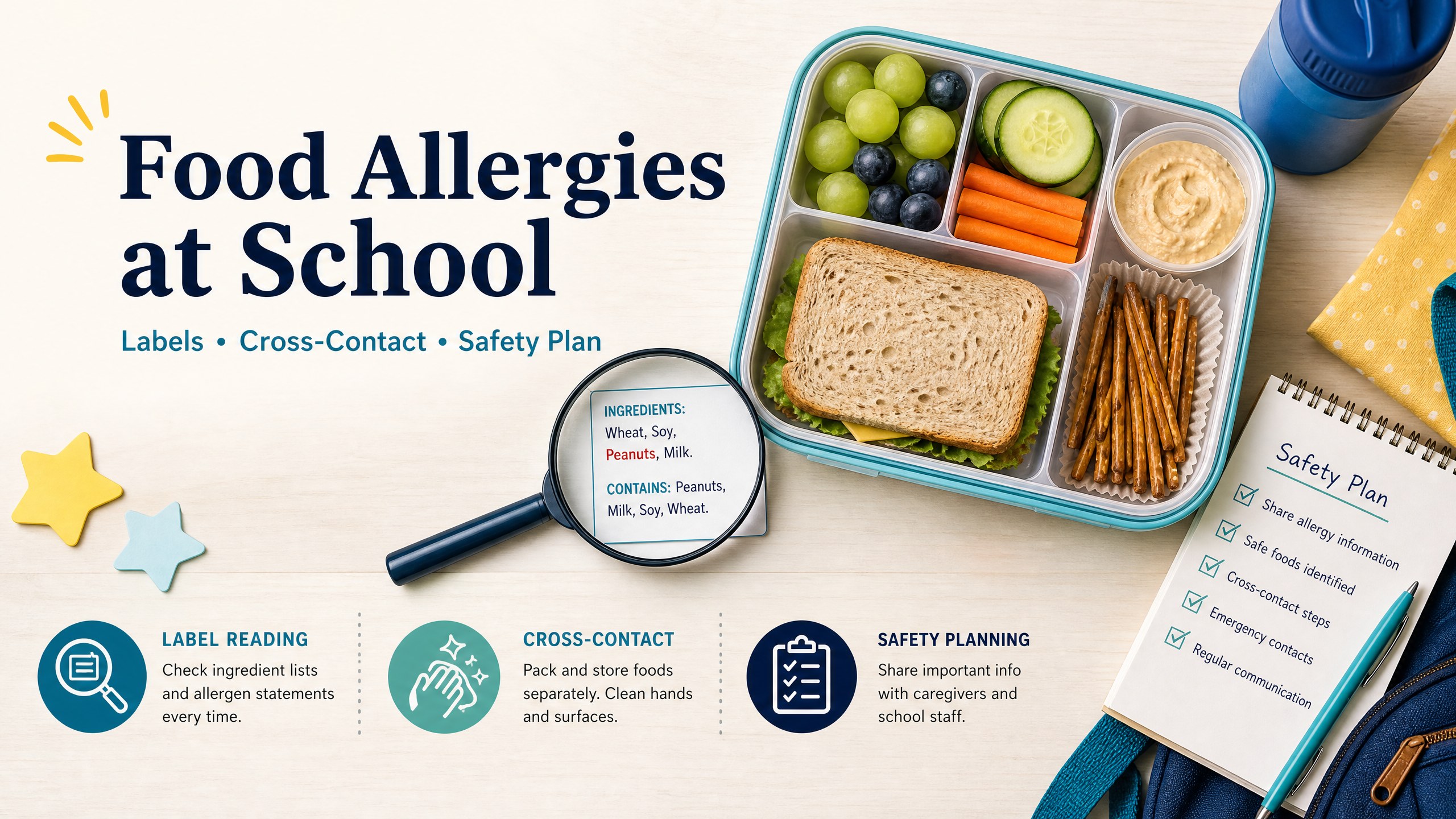
Packaged foods in the U.S. must list ingredients on the label. The U.S. Food and Drug Administration (FDA) requires a plain-language declaration when a product contains a major food allergen.
- Read the full ingredients list every time you buy a product. Recipes and suppliers can change.
- Look for a separate “Contains” statement or an allergen disclosure near the ingredient list. This is intended to name major allergens in plain language.
- Be cautious with voluntary advisory statements (for example, “may contain” or “made in a facility that also processes…”). These are not standardized; treat them as a signal to investigate further when the product is intended for a child with a life‑threatening allergy.
- If a label is unclear, contact the manufacturer for written clarification before sending the item to school.
For children missing one or more common food groups because of an allergy, use trusted guidance on healthy eating (for example, MyPlate and National Institute on Aging materials) to plan balanced substitutions that meet nutrition needs.
Understanding cross-contact and how it happens
Cross-contact (sometimes called cross-contamination) occurs when an allergen is transferred to a food that should be allergen-free. It is different from foodborne contamination: the concern is transfer of proteins that trigger allergic reactions. Common ways cross-contact happens at school include shared utensils, cutting boards, communal serving spoons, unclean surfaces, and hands that still have allergen residue.
- Encourage and reinforce thorough handwashing with soap and water after eating or handling allergenic foods — hand sanitizers do not remove residues as effectively as washing for some allergens.
- Ask schools to use separate utensils, bowls, and cutting boards for allergen-free foods or to label items clearly.
- Recommend wiping and cleaning surfaces between uses with appropriate cleaners (follow the school’s cleaning protocols) to reduce residue transfer.
- Avoid double-dipping and sharing food and utensils during meals and classroom events.
Planning with the school: steps to take
- Request a meeting with the school nurse, teacher, and food-service director early in the year to review your child’s diagnosis and needs.
- Provide an up-to-date allergy action plan from your child’s licensed health care provider that describes expected symptoms and emergency steps. Make sure the school has signed consent to follow this plan during school hours and extracurriculars.
- Discuss where medications (including epinephrine, if prescribed) will be stored and who is authorized and trained to administer them.
- Ask about classroom and cafeteria policies for special events, birthday treats, and field trips. Consider alternatives such as nonfood rewards or pre-approved allergen-free treats supplied by the family.
- Explore formal supports such as a 504 plan or individualized health care plan if your child needs accommodations for learning or participation because of their allergy.
Many schools have protocols for training staff and keeping emergency medication accessible; ask how often staff training occurs and what steps are taken to prevent cross-contact.
Practical examples
- For a peanut allergy: ask that the student have a designated seat in the cafeteria, have a separate spot for their lunchbox, and that common surfaces are cleaned between seatings.
- For classroom parties: offer to provide pre-packaged, labeled treats or nonfood rewards so the teacher and families have safe options to give all students.
- Label home-packed lunches clearly with the child’s name and allergy to help food-service staff avoid mistakes during service.
Food safety and school kitchens
School food-service teams follow safe handling guidance to reduce food-safety hazards such as bacteria; these practices also help minimize cross-contact risk when staff use separate equipment or cleaning steps. If you have concerns about cafeteria practices, speak directly with the food-service director so you can understand routine procedures and any available accommodations.
When to seek care
If your child has signs of a severe allergic reaction — for example, difficulty breathing, throat tightness or swelling, sudden dizziness or fainting, or severe and persistent vomiting — follow the allergy action plan provided by your child’s clinician, use emergency medication if prescribed, and seek emergency medical help immediately. For new or uncertain symptoms that are not life‑threatening, contact your child’s health care provider to determine next steps.
Bottom line
Managing food allergies at school is a team effort. Learn how to read labels, plan with school staff, and reduce cross-contact through simple, consistent practices like handwashing, separate utensils, and clear communication. Provide the school with an up-to-date allergy action plan and keep emergency medications accessible. If you or the school are unsure about a product or procedure, contact the manufacturer or your child’s clinician for clarification.
Draft for editorial review — not individualized medical advice. For clinical questions about diagnosis or treatment, consult your child’s health care provider.