In this guide
This guide helps you plan fall breakfasts that pair protein and fiber so meals feel satisfying and support digestion and daily nutrient needs. It’s a practical, food-first approach based on U.S. dietary guidance and federal nutrition resources. This is informational only—not individualized medical or dietetic advice.
Why focus on protein and fiber?
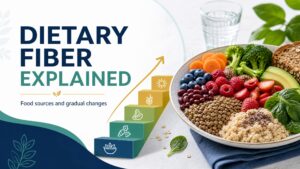
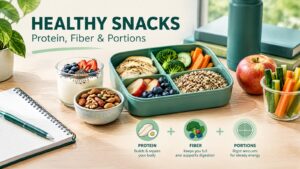
Both protein and fiber are nutritionally important across the lifespan. Protein helps the body build and maintain tissues and supports fullness after meals; fiber supports regular bowel habits and helps you feel satisfied longer. Federal resources describe these nutrients and their roles in a healthy eating pattern (see references).
Planning principles
- Pair a protein source with a fiber-rich carbohydrate or produce at each breakfast (for example, eggs plus whole-grain toast and fruit).
- Include a mix of plant and animal proteins across the week (legumes, dairy, eggs, lean meats, tofu) to vary nutrients and flavors.
- Choose whole grains, fruits, vegetables, nuts, and seeds to boost fiber instead of relying on added-sugar cereals or refined baked goods.
- Use seasonal fall produce (apples, pears, winter squash, pumpkin) to add fiber, flavor, and variety.
Practical fall breakfast ideas
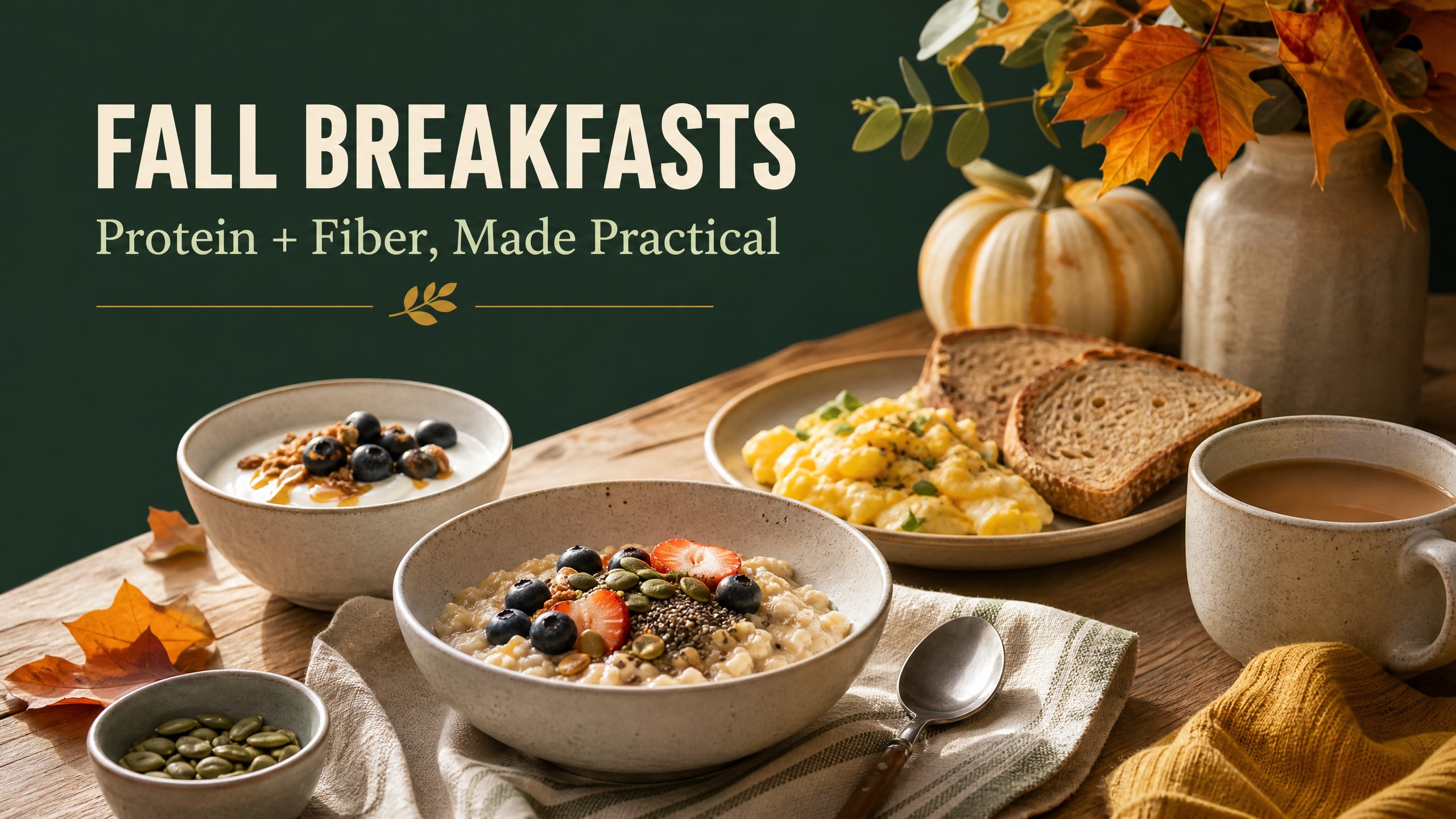
Below are examples you can mix and match. Each combines a protein source with fiber-rich foods.
- Oatmeal topped with chopped apples or pears, a tablespoon of chopped walnuts, and a scoop of plain Greek yogurt.
- Savory scrambled eggs with spinach and black beans, served with a slice of whole-grain toast.
- Overnight oats made with milk or a fortified plant milk, canned pumpkin, chia seeds, and cinnamon.
- Yogurt parfait with berries, high-fiber granola, and a sprinkle of ground flaxseed.
- Tofu or chickpea scramble with roasted squash and a side of whole-grain pita.
- Smoothie with frozen banana, leafy greens, nut butter, plain protein-rich yogurt or protein powder, and a handful of oats for fiber.
- Whole-grain English muffin topped with nut butter and sliced pear; add cottage cheese for extra protein.
Label reading and ingredient tips
Use the Nutrition Facts label to compare foods. The U.S. Food and Drug Administration explains how to find serving size, protein, and fiber on the label. When you shop:
- Check the serving size so you compare similar portions.
- Look at grams of protein and fiber per serving; higher amounts can help make the meal more satisfying.
- Scan the ingredient list: whole grains and intact foods (oats, whole wheat) are better sources of fiber than added fibers or refined grains.
- Watch added sugars: some flavored yogurts, granolas, and oatmeal packets can be high in added sugars—choose lower-sugar options or sweeten yourself with fruit.
Quick meal prep ideas
- Cook a big pot of steel-cut or rolled oats to reheat during the week; store in the fridge and add fresh fruit and protein at serving time.
- Make a batch of baked egg muffins with vegetables and beans for grab-and-go protein.
- Portion single-serving tubs of yogurt with a small bag of high-fiber cereal or chopped nuts for topping.
- Keep canned beans, canned pumpkin, and frozen fruits on hand to build quick breakfasts.
Food safety and allergies
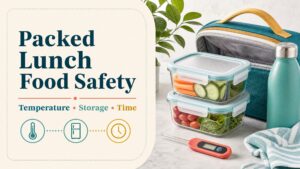
Follow safe food-handling and storage practices when preparing breakfasts. The USDA and FDA provide guidance on buying, storing, and serving foods safely. If you have food allergies, be mindful of common allergens like milk, eggs, tree nuts, peanuts, soy, and wheat; the FDA has resources on food allergies and labeling.
When to seek care
- If you have signs of a severe allergic reaction (trouble breathing, swelling of the face or throat, fainting), seek emergency care immediately. For questions about food allergies, consult a clinician or allergist.
- If you experience persistent constipation, painful bloating, unintentional weight loss, or prolonged changes in bowel habits, discuss symptoms with your healthcare provider. The National Institute of Diabetes and Digestive and Kidney Diseases (NIDDK) has information on constipation and gas that can help you determine when to seek care.
- If you suspect foodborne illness after eating (severe vomiting, bloody diarrhea, high fever), contact a healthcare provider or local public health authority; review federal food-safety resources for guidance.
Bottom line
Simple swaps and combinations—whole grains, fruits and vegetables, nuts or seeds, beans, dairy, eggs, or tofu—make fall breakfasts both flavorful and balanced. Pairing a good source of protein with fiber-rich foods can help meals feel more satisfying and support regular digestion. Use label information to choose higher-protein and higher-fiber options and follow federal food-safety guidance when preparing and storing foods.