In this guide
This article explains differences between two commonly offered oral iron forms — iron bisglycinate and ferrous sulfate — and gives practical guidance for reading supplement labels and talking with your clinician. It is a general information article, not personalized medical advice.
What the different forms are
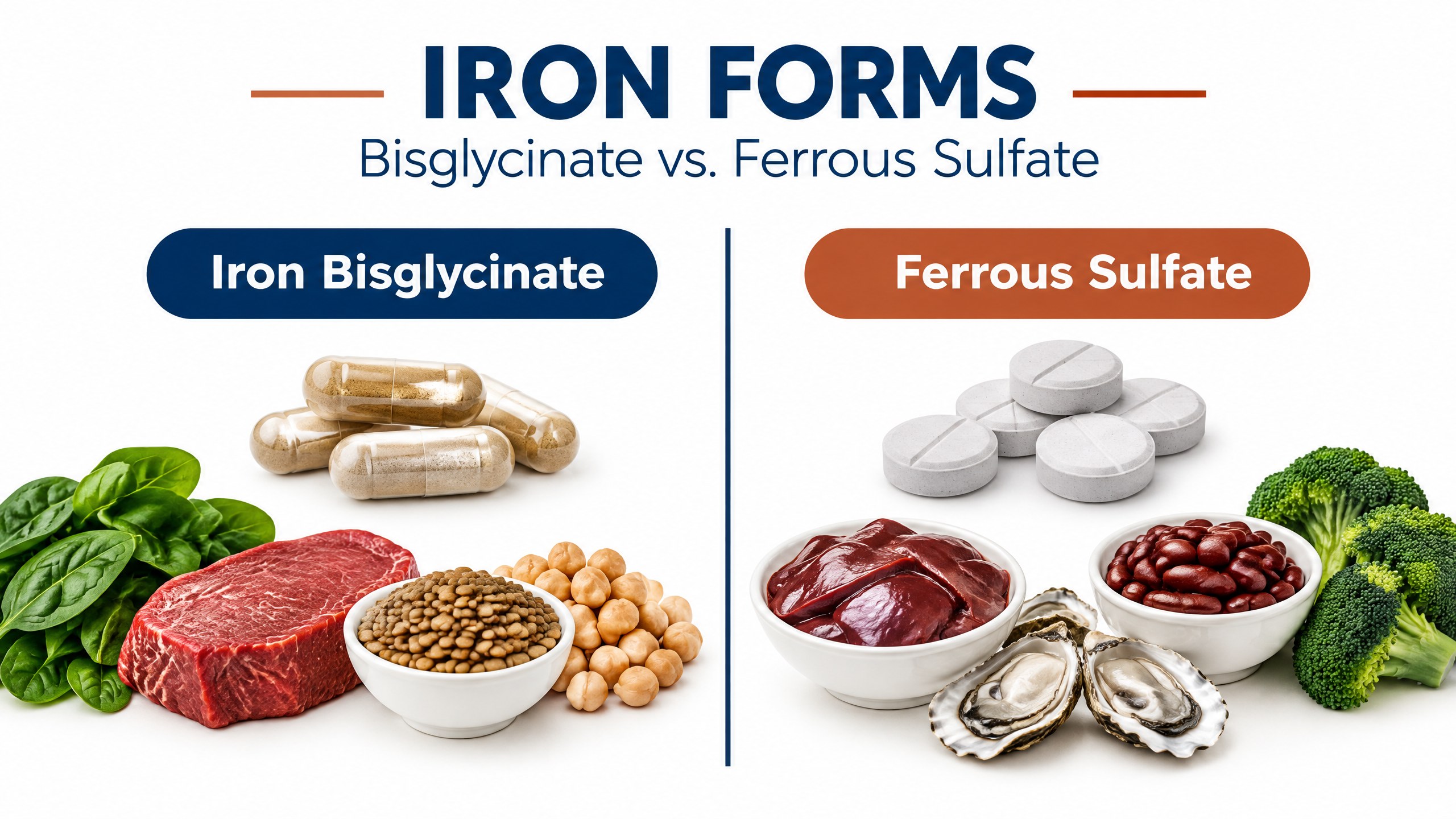
“Ferrous sulfate” is one of the ferrous (Fe2+) salts commonly used in oral iron products. Ferrous salts (including ferrous gluconate and ferrous fumarate) have long been used to treat iron deficiency because they supply elemental iron in a simple salt form.
“Iron bisglycinate” (sometimes called ferrous bisglycinate or iron glycinate) is a chelated form in which iron is bound to the amino acid glycine. Manufacturers market chelated forms like bisglycinate as having different absorption or tolerability characteristics compared with standard ferrous salts.
What the evidence says
The National Institutes of Health Office of Dietary Supplements (ODS) describes several iron forms used in supplements and notes that absorption and side effects can vary. However, high-quality, conclusive comparisons between every form are limited. Supplement makers often claim that bisglycinate is better absorbed and causes fewer gastrointestinal (GI) side effects than ferrous sulfate; available evidence is mixed and not definitive across populations.
In practice, many clinicians and public health guidelines use ferrous salts because of their established track record and known effects, while some clinicians may prefer alternative forms for patients who report intolerance. Because study designs, doses, and outcome measures vary, the ODS emphasizes that differences among forms are not uniformly settled.
Common practical differences (what people notice)
- Absorption: Iron absorption is affected by the chemical form, but also by diet, stomach acidity, and other drugs or supplements. Vitamin C can increase absorption; calcium, tea, coffee, and some medications can reduce it.
- Tolerability: Ferrous salts commonly cause GI side effects for some people (nausea, constipation, stomach upset). Manufacturers of chelated forms claim fewer side effects; some users report better tolerability, but evidence is variable.
- Labeling: Different products list the total (elemental) iron amount differently — see the label-reading section below.
What to look for on the label
- Type of iron: The label should name the form (e.g., “ferrous sulfate” or “ferrous bisglycinate”).
- Elemental iron: Look for the amount of elemental iron per tablet/capsule/serving — that determines how much absorbable iron you get, not just the salt name.
- Serving instructions and warnings: Read age and pregnancy warnings and instructions about taking with or without food.
- Other ingredients: Note added vitamin C (may boost absorption) or calcium (may reduce absorption), and common inactive ingredients that might matter if you have allergies or intolerances.
- Safety and storage: Keep supplements out of reach of children; iron overdose can be dangerous.
Interactions and contraindications
- Drugs and minerals: Calcium, antacids, some antibiotics, and certain other medications can reduce iron absorption or be affected by iron. Talk to your clinician or pharmacist about your medications.
- Medical conditions: People with disorders causing iron overload (for example, hereditary hemochromatosis) generally should not take supplemental iron unless a clinician advises otherwise.
- Pregnancy and planning: Iron needs change in pregnancy; discuss supplementation with your clinician rather than self-prescribing.
- Supplements are not FDA-approved: Dietary supplements are regulated differently from prescription drugs. The FDA does not approve most supplements for safety or effectiveness before they reach the market, so product quality and labeling can vary.
Questions to ask your clinician or pharmacist
- Do I need an iron supplement based on blood tests and symptoms?
- If I need iron, which form do you recommend for my situation and why?
- How much elemental iron should I take, and how often?
- Should I take this with food or on an empty stomach, and what should I avoid around the dose (e.g., calcium, tea, coffee, antacids)?
- What side effects should I expect and when should I stop taking it?
When to seek care
- If you experience severe abdominal pain, repeated vomiting, black or bloody stools, fainting, or signs of allergy after taking an iron product, seek medical care promptly.
- If a child has swallowed adult-strength iron supplements, call your local poison control center or emergency services right away — accidental iron ingestion in children can be serious.
- Before starting iron if you have unexplained symptoms like fatigue or shortness of breath — get appropriate testing rather than assuming you need a supplement.
Bottom line
Ferrous sulfate and iron bisglycinate are two different chemical forms of oral iron. Manufacturers and some small studies suggest chelated forms such as bisglycinate may be easier on the stomach or absorbed differently, but evidence is not definitive across all groups. The choice of product should be guided by objective testing (bloodwork), tolerability, and discussion with your clinician or pharmacist. Read labels for the type of iron and elemental iron content, be aware of interactions, and keep supplements out of reach of children.
This article uses information from the U.S. National Institutes of Health Office of Dietary Supplements and the U.S. Food and Drug Administration. It is a general summary and not a substitute for individualized medical advice.
References
- National Institutes of Health, Office of Dietary Supplements: Iron — Consumer
- National Institutes of Health, Office of Dietary Supplements: What You Need To Know About Dietary Supplements
- U.S. Food and Drug Administration: Dietary Supplements
- NIH Office of Dietary Supplements: Frequently Asked Questions