In this guide
Note: This draft is for editorial review and is not individualized medical advice. For personal recommendations, consult a health professional.
Why the form on the label matters
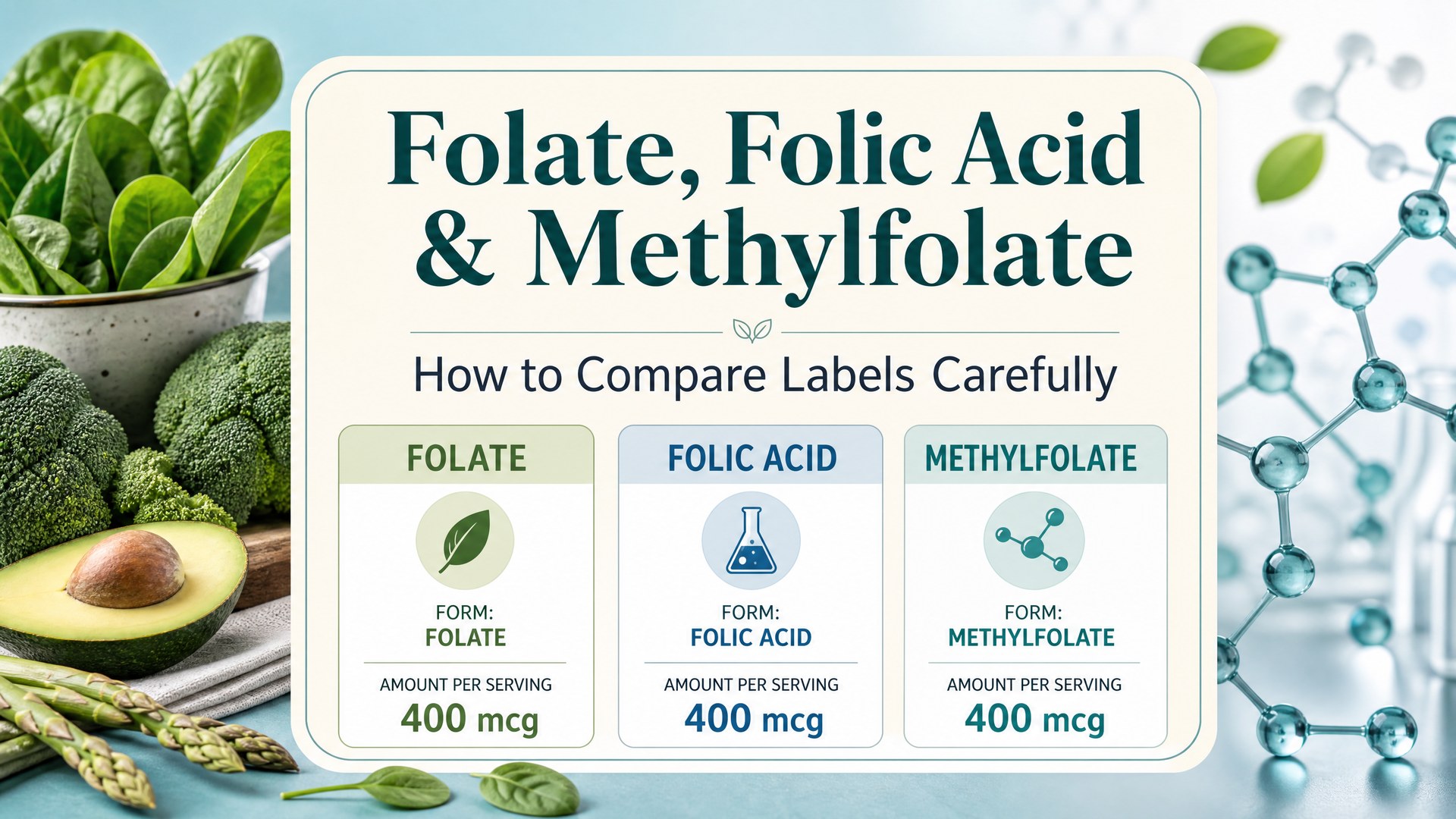
“Folate,” “folic acid,” and “methylfolate” are related but not identical terms you will see on food or supplement labels. Understanding the wording helps you compare products and match them to your needs.
- Folate usually refers to the naturally occurring family of compounds found in foods such as leafy greens, beans, and liver.
- Folic acid is a synthetic form used in fortified foods and many supplements. It is stable and inexpensive, which is why it is commonly used for enrichment and prevention strategies.
- Methylfolate (often labeled as L‑methylfolate, 5‑MTHF, or levomefolate) is a biologically active form of folate used in some supplements. Manufacturers sometimes market it for people who may have difficulty converting folic acid to active forms.
The official NIH Office of Dietary Supplements (ODS) folate fact sheet explains these terms and the roles they play in diet and supplementation.
Label-reading checklist
Use this step-by-step approach when comparing food or supplement labels:
- Look at the ingredient line to see which form is listed: folate, folic acid, or L‑methylfolate (5‑MTHF).
- Check the amount and the unit of measure. Labels may use micrograms (mcg or µg) and sometimes list Dietary Folate Equivalents (DFE) to indicate bioavailability differences between food folate and synthetic folic acid. If DFEs are used, they help compare amounts across forms.
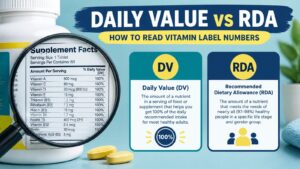
- Read the Supplement Facts or Nutrition Facts panel for the percent Daily Value (if present) or other labeling claims. Keep in mind Daily Values and labeling rules are regulatory terms and may be updated; the ODS Daily Values page explains current labeling concepts.
- Note whether a product is a fortified food or a dietary supplement. Fortified foods and supplements are regulated differently; the FDA page on dietary supplements explains basic differences in oversight and claims.
- Check the full ingredient statement for descriptors like “calcium L‑5‑methyltetrahydrofolate” or “folic acid (pteroylmonoglutamic acid).” These details clarify the chemical form present.
Practical comparisons and marketing claims
Manufacturers sometimes emphasize “methylfolate” as a more active form and position it for people with genetic differences in folate metabolism. While methylfolate is an active form used by the body, marketing language can overstate benefits. The ODS folate fact sheet describes the different forms and their use in products; it does not endorse commercial claims.
When labels claim superiority (“natural,” “better absorbed,” etc.), look for evidence on the product label or the manufacturer’s website but interpret claims cautiously—regulatory authorities require truthful labeling but do not preapprove most supplement efficacy claims.
Interactions, contraindications, and safety considerations
- Folate supplements can interact with some medications. For example, certain drugs that affect folate metabolism may change how much folate or folic acid is appropriate. The ODS folate fact sheet discusses known drug–nutrient interactions.
- High supplemental folic acid can mask signs of vitamin B12 deficiency, which may delay diagnosis and treatment of B12‑related problems. If you have risk factors for B12 deficiency, discuss folate use with a clinician.
- People taking specific prescription medications that interfere with folate metabolism (such as some anticonvulsant or antifolate medications) should consult the prescribing clinician or a pharmacist before starting folate or methylfolate supplements.
- Pregnancy and people capable of pregnancy: public health guidance supports supplemental folic acid around conception to reduce the risk of certain birth defects. For individual recommendations, consult a healthcare professional and authoritative guidance summarized by the ODS.
When to seek care
- If you are trying to become pregnant, are pregnant, or have concerns about birth‑defect prevention, talk with your clinician about folate/folic acid and which product and dose are appropriate.
- If you are taking prescription medications that may interact with folate (for example, medications that affect folate status or antifolate chemotherapy), seek advice from your prescriber or pharmacist before starting any supplement.
- If you experience new neurologic symptoms, unexplained fatigue, or other concerning signs while using folate-containing supplements, contact a healthcare provider for evaluation—these could signal issues such as vitamin B12 deficiency or other conditions.
Bottom line
Folate, folic acid, and methylfolate are related but distinct on labels. Read the ingredient name and the amount (including whether Dietary Folate Equivalents are listed) to compare products. Consider your life stage, medications, and health conditions when choosing a form. For decisions about supplementation, especially around pregnancy or when taking interacting drugs, consult a clinician. The NIH Office of Dietary Supplements and the FDA provide reliable consumer information about forms, labeling, and safety.