In this guide
- How supplements are regulated (short version)
- Compare cost: questions to ask
- Compare ingredients and evidence
- Practical label-reading checklist
- Separate evidence, marketing claims, and uncertainty
- Interactions, contraindications, and safety checks
- Cancellation and refund terms — what to look for
- When to seek care
- References
- Bottom line
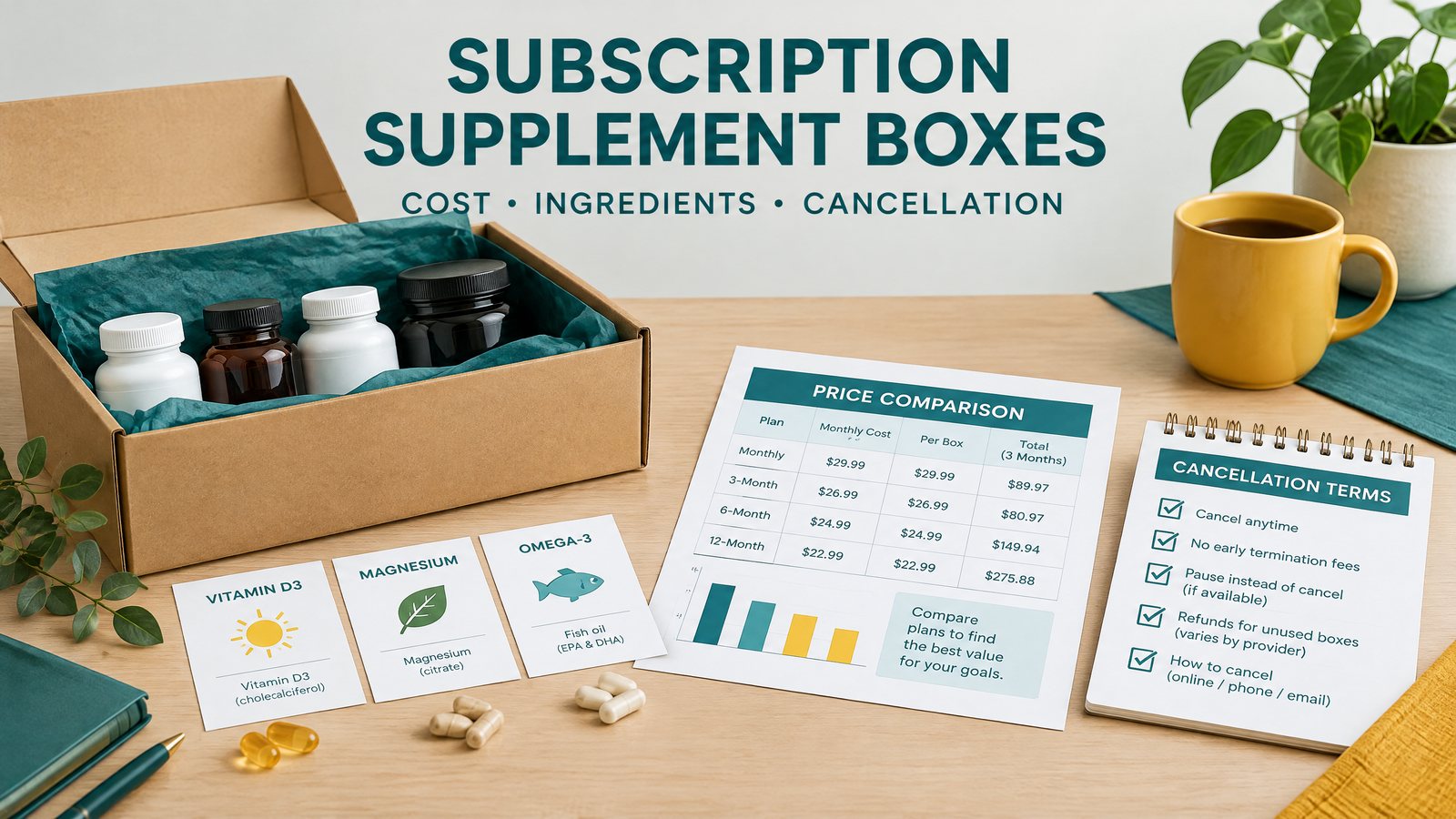
Subscription supplement boxes — monthly deliveries of pills, powders, or gummies — are a growing part of the dietary supplement marketplace. Like one-time purchases, supplements are not reviewed and approved by the U.S. Food and Drug Administration (FDA) before they are sold. That means consumers need to compare cost, ingredients, and the seller’s terms carefully before subscribing.
How supplements are regulated (short version)
The FDA treats dietary supplements differently from prescription and over-the-counter drugs. Manufacturers are primarily responsible for safety and truthful labeling; the FDA can intervene after products are on the market if there are safety problems or mislabeling. The FDA’s consumer guidance and the NIH Office of Dietary Supplements (ODS) explain these differences and what consumers should expect from labels and claims.
Compare cost: questions to ask
- What is the unit cost? Break the price down to cost per pill, capsule, or serving so you can compare to single-bottle purchases at retail.
- Are shipping, handling, or membership fees added? Subscription boxes often include shipping or automatic renewal fees that change the effective price.
- Do trial or introductory offers convert to a recurring subscription automatically? Understand how long the introductory price lasts and what the renewal price will be.
- Are returns, refunds, or cancellations allowed, and under what conditions? Cancellation policies vary and are governed by the seller’s terms.
Official federal sources do not rank products or set subscription pricing, so you’ll need to read the seller’s terms and compare unit costs yourself.
Compare ingredients and evidence
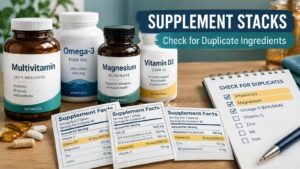
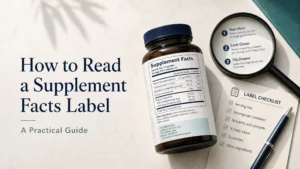
Start with the label. The FDA requires dietary supplement labels to list the product name, “Supplement Facts” panel with serving size and ingredient amounts, the manufacturer’s name and place of business, and a complete ingredient list. However, a label alone does not guarantee a product contains what it claims or that it is safe for a particular use.
Practical label-reading checklist
- Identify the active ingredients and the amount per serving (not just proprietary blend names).
- Check serving size and how many servings you would consume per day.
- Look for percent Daily Value (%DV) where applicable.
- Note inactive ingredients and potential allergens (soy, shellfish, gluten, etc.).
- Watch for vague or disease-treatment claims — supplements may say they support structure or function but cannot legally claim to treat diseases.
Use federal databases to cross-check labels and ingredient content when possible. The NIH Dietary Supplement Label Database (DSLD) allows you to look up published label information for many commercial products. The NIH Dietary Supplement Ingredient Database (DSID) provides information from laboratory analyses that can help you compare labeled amounts with measured amounts in some supplements.
For information on specific ingredients or herbs, consult evidence summaries from the ODS factsheets and the National Center for Complementary and Integrative Health (NCCIH). These sources summarize what is known about benefits and risks for many vitamins, minerals, probiotics, fiber supplements, herbs, and ingredients often marketed in subscription boxes.
Separate evidence, marketing claims, and uncertainty
- Established evidence: Some ingredients have well-documented effects for particular uses (see ODS and NCCIH fact sheets for details on each ingredient).
- Preliminary or limited evidence: For many newer ingredients or complex blends, human evidence may be limited or mixed. ODS and NCCIH note where evidence is incomplete.
- Marketing claims: Claims on a subscription box’s website or in promotional material are not the same as scientific proof. The FDA monitors false or misleading claims and can act after products reach the market.
- Uncertainty: Because supplements are variable and testing is incomplete, some boxes may contain different amounts of ingredients than listed. The DSID and DSLD can help reveal discrepancies where testing exists, but these databases do not cover every product or ingredient.
Interactions, contraindications, and safety checks
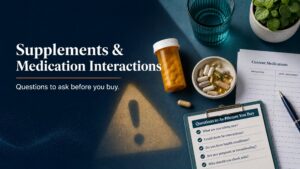
Dietary supplements contain biologically active ingredients that can interact with prescription medications, other supplements, or medical conditions. The ODS and NCCIH advise discussing supplement use with your health care provider, especially if you are pregnant or breastfeeding, have chronic health conditions, take prescription medicines, or are preparing for surgery.
If a subscription box contains herbs or stimulants, be particularly cautious: some herbal ingredients are known to interact with common medicines. When ingredient-specific interaction information is not available in federal summaries, ask a clinician or pharmacist.
Cancellation and refund terms — what to look for
Subscription services vary. Important items to check in the company’s terms and FAQ include:
- How and when you can cancel (online account, email, phone).
- Whether charges continue until cancellation is processed.
- Refund and return policies for opened and unopened products.
- How pricing changes or promotional offers are handled on renewal.
Federal health agencies do not set subscription contract rules for sellers, so if a company’s policies are unclear you may want to contact the seller for clarification before subscribing.
When to seek care
- Stop the supplement and seek immediate medical care for signs of a severe allergic reaction (hives, swelling, breathing difficulty) or other serious symptoms.
- Contact your health care provider if you experience new or worsening symptoms after starting a supplement, or if you suspect a supplement has interfered with your medications.
- Report serious adverse events to the FDA’s MedWatch system so they can be investigated.
Choosing a subscription supplement box requires checking labels carefully, verifying ingredient information with federal resources where available, and understanding the seller’s cancellation and refund terms. When in doubt about safety or interactions, consult a qualified health professional.
References
- NIH Office of Dietary Supplements — What You Need to Know (consumer guide)
- U.S. Food and Drug Administration — Dietary Supplements
- NIH Dietary Supplement Label Database (DSLD)
- NIH Dietary Supplement Ingredient Database (DSID)
- NIH ODS — Frequently Asked Questions
Bottom line
A practical guide to comparing subscription supplement boxes — what to check on labels, how to evaluate ingredients and evidence, and what to watch for in cancellation and refund policies.