In this guide
Draft for editorial review — not personal medical advice.
Overview
Berberine is a compound found in several plants and is marketed in dietary supplement form. Interest in berberine has grown in research and among consumers, but regulatory and safety considerations for supplements differ from those for prescription medicines. The U.S. Food and Drug Administration (FDA) does not review or approve dietary supplements for safety and effectiveness before they reach the market; manufacturers are responsible for ensuring product safety and labeling (see FDA links in References).
What the research shows — established evidence vs. preliminary findings
Established, high-quality evidence that definitively proves benefit for any specific medical condition is not available from the official sources used here. Some clinical and laboratory studies have investigated berberine and reported effects in small or preliminary trials, but findings vary and more rigorous, larger studies are needed.
Bottom line: interest and preliminary research exist, but there is not a conclusive body of evidence established by federal health agencies that confirms safety and effectiveness for treating health conditions.
Why medication interactions matter
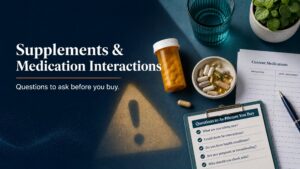
Dietary supplements, including berberine products, can alter how prescription medicines are absorbed, distributed, metabolized, or eliminated. That can change a medicine’s effectiveness or raise the risk of side effects. Because the FDA does not preapprove dietary supplements, interaction risks may not be fully assessed or listed on a product label.
Practical implications:
- If you take prescription medicines, especially for chronic conditions, adding a supplement can change how well those medicines work.
- Some interactions can increase the risk of very low blood sugar, excessive bleeding, or other serious effects depending on the medicines involved.
- Health care professionals and pharmacists can check for known interactions and advise whether a supplement is likely to be safe in your situation.
Label reading: practical steps
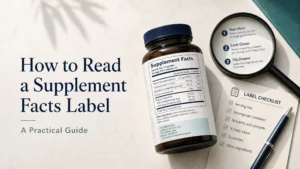
Use label-reading to gather reliable information about any berberine product you are considering. The Dietary Supplement Label Database (DSLD) and FDA guidance can help you know what to look for.
- Check the Supplement Facts panel: note the amount of each named ingredient per serving and the serving size.
- Look for the full botanical name if the product lists a plant source, and any standardized extract information if provided.
- Review the list of “Other Ingredients” (fillers, preservatives) and allergen statements.
- Find the manufacturer’s name, contact information, lot number, and expiration date — these help if you need to report a problem.
- Be cautious about labels that claim to “treat,” “cure,” or “prevent” a disease — such claims are not permitted for dietary supplements and may be misleading.
Interactions, contraindications, and who should be cautious
Because supplements can interact with prescription drugs and because evidence on berberine is still developing, take extra caution if any of the following apply:
- You take prescription medicines for chronic conditions (for example, diabetes, heart disease, or anticoagulation) — speak with your clinician or pharmacist before starting berberine.
- You are pregnant, planning pregnancy, or breastfeeding — many supplements have not been adequately studied in pregnancy and lactation.
- You are a child, elderly, or have complex medical problems — dosing, safety, and interactions can differ across groups.
- You have liver or kidney disease — these organs handle many drugs and supplements differently when impaired.
Always tell your prescribing clinician and pharmacist about any supplements you use so they can assess for interactions and contraindications.
When to seek care
Stop the supplement and seek medical attention promptly if you experience:
- Signs of an allergic reaction (hives, swelling of the face or throat, difficulty breathing)
- Sudden dizziness, fainting, or very low blood sugar symptoms if you take diabetes medications (sweating, dizziness, confusion, fainting)
- Unexplained bruising or bleeding if you take blood thinners
- Severe abdominal pain, persistent vomiting, yellowing of skin or eyes, or other new, concerning symptoms
For non-urgent questions, your pharmacist or primary care clinician can usually advise whether a supplement is likely to interact with your medicines or conditions.
How the official resources can help
- The FDA provides information about how dietary supplements are regulated and what to watch for on labels.
- The Dietary Supplement Label Database (DSLD) lets you look up label information for many marketed products.
- The Office of Dietary Supplements (ODS) and the National Center for Complementary and Integrative Health (NCCIH) offer consumer guidance on supplement use, safety, and how to evaluate evidence.
Final notes
Berberine is a commonly sold dietary supplement that has attracted research interest, but current official guidance emphasizes limited and preliminary evidence and the potential for drug interactions. If you are considering berberine, discuss it with your clinician or pharmacist, review product labels carefully, and report any adverse effects to your health care provider and to the FDA’s MedWatch program.
References
- Office of Dietary Supplements — What You Need to Know About Dietary Supplements (consumer tips)
- Office of Dietary Supplements — List of All Dietary Supplement Fact Sheets
- FDA — Dietary Supplements
- FDA — Dietary Supplement Products & Ingredients (labeling, ingredient lists)
- Dietary Supplement Label Database (DSLD)
- NCCIH — Herbs at a Glance