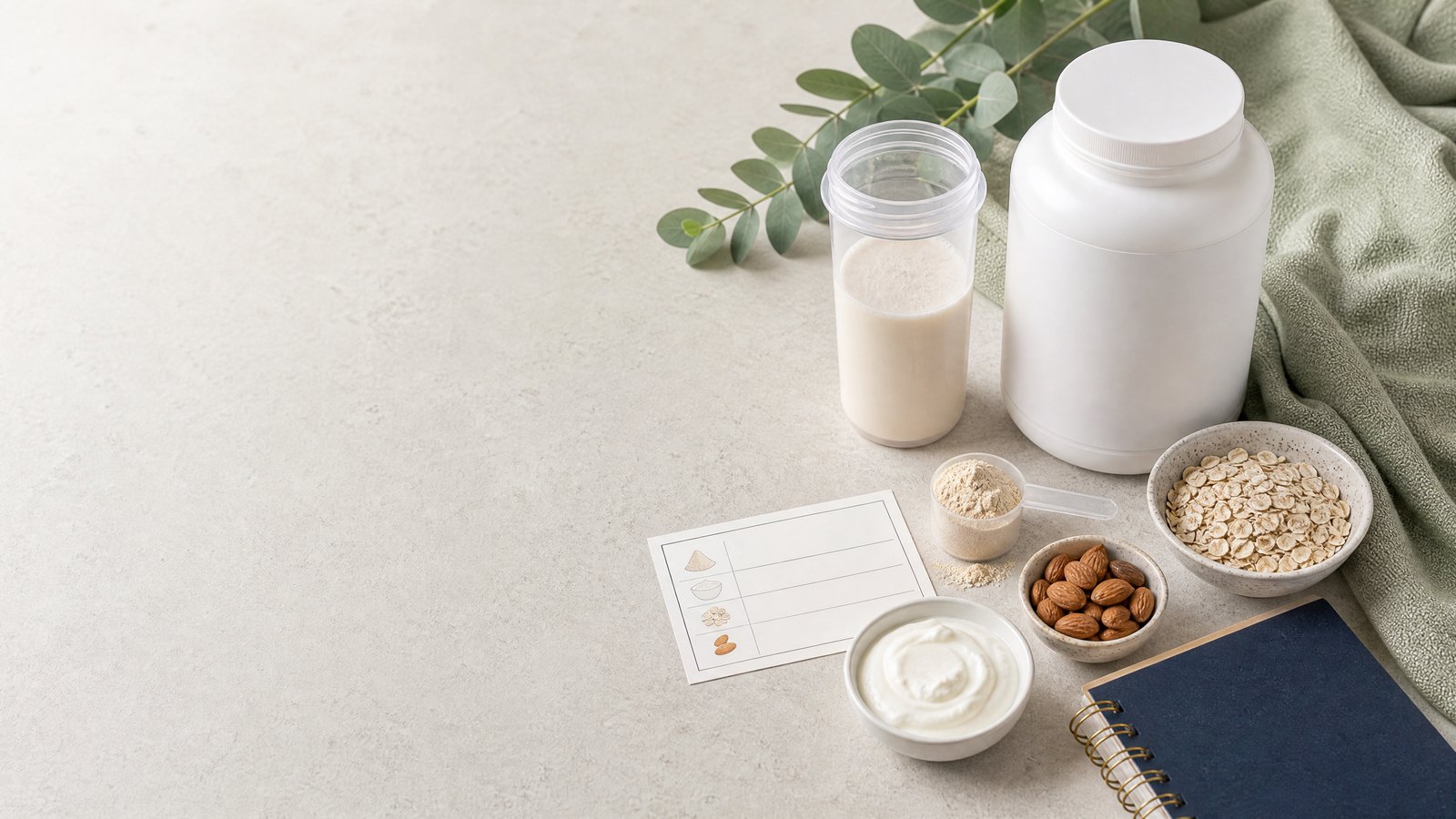
Protein powders can be convenient, but they are not required for everyone and they do not replace a varied eating pattern. The most useful comparison starts with the label and your actual dietary needs rather than a marketing promise.
This article is general educational information, not medical advice. Ask a qualified healthcare professional or registered dietitian for personal guidance—especially if you’re pregnant or breastfeeding, have a chronic health condition, take medications, or are choosing a product for a child.
Start with your diet and goals
Before shopping, consider whether a powder fills a real gap. Foods such as dairy products, eggs, fish, poultry, meat, beans, lentils, soy foods, nuts, and seeds provide protein along with other nutrients. The Dietary Guidelines for Americans encourage a healthy dietary pattern built from a variety of nutrient-dense foods; supplements are not a substitute for that pattern. A protein powder may be useful when you need a quick, portable option or have trouble meeting protein goals from food, but “more protein” is not automatically better for everyone.
Read the label like a skeptic
Serving size and protein per serving
- Check the serving size listed on the label and the grams of protein per serving. Scoops vary widely; a product can look higher in protein simply because the serving is larger.
- Look at the calories per serving and the number of servings per container. These details help you estimate cost per serving and how long a container will last.
- If you compare prices, consider calculating cost per set amount of protein (for example, cost per 20 grams) rather than only cost per tub.
Supplement Facts vs. Nutrition Facts
- Products marketed as dietary supplements display a Supplement Facts panel; conventional foods and beverages use a Nutrition Facts label. Both are intended to help you compare serving size and ingredients.
- For dietary supplements, the U.S. Food and Drug Administration (FDA) does not approve products for safety or effectiveness before they are sold. Manufacturers are responsible for product quality and labeling. This is one reason to read labels carefully and be cautious with claims.
Scan the ingredient list
- Identify the protein source (for example, milk-derived, egg, or plant-based). Choose a source you tolerate and that fits your preferences and eating pattern.
- Look for added ingredients such as sugars or sweeteners, flavors, thickeners, color additives, caffeine or other stimulants, and added vitamins or minerals. Pick the simplest formula that meets your needs.
- Check for allergen statements. If you have food allergies or sensitivities, verify the presence of milk, soy, egg, wheat, or other relevant allergens.
Quality and safety signals to look for
- Complete and clear labeling: A supplement should have a Supplement Facts panel and a list of ingredients. The label should also include the name and contact information of the manufacturer, packer, or distributor so you can reach them with questions.
- Independent quality testing: Some manufacturers use third-party organizations that test products and allow use of a quality seal. A seal can indicate certain manufacturing or testing steps, but it does not guarantee a product is safe for every person or effective for a specific goal.
- Expiration or “best by” date and storage instructions: Choose products with legible dating and follow storage guidance on the label.
- Realistic claims: Be wary of phrases like “works fast,” “miracle,” “guaranteed,” or “cures.” The FDA advises caution with such claims for supplements.
How to compare two protein powders
Use the same four steps for every product you consider:
- Match to your need: Does a powder solve a specific, practical problem for you (for example, a portable option after a long workday), or are you buying because of a promise on the front of the package?
- Check the basics: Compare serving size, grams of protein per serving, calories per serving, and cost per serving. Normalize cost to a set amount of protein to make comparisons fair.
- Scan ingredients for fit: Confirm the protein source you prefer, and look for ingredients you wish to include or avoid. Verify allergen statements.
- Evaluate quality signals: Is the label complete and clear? Is there manufacturer contact information? Is there credible information about quality testing? Are the claims on the label measured and realistic?
Common mistakes—and how to avoid them
- Judging by the biggest number on the front: Large numbers can reflect a larger scoop, not a more efficient product. Always check per-serving amounts.
- Assuming “natural” or “clean” guarantees safety: The FDA and the National Institutes of Health’s Office of Dietary Supplements advise that supplements can have side effects, quality can vary, and more is not always better. Base decisions on facts from the label, not buzzwords.
- Ignoring the rest of your diet: Protein powders are additions, not replacements, for nutrient-dense meals. Start with your dietary pattern, then use powders only to fill a specific gap.
- Overlooking overlapping ingredients: If you use multiple supplements or fortified foods, review labels to avoid unintended high intakes of added ingredients.
Questions to ask a clinician or dietitian
- Given my usual diet, do I have a gap that a protein powder could reasonably fill?
- Are there ingredients I should avoid because of my health conditions or medications?
- Is there a form (for example, a conventional food, a ready-to-drink product, or a dietary supplement powder) that better fits my situation?
- How should I monitor for tolerance, and what symptoms would mean I should stop and check in?
Safety and when to ask for help
Dietary supplements are regulated differently from drugs. In the United States, dietary supplement manufacturers are responsible for ensuring their products are safe and properly labeled, and the FDA does not approve supplements for safety or effectiveness before they are sold. The NIH Office of Dietary Supplements emphasizes that supplements are not intended to replace a healthy diet and can interact with medications or have side effects. If you’re pregnant or breastfeeding, have a chronic health condition, take medications, or are choosing a product for a child, talk with a healthcare professional first.
If you suspect an adverse effect after using a protein powder marketed as a dietary supplement, stop using it and contact a healthcare professional. You or your provider can report serious problems to the FDA through the Safety Reporting Portal (MedWatch).
Bottom line
Choose a protein powder only when it solves a practical need. Compare protein per serving, serving size, ingredients, tolerance, cost per serving, and quality information—without treating a marketing claim as proof of a health outcome. Start with your overall diet, read labels carefully, and ask for professional guidance if you have health conditions, take medications, or are pregnant or breastfeeding.
Related reading
- How to Read a Supplement Facts Label: A Practical Guide
- Creatine for Adults: Evidence, Labels, and Safety Questions
Sources
- Dietary Guidelines for Americans
- NIH Office of Dietary Supplements: Dietary Supplements—What You Need to Know
- FDA: Information for Consumers on Using Dietary Supplements
Note: This article is general educational information and is not a substitute for professional medical advice.
Editorial review: August 2026. This article should be rechecked when major guidance or evidence changes.