In this guide
- What this guide covers
- Key points at a glance
- How much walking per week — the evidence-based target
- How to choose the right walking workout plan
- Weekly sample plans (practical examples)
- Making walking sustainable long-term
- Injury prevention and recovery
- How to compare walking workout plans (quick framework)
- Limitations and when to ask a clinician
- How to compare products later
- Bottom line
- Editorial note
- References
- Related VitaEvidence reading
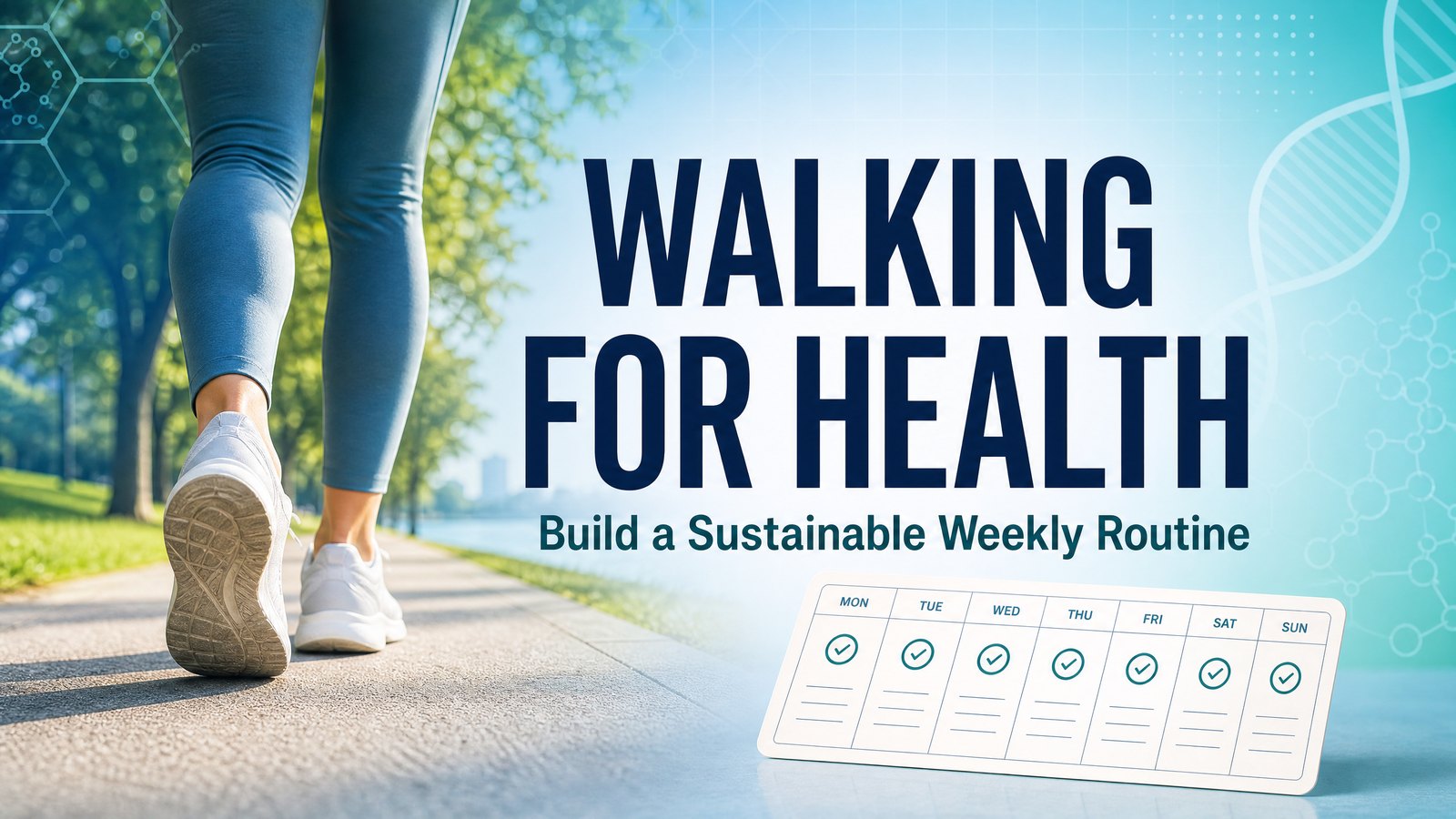
Walking is one of the simplest ways to improve cardiovascular health, mood, sleep, and functional fitness. This guide explains how much walking you may aim for, how to structure a realistic weekly plan, and practical strategies to keep it sustainable over months and years.
What this guide covers
- Evidence-based targets for weekly walking and how to gauge intensity.
- Practical, progressive walking workout plans for beginners to active walkers.
- Tips for staying consistent, avoiding setbacks, and modifying for common limitations.
- A comparison framework for choosing shoes, trackers, and apps later.
Key points at a glance
- Aim for 150–300 minutes of moderate-intensity activity (brisk walking) per week for substantial health benefit; more yields additional benefit [1][2].
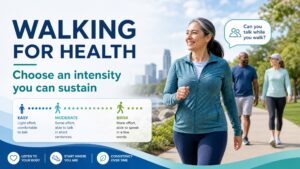
- Moderate intensity means you can talk but not sing while exercising—use the “talk test” as a simple self-check [2].
- Start where you are, progress gradually (add time or intensity by ~10% per week), and use a mix of steady walks and short higher-intensity intervals to improve fitness and reduce boredom.
- Plan for recovery, safe footwear, weather alternatives, and occasional rest days to make the routine sustainable long-term.
How much walking per week — the evidence-based target
Public health guidance frames walking as a form of moderate-intensity aerobic activity. Adults should aim for at least 150 minutes per week of moderate-intensity activity (e.g., brisk walking), or 75 minutes of vigorous activity, or an equivalent combination; more activity (up to about 300 minutes weekly) gives greater benefits for weight control and health outcomes [1][2][3].
How to translate that into a weekly routine:
– 150 minutes/week example: five 30-minute brisk walks on most days.
– 300 minutes/week example: most days ~40–45 minutes, or longer weekend walks plus shorter weekday walks.
Use the talk test: during moderate activity you can hold a conversation but not sing; if you can sing, pick up the pace [2].
How to choose the right walking workout plan
A practical plan balances frequency, duration, intensity, and progression. Below are sample frameworks; pick the one that matches your starting fitness and goals.
H3: Beginner — build a habit (total ~150 min/week goal)
– Week 1–2: 3 walks × 15–20 minutes (easy pace).
– Week 3–4: 4 walks × 20–25 minutes (brisk when possible).
– Week 5–8: 5 walks × 30 minutes (brisk), reaching ~150 minutes/week.
H3: Progression for fitness — add intensity and variety
– Warm-up 5 minutes easy walking.
– Interval session (once or twice weekly): 10 × (1–2 minutes brisk/1–2 minutes easy), cool down 5 minutes.
– One longer walk per week (45–90 minutes) at a steady pace to build endurance.
H3: Maintenance or weight-management focus (toward 300 min/week)
– Most days 40–60 minutes brisk walking, plus one interval session weekly.
– Combine walking with light strength work (bodyweight squats, calf raises) twice weekly to preserve muscle and function [3][4].
Weekly sample plans (practical examples)
- 3-day starter plan (time-constrained): Mon 30 min brisk, Wed 30 min brisk + 10 min hills, Sat 50 min moderate → ~110 min; add two 10–15 minute walks to reach 150 min.
- 5-day balanced plan: Mon–Fri 30 min brisk each day → 150 min/week.
- 6-day higher-volume plan: Mon–Sat 45 min brisk → 270 min/week (close to the upper recommended range).
Adjust sessions by preference (e.g., split a 30-minute walk into two 15-minute walks if that’s easier to sustain).
Making walking sustainable long-term
- Schedule it like an appointment: same time slots on selected days increase adherence.
- Habit stacking: attach a short walk to an existing routine (after breakfast, during a work break).
- Social accountability: walk with a friend, join a community group, or use a walking challenge with coworkers.
- Variety to prevent boredom: change routes, add hills, or use nature trails.
- Inclement-weather plan: have indoor alternatives (mall walking, treadmill, guided video walks).
- Equipment basics: a comfortable, supportive shoe, moisture-wicking clothing, and visible clothing for low-light walks.
Injury prevention and recovery
- Progress gradually—avoid large jumps in distance or speed; ~10% weekly increases are a common practical rule of thumb.
- Include warm-up and cool-down (5 minutes easy walking, plus gentle calf/hip mobility).
- If you feel persistent joint pain, sharp localized pain, numbness, or chest pain, stop and seek medical evaluation.
- Strength and balance exercises 2× weekly help reduce fall risk and maintain function, especially for older adults [3][4].
How to compare walking workout plans (quick framework)
When evaluating plans or programs, compare these attributes:
– Starting level and progression rate (is progression gradual and adjustable?).
– Weekly time commitment and session frequency (fits your schedule?).
– Intensity guidance (uses talk test, pace targets, or heart-rate zones?).
– Variety and recovery built in (intervals, long walk days, rest days?).
– Accessibility (equipment needs, indoor/outdoor options, cost).
– Options for modification (injury, pregnancy, chronic conditions).
Using those criteria helps you choose a plan that matches your life and keeps you consistent.
Limitations and when to ask a clinician
Walking is safe for many people, but certain situations warrant medical advice before starting or increasing activity:
– Recent cardiac events, uncontrolled high blood pressure, unexplained shortness of breath, or chest pain.
– Advanced diabetes with neuropathy, active ulcers, or frequent hypoglycemia events.
– Severe arthritis or joint replacement surgery where specific rehabilitation guidance is needed.
– Pregnancy with complications, or six weeks postpartum for many people (ask your obstetric provider).
– New dizziness, fainting, or any neurological symptoms.
If you have chronic conditions, are on multiple medications, or have mobility limitations, ask your clinician for tailored guidance and safe progression strategies [2][4]. Stop and seek care for red-flag symptoms (chest pain, sudden weakness, severe shortness of breath).
How to compare products later
When you decide to buy walking-related gear or an activity tracker, compare neutral label attributes rather than marketing claims. For shoes: cushioning, stability, heel-to-toe drop, width options, weight, and return/exchange policy. For wearable trackers and apps: accuracy of step and heart-rate measurement (look for independent reviews), battery life, water resistance, data privacy policy, and cost of premium features. For clothing: breathability, moisture-wicking fabric, and visible elements for low-light walking. Consider warranty, sizing options, and whether trial periods or return policies allow testing comfort and fit.
[Affiliate product comparison block—add verified iHerb links after approval]
Bottom line
Walking is a low-cost, accessible way to improve cardiovascular health, mood, sleep, and functional fitness. Aim for at least 150 minutes of brisk walking per week and progress gradually toward your goals; use variety, social support, and scheduling strategies to keep the habit sustainable. If you have medical concerns, recent health events, or new symptoms, consult a clinician before starting or intensifying your routine.
Editorial note
VitaEvidence Editorial Team. Last reviewed: August 2026. For general education, not personal medical advice. Read our Editorial Policy.
References
[1] CDC — Benefits of Physical Activity. https://www.cdc.gov/physicalactivity/basics/pa-health/index.htm
[2] CDC — How much physical activity do adults need? https://www.cdc.gov/physicalactivity/basics/adults/index.htm
[3] Dietary Guidelines for Americans 2020–2025. https://www.dietaryguidelines.gov/
[4] NIH Office of Dietary Supplements — Exercise and Athletic Performance (Health Professional Fact Sheet). https://ods.od.nih.gov/factsheets/ExerciseAndAthleticPerformance-HealthProfessional/
[5] USDA MyPlate — Physical Activity and Healthy Eating. https://www.myplate.gov/
[6] CDC — About Sleep: Sleep and Health. https://www.cdc.gov/sleep/about/index.html