In this guide
- Key takeaways
- Why this matters
- How safety alerts differ from marketing claims
- Sources to check first
- Practical steps to verify whether a notice is a safety alert or marketing
- Special cases: hidden or adulterated ingredients
- What to do if you think a product is unsafe
- When to contact your clinician or seek emergency care
- Limitations and common pitfalls
- A short safety disclaimer
- Further reading and tools
- Safety disclaimer
- References
- Related VitaEvidence reading
Category: FDA Warnings and Safety Updates
Key takeaways
- Safety alerts and regulatory warnings come from agencies (for example, FDA) and name specific products, lots, or firms; marketing claims come from sellers and use promotional language.
- Check the source, wording, and evidence: official alerts may cite testing, lot numbers, affected products, or enforcement actions; marketing claims use Testimonials, vague benefits, or calls to buy.
- Use official resources—such as FDA safety alerts, recalls, product databases, and guidance pages—and save packaging, lot numbers, and photos if you suspect a problem.
- If you experience an adverse effect or have safety concerns about a product (especially if you take prescription medicines), contact your clinician and report the product to FDA.
Why this matters
Consumers receive a steady stream of product messages: social posts, influencer endorsements, emails, news articles, and official public health notices. Telling a genuine safety alert (an official warning that a product may be dangerous, contaminated, or adulterated) apart from a marketing claim (designed to persuade you to buy) helps you take the right next steps to protect your health and avoid misinformation.
How safety alerts differ from marketing claims
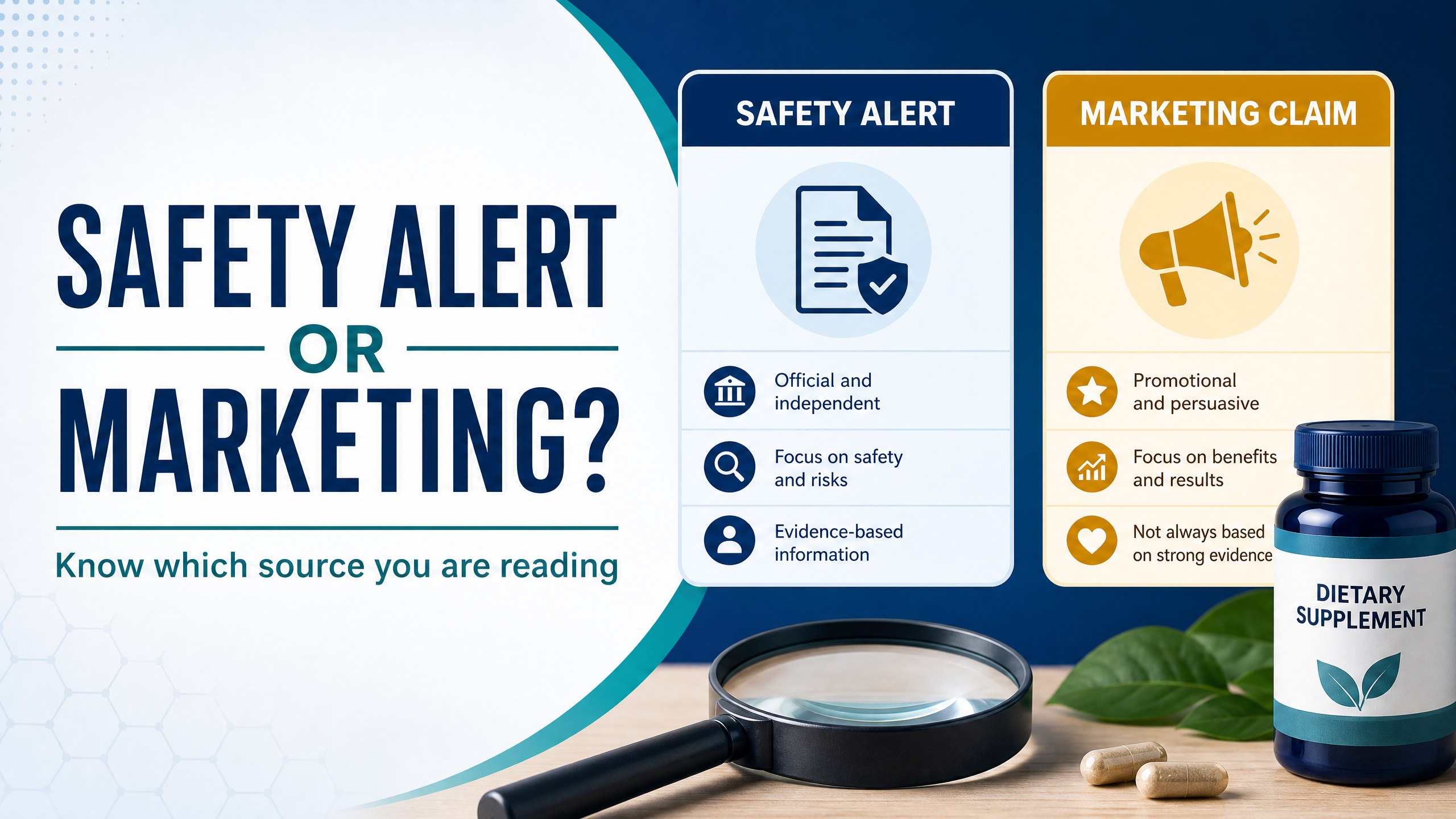
Below is a simple comparison to help you spot the difference quickly.
| Feature | Safety alert / regulatory notice | Marketing claim / promotional message |
|---|---|---|
| Typical source | Government agency (FDA), state health department, or an official recall notice | Manufacturer, retailer, influencer, or advertising platform |
| Purpose | Warn about health risks, contamination, adulteration, or mislabeling; may advise disposal or returning product | Promote benefits, features, or sales; encourage purchase |
| Language | Clear words such as “warning,” “recall,” “safety alert,” or “tainted”; identifies specific product names, lot numbers, and testing results | Persuasive language, “miracle,” “clinically proven” (often without details), calls to “buy now” or “limited time” |
| Evidence provided | Links to testing, lab results, firm correspondence, or enforcement action; often dated and traceable | Rarely provides test data or verifiable documentation |
| Scope | Specific products, lots, or manufacturers (rarely entire categories unless broad contamination is identified) | Broad claims covering a brand or category, sometimes vague about what was tested |
| Recommended response | Stop using product (if specified), seek medical help if symptomatic, report to authorities | Evaluate claims, compare evidence, consult independent information sources |
Sources to check first
- FDA official consumer alerts and health fraud notifications. The FDA posts medication and product warnings and letters to firms that identify specific unsafe or adulterated items.
- FDA Health Fraud Product Database. Use this database to search for products that the FDA has identified as fraudulent, adulterated, or misbranded.
- FDA pages about dietary supplements and labeling. These explain how supplements are regulated and what claims are allowed (and which are not).
- FTC guidance on health claims and advertising. The Federal Trade Commission enforces truth-in-advertising rules for health-related claims.
Practical steps to verify whether a notice is a safety alert or marketing
- Check the source
– Look for a reliable origin: an official .gov page (FDA or state health department) or a press release from an established public health agency. If the message links to media coverage, follow that coverage back to the original agency statement. - Read the wording carefully
– Safety alerts use specific language (recall, warning, safety alert) and include product names, lot numbers, photos, or lab evidence. Marketing material touts benefits and often uses emotional cues, testimonials, or urgency to buy. - Look for supporting evidence
– Official alerts usually reference tests, lab work, or formal communications to manufacturers. Marketing claims rarely provide verifiable data or will cite unclear “studies” without links or identifiers. - Search official FDA resources
– Use the FDA Health Fraud Product Database and the FDA’s medication health fraud notifications to see whether the product has been identified by regulators. - Check labeling and claims against FDA rules
– Dietary supplements are regulated differently from drugs; firms cannot legally claim to treat or cure disease. The FDA’s labeling guide and Q&A explain what is and is not allowed on supplement labels. - Beware of social media amplifiers
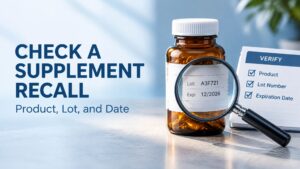
– False or exaggerated safety notices can spread quickly. Verify the notice on FDA.gov or a state public health site before acting on it. - Compare product identifiers exactly
– Safety alerts usually identify lot numbers, barcode numbers, and firm names. Do not assume an alert about “Brand X — lot Y” applies to all items sold under similar names or sold by different firms.
Special cases: hidden or adulterated ingredients
The FDA has repeatedly identified consumer products—especially dietary supplements and some marketed sexual enhancement or energy products—that contain hidden active pharmaceutical ingredients. The FDA’s guidance on avoiding products contaminated with hidden ingredients explains how such adulteration can pose serious risks. Examples and specific product warnings are listed on FDA pages for tainted products and medication health fraud notifications. If an official alert identifies hidden ingredients in a named product or batch, that notice applies to the specific product(s) described; do not assume every product with a similar brand or label is covered unless the notice says so.
What to do if you think a product is unsafe
- Stop using the product immediately if the alert instructs you to do so.
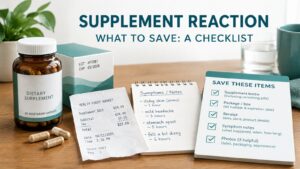
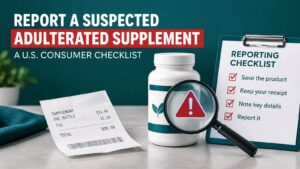
- Keep the product packaging, supplements facts label, lot number, barcode, and receipt if possible.
- Contact your health care clinician if you experience any adverse effects, especially if you take prescription medications, have chronic health issues, or are pregnant or breastfeeding.
- Report the product to FDA. The FDA provides ways for consumers to report suspicious or adverse events; use the FDA reporting options to help regulators track unsafe items.
- If you bought the item from a marketplace or retailer, check the seller’s site for official recall or return instructions, but rely on agency guidance for safety decisions.
When to contact your clinician or seek emergency care
- Seek immediate medical attention if you have severe or worrying symptoms after using a product (difficulty breathing, chest pain, severe allergic reaction, fainting, seizures).
- Contact your clinician if you suspect an adulterated product has interacted with your prescription medicines, or if you develop new symptoms after starting a supplement or over-the-counter product. If you need help identifying possible interactions, consult resources like our internal guide on supplements and medication interactions (/supplements-medication-interactions-questions/).
- If the product is a sexual enhancement or energy product and you have cardiovascular disease or take nitrates or prescription erectile dysfunction medications, contact your clinician before taking any such product, as official FDA notices have found hidden drug ingredients in some items.
Limitations and common pitfalls
- Not all safety communications are immediate recalls. The FDA may issue warnings, consumer advisories, or letters to firms that stop sales before a physical recall is ordered. Read the notice closely to understand what action is recommended.
- Manufacturers sometimes issue voluntary recalls or safety notices; these are legitimate but separate from FDA enforcement actions. Check whether the communication is from the firm or an independent agency.
- Marketing materials can borrow the tone of health authorities (using words like “doctor-recommended” or quoting anonymous “studies”). Don’t take persuasive language at face value—verify the underlying evidence.
- Do not generalize a warning about one product, batch, or lot to all products with a similar name. Official notices will specify the scope.
A short safety disclaimer
This article is educational and not a substitute for professional medical advice. If you have health concerns about a product or have experienced an adverse reaction, contact a qualified health care professional promptly.
Further reading and tools
- Learn how to read supplement labels: /how-to-read-supplement-facts-label/
- If you’re concerned about potential interactions between supplements and medicines, see our resource: /supplements-medication-interactions-questions/
Safety disclaimer
This article provides general information and is not medical advice. It is not a substitute for professional medical evaluation. If you have health concerns, consult a licensed clinician.
References
- https://www.fda.gov/drugs/medication-health-fraud/avoiding-products-contaminated-hidden-ingredients
- https://www.fda.gov/consumers/health-fraud-scams/tainted-honey-based-products-hidden-active-drug-ingredients
- https://www.fda.gov/consumers/health-fraud-scams/health-fraud-product-database
- https://www.fda.gov/food/dietary-supplements
- https://www.fda.gov/food/information-consumers-using-dietary-supplements/questions-and-answers-dietary-supplements
- https://www.fda.gov/food/dietary-supplements-guidance-documents-regulatory-information/dietary-supplement-labeling-guide
- https://www.fda.gov/drugs/medication-health-fraud-notifications/sexual-enhancement-and-energy-product-notifications
- https://www.fda.gov/drugs/medication-health-fraud/medication-health-fraud-notifications
- https://www.ftc.gov/news-events/topics/truth-advertising/health-claims
- https://www.ftc.gov/business-guidance/resources/health-products-compliance-guidance
- https://www.fda.gov/about-fda/cder-contact-information/ways-consumers-contact-fda-about-human-drugs
Last reviewed: August 2026
VitaEvidence Editorial Team