In this guide
- Key takeaways
- Why products get recalled or receive FDA warnings
- How to find out whether a product is recalled or flagged
- What to do immediately if a supplement you own is recalled or flagged
- Medical concerns and interactions
- Practical guidance on disposal, returns, and refunds
- How to reduce risk when buying supplements
- How to report adverse events or suspicious products
- When to contact a clinician or emergency services
- Limitations and what this article does not cover
- Safety disclaimer
- Safety disclaimer
- References
- Recall response sequence
- Related VitaEvidence reading
Category: FDA Warnings and Safety Updates
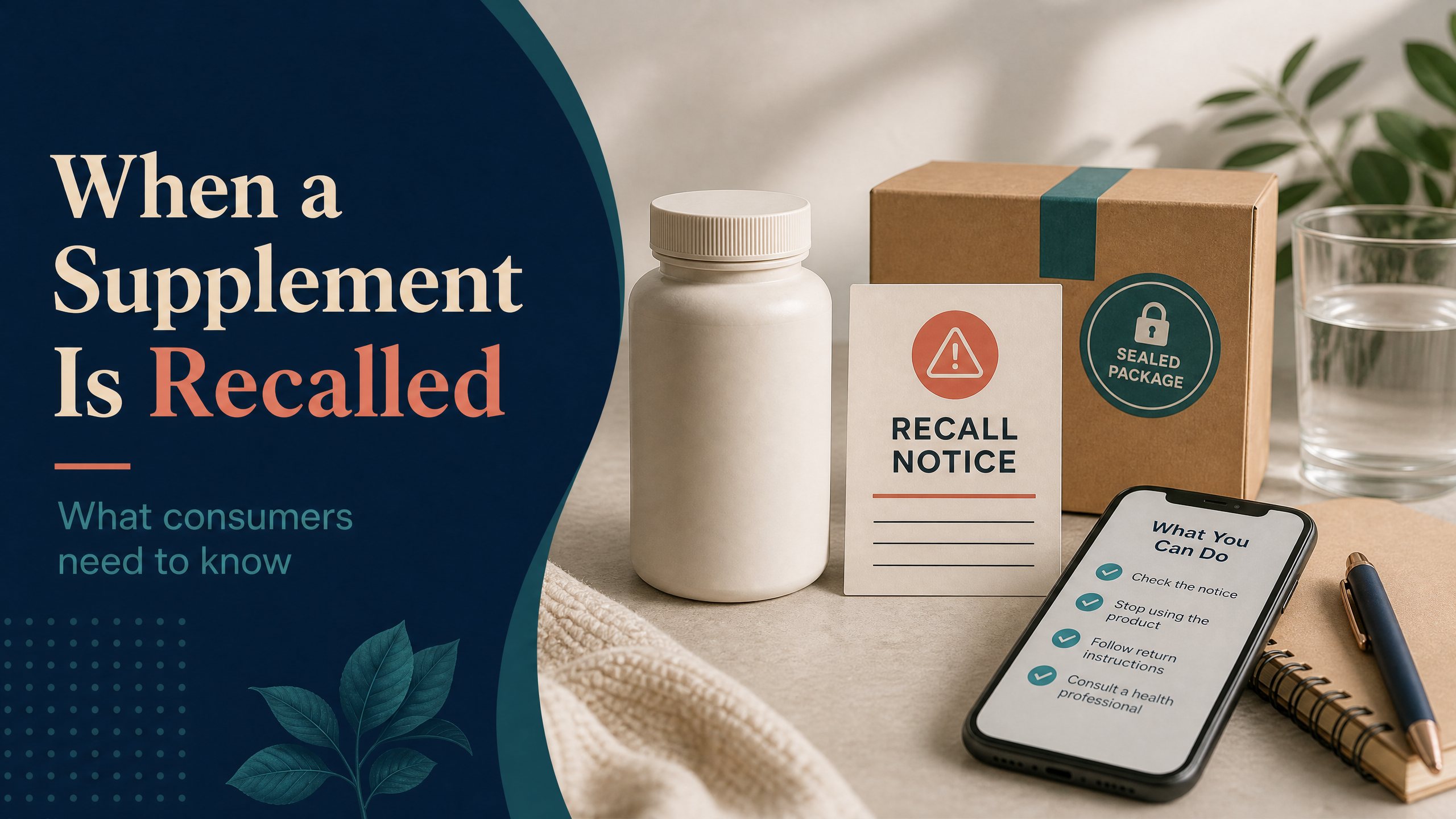
Supplements and other wellness products can be removed from the market or the subject of FDA warnings for several reasons — from mislabeling and contamination to hidden or undeclared drug ingredients. This article explains what to do if a supplement you use is recalled or flagged by the FDA, how to check whether a product is affected, when to seek medical help, and how to report problems. The information is educational and not individualized medical advice.
Key takeaways
- Stop using a product immediately if the FDA lists it as recalled, contaminated, or adulterated.
- Check the FDA Health Fraud Product Database and FDA notifications to confirm whether your product or lot is affected.
- Keep product packaging and lot numbers, and follow the recall notice for return or disposal instructions.
- Seek medical advice if you have symptoms or are taking medications that could interact with hidden ingredients — get urgent care for severe reactions.
- Report adverse events or suspicious products to the FDA so they can investigate.
Why products get recalled or receive FDA warnings
Supplements and related products can be removed from shelves or subject to FDA action for a few common reasons:
– Presence of hidden or undeclared active pharmaceutical ingredients (for example, the FDA has warned that some honey-based products and other supplements have contained undeclared drug ingredients) (FDA: tainted honey-based products) https://www.fda.gov/consumers/health-fraud-scams/tainted-honey-based-products-hidden-active-drug-ingredients
– Contamination with harmful bacteria, heavy metals, or other contaminants.
– Mislabeling — product contents or amounts do not match the label.
– False or unsupported health claims that may constitute health fraud (see the FDA and FTC guidance on health fraud and advertising) https://www.fda.gov/drugs/medication-health-fraud/avoiding-products-contaminated-hidden-ingredients and https://www.ftc.gov/news-events/topics/truth-advertising/health-claims
The FDA’s material about hidden ingredients explains that some types of products — notably some sexual-enhancement, weight-loss, and energy products — have been found to contain undeclared drugs that can be dangerous, interact with other medicines, or cause unexpected side effects (FDA: sexual enhancement and energy product notifications) https://www.fda.gov/drugs/medication-health-fraud-notifications/sexual-enhancement-and-energy-product-notifications
How to find out whether a product is recalled or flagged
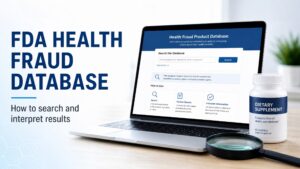
- Search the FDA Health Fraud Product Database. This database lists products the FDA has reviewed for health fraud and related safety concerns. It’s a good starting point for checking whether a named product has been flagged by the agency (FDA Health Fraud Product Database) https://www.fda.gov/consumers/health-fraud-scams/health-fraud-product-database
- Check FDA notification pages for medication health fraud and specific categories (for example, sexual-enhancement or energy products) https://www.fda.gov/drugs/medication-health-fraud/medication-health-fraud-notifications and https://www.fda.gov/drugs/medication-health-fraud-notifications/sexual-enhancement-and-energy-product-notifications
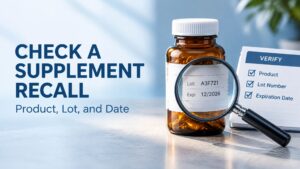
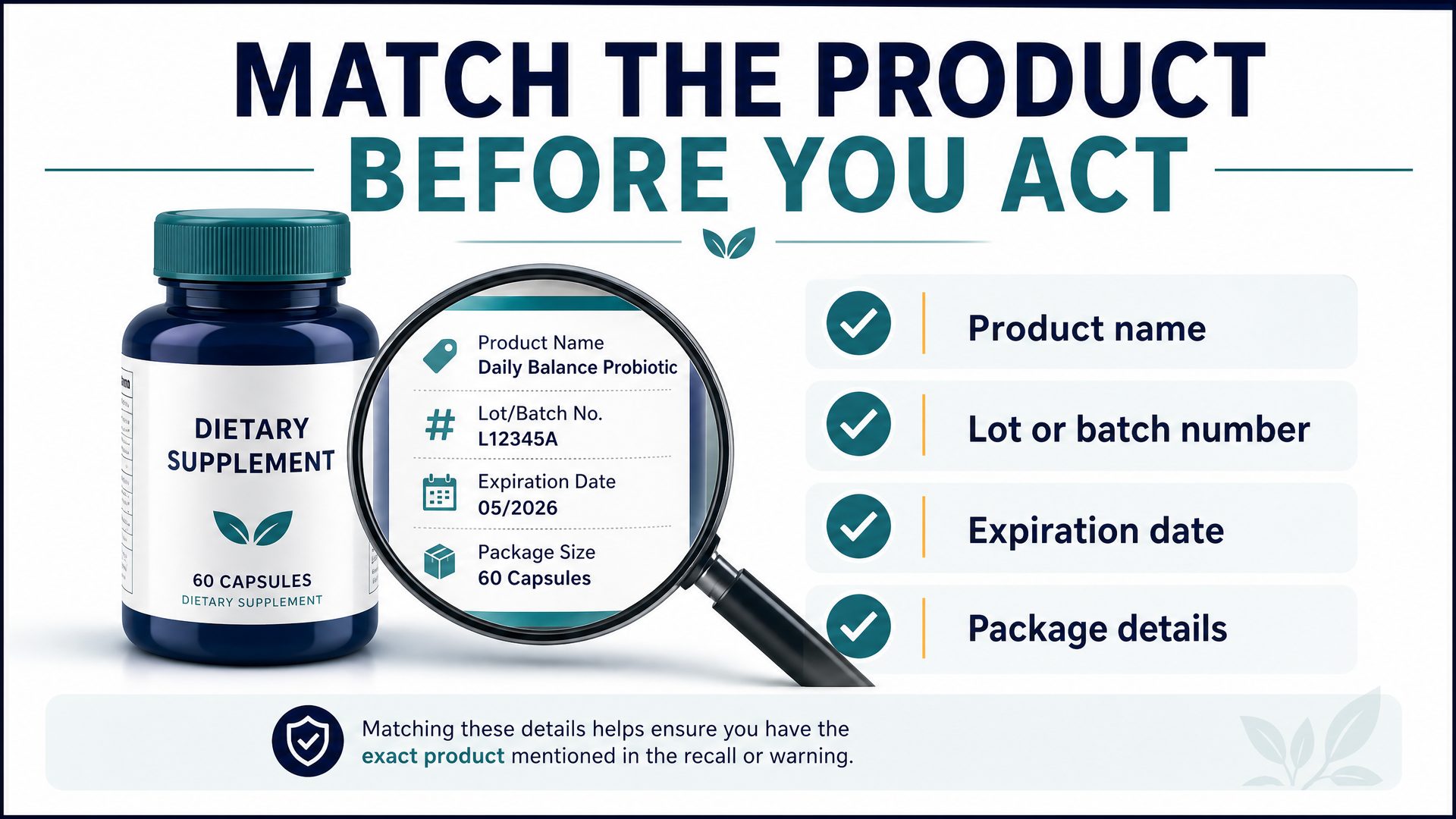
- Look for manufacturer or retailer recall notices and follow any lot/expiration details in the announcement.
- If you’re unsure, contact the FDA using the ways consumers can reach CDER to ask about a specific product or to report concerns (FDA contact information) https://www.fda.gov/about-fda/cder-contact-information/ways-consumers-contact-fda-about-human-drugs
What to do immediately if a supplement you own is recalled or flagged
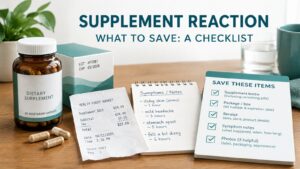
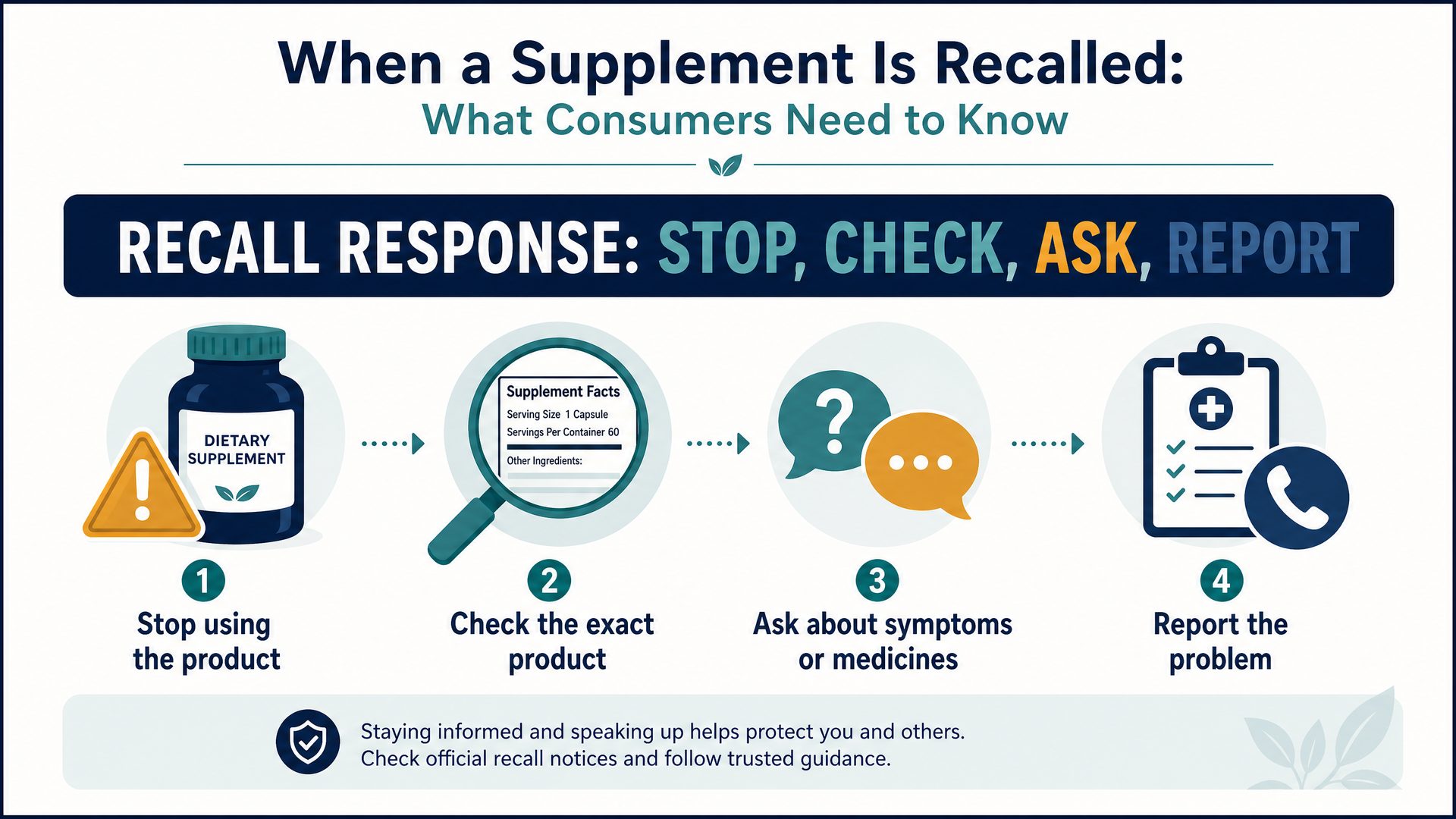
Use the steps below as a practical checklist. The exact action may vary depending on the recall notice — some recalls call for returning the product, others advise discarding it and not using it.
| Immediate step | Why it matters |
|---|---|
| Stop using the product right away | Prevent further exposure to a potentially harmful or adulterated product |
| Keep the product, label, lot number, and receipt | Authorities and clinicians may need this information for investigation or medical assessment |
| Read the FDA or retailer recall notice for specific instructions | The notice may explain whether to return the product, receive a refund, or discard it safely |
| Contact your clinician if you have symptoms or are taking medications | Hidden ingredients can interact with prescription drugs or worsen chronic conditions |
| Report the problem to the FDA and your state health department | Reporting helps regulators identify patterns and protect others (FDA reporting options) https://www.fda.gov/about-fda/cder-contact-information/ways-consumers-contact-fda-about-human-drugs |
Medical concerns and interactions
Hidden or undeclared ingredients in supplements can cause adverse health effects or interact with prescription and over-the-counter medicines. The FDA’s materials on hidden ingredients and medication health fraud explain that undeclared drugs may lead to serious reactions or amplify risks when combined with other medications (FDA: avoiding products contaminated with hidden ingredients) https://www.fda.gov/drugs/medication-health-fraud/avoiding-products-contaminated-hidden-ingredients
If you have symptoms — such as chest pain, difficulty breathing, serious allergic reactions, fainting, sudden changes in mood or mental status, severe gastrointestinal symptoms, or other worrying signs — seek immediate medical attention or call emergency services. If you are on medications (blood thinners, blood-pressure drugs, heart medications, diabetes medications, etc.), contact your clinician for advice even if symptoms are mild, because interactions can be serious.
Practical guidance on disposal, returns, and refunds
- Follow the recall notice. Some recalls provide directions for returning the product to the distributor or retailer or for receiving a refund. Others instruct you to dispose of the product safely.
- If the notice does not provide disposal guidance, follow local household hazardous-waste or medication-disposal instructions. Many communities and pharmacies offer medicine take-back programs.
- Do not flush supplements down the toilet unless local guidance specifies this; local disposal programs are usually preferred.
How to reduce risk when buying supplements
- Understand FDA oversight limitations: dietary supplements are regulated differently than prescription or over-the-counter drugs. Manufacturers are responsible for product safety and truthful labeling before marketing; the FDA typically takes action after problems are reported or discovered (FDA—dietary supplements) https://www.fda.gov/food/dietary-supplements and https://www.fda.gov/food/information-consumers-using-dietary-supplements/questions-and-answers-dietary-supplements
- Read the label and Supplement Facts panel carefully. If a product promises a dramatic cure or “quick fix,” be skeptical — the Federal Trade Commission enforces rules against false and misleading health claims (FTC health claims) https://www.ftc.gov/news-events/topics/truth-advertising/health-claims
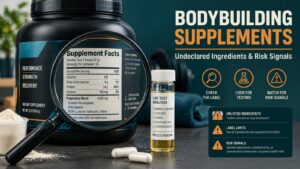
- Be cautious about products marketed for serious conditions or those that promise performance-enhancing effects. Check FDA notification pages where certain categories have been frequently found to be adulterated (FDA sexual enhancement/energy notifications) https://www.fda.gov/drugs/medication-health-fraud-notifications/sexual-enhancement-and-energy-product-notifications
- If you have questions about reading labels or supplement interactions, consult reliable resources or your clinician. (See our related reading on how to read the Supplement Facts label: /how-to-read-supplement-facts-label/ and on interactions: /supplements-medication-interactions-questions/.)
How to report adverse events or suspicious products
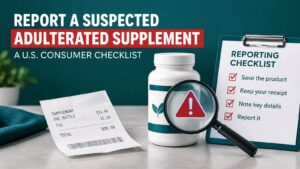
Reporting helps regulators track problems and protect others. The FDA provides ways for consumers to report adverse events, suspect products, or other safety concerns (FDA contact information) https://www.fda.gov/about-fda/cder-contact-information/ways-consumers-contact-fda-about-human-drugs. Include as much information as you can — product name, lot number, where and when purchased, what happened, and any photos or packaging you can share.
When to contact a clinician or emergency services
Contact emergency services or go to the nearest emergency department if you have life‑threatening symptoms: difficulty breathing, chest pain, fainting, seizures, severe bleeding, or severe allergic reactions. Contact your primary care clinician or urgent care for symptoms that are not immediately life‑threatening but are new or concerning (palpitations, dizziness, marked changes in blood pressure or blood sugar, severe gastrointestinal symptoms, or unexplained rashes). Tell clinicians about all supplements you are taking and bring the product label or packaging if possible.
Limitations and what this article does not cover
This article provides general, evidence-based consumer guidance about what to do when a supplement is recalled or flagged by the FDA. It is not a substitute for professional medical advice, diagnosis, or treatment. Specific recall instructions can vary by product and incident; always follow the official recall or safety notice for the exact product and lot.
Safety disclaimer
This content is educational and does not replace personalized medical advice. If you have health concerns or are experiencing symptoms after taking a supplement, contact a healthcare professional promptly.
Safety disclaimer
This article provides general information and is not medical advice. It is not a substitute for professional medical evaluation. If you have health concerns, consult a licensed clinician.
References
- https://www.fda.gov/drugs/medication-health-fraud/avoiding-products-contaminated-hidden-ingredients
- https://www.fda.gov/consumers/health-fraud-scams/tainted-honey-based-products-hidden-active-drug-ingredients
- https://www.fda.gov/consumers/health-fraud-scams/health-fraud-product-database
- https://www.fda.gov/food/dietary-supplements
- https://www.fda.gov/food/information-consumers-using-dietary-supplements/questions-and-answers-dietary-supplements
- https://www.fda.gov/food/dietary-supplements-guidance-documents-regulatory-information/dietary-supplement-labeling-guide
- https://www.fda.gov/drugs/medication-health-fraud-notifications/sexual-enhancement-and-energy-product-notifications
- https://www.fda.gov/drugs/medication-health-fraud/medication-health-fraud-notifications
- https://www.ftc.gov/news-events/topics/truth-advertising/health-claims
- https://www.ftc.gov/business-guidance/resources/health-products-compliance-guidance
- https://www.fda.gov/about-fda/cder-contact-information/ways-consumers-contact-fda-about-human-drugs
Last reviewed: August 2026
VitaEvidence Editorial Team