
In this guide
This draft is for editorial review. It summarizes what major women’s health resources say about sleep changes during the menopausal transition and offers practical tracking tips to discuss with a clinician.
What is perimenopause and how it relates to sleep
Perimenopause is the transition leading up to menopause, when menstrual cycles become irregular and reproductive hormones fluctuate before periods stop entirely. According to ACOG, common symptoms include hot flashes, night sweats, sleep problems, mood changes, and vaginal dryness. Changes in sleep are among the complaints that prompt people to seek care during this life stage.
Why night waking often increases in perimenopause
Several features of the menopausal transition can contribute to waking at night. Clinical guidance describes these as associated changes rather than single proven causes:
- Hot flashes and night sweats. Sudden, temporary feelings of intense heat and sweating can wake you from sleep. These symptoms are common during the transition and are frequently reported as a cause of disrupted sleep.
- Hormone fluctuations. Falling and fluctuating levels of estrogen and progesterone can change sleep architecture and the ability to stay asleep. These hormonal changes also underlie other symptoms that disrupt sleep.
- Mood and anxiety. Perimenopause can bring mood symptoms and anxiety for some people, and these can make it harder to fall back asleep after waking.
- Nocturia and bladder symptoms. Increased nighttime trips to the bathroom—whether from urinary urgency, vaginal changes, or other causes—can fragment sleep.
- Medication or substance effects. New or changing medications, alcohol, or caffeine intake can worsen nighttime awakenings.
Other health changes to keep in mind
Some people develop new or worsened chronic conditions in midlife that affect sleep. If you notice loud snoring, gasping, or pauses in breathing, or if daytime sleepiness increases, mention this to your clinician so they can evaluate breathing-related sleep disorders. Also discuss heavy or irregular bleeding with a clinician; ACOG has guidance on abnormal uterine bleeding and when evaluation is needed.
What to track: a practical symptom and sleep log
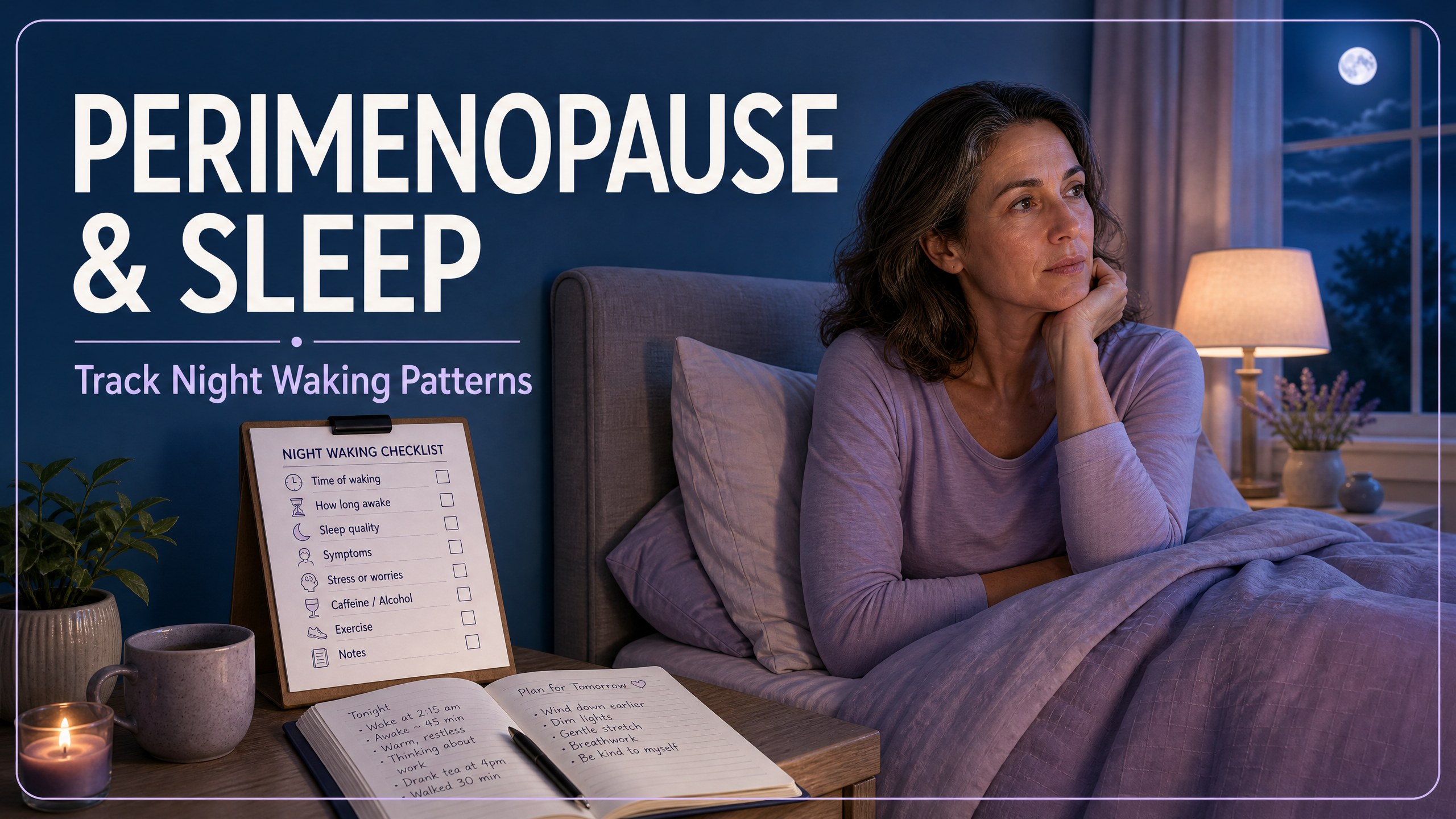
Keeping a simple, consistent log for 2–4 weeks can help your clinician see patterns and suggest tests or treatments. Aim for entries each day and after nights when sleep was poor.
Suggested daily items to record:
- Nighttime sleep timing. Bedtime, approximate time you fell asleep, number and time of awakenings, final wake time, total sleep hours (estimate).
- Number and severity of night sweats/hot flashes. Count events and rate how disruptive they were (mild/moderate/severe).
- Bathroom trips. Number of times you got up to urinate at night.
- Mood and daytime symptoms. Short rating (for example 1–5) for mood, anxiety, and daytime sleepiness or fatigue.
- Caffeine, alcohol, and naps. Note timing and approximate amounts (particularly anything after mid-afternoon).
- Medications and supplements. List prescription and over-the-counter medicines and any supplements taken that day.
- Menstrual changes. Record bleeding or spotting and whether cycles are regular or irregular.
- Other triggers. Illness, travel, caregiving interruptions, or environmental factors (room temperature, bedding) that could affect sleep.
You can use a paper diary, a simple spreadsheet, or a sleep-tracking app or wearable. The goal is a clear pattern you can show a clinician: what wakes you, when it happens, and what makes it better or worse.
What to bring to a clinician visit
- Your 2–4 week sleep and symptom log.
- A list of current medications and supplements (brand, dose, and how often).
- Description of sleep-related symptoms (timing, severity, and daytime effects).
- Any menstrual or bleeding changes. If bleeding is very heavy or prolonged, seek care promptly; ACOG provides information on abnormal uterine bleeding and evaluation.
This information helps clinicians decide whether tests (for example, blood work or sleep study) or interventions are appropriate and whether referral to a sleep specialist, gynecologist, or other clinician is needed.
Diet, supplements, and safety
Good general nutrition supports overall health during midlife. If you are considering supplements (for bone health, iron for heavy bleeding, or other reasons), consult your clinician before starting them. The NIH Office of Dietary Supplements has consumer fact sheets on calcium, vitamin D, iron, omega-3s, and other nutrients that explain benefits, known risks, and interactions. The FDA provides general safety information about dietary supplements.
Do not assume a supplement is safe just because it is available over the counter; your clinician can help you weigh potential benefits and risks in the context of your overall health and medications.
When to seek care
- If night waking or daytime sleepiness significantly interferes with work, driving, or daily function.
- If you have severe or very frequent hot flashes or night sweats that cause distress.
- If you notice heavy or prolonged vaginal bleeding or bleeding between periods.
- If you have symptoms suggesting breathing-related sleep problems (loud snoring, gasping, witnessed pauses) or sudden excessive daytime sleepiness.
- If you have new or worsening depression, anxiety, or any thoughts of harming yourself—seek immediate care or call emergency services.
This article summarizes public clinical guidance and consumer information. It is not a substitute for personalized medical evaluation and treatment.
Next steps
Start a simple 2–4 week log, note what seems to trigger wakefulness, and bring that record to your clinician. Together you can consider lifestyle measures, targeted evaluations, and safe treatment options that are appropriate for your symptoms and medical history.