In this guide
This article summarizes what official consumer health sources say about omega‑3 fatty acids during pregnancy. Omega‑3s include short-chain ALA (found in some plant foods) and the longer-chain EPA and DHA (found mainly in seafood and some supplements). DHA is a major structural fat in the fetal brain and retina, so many prenatal dietary recommendations focus on obtaining DHA during pregnancy.
Food sources of omega-3s
Primary dietary sources differ by type of omega‑3:
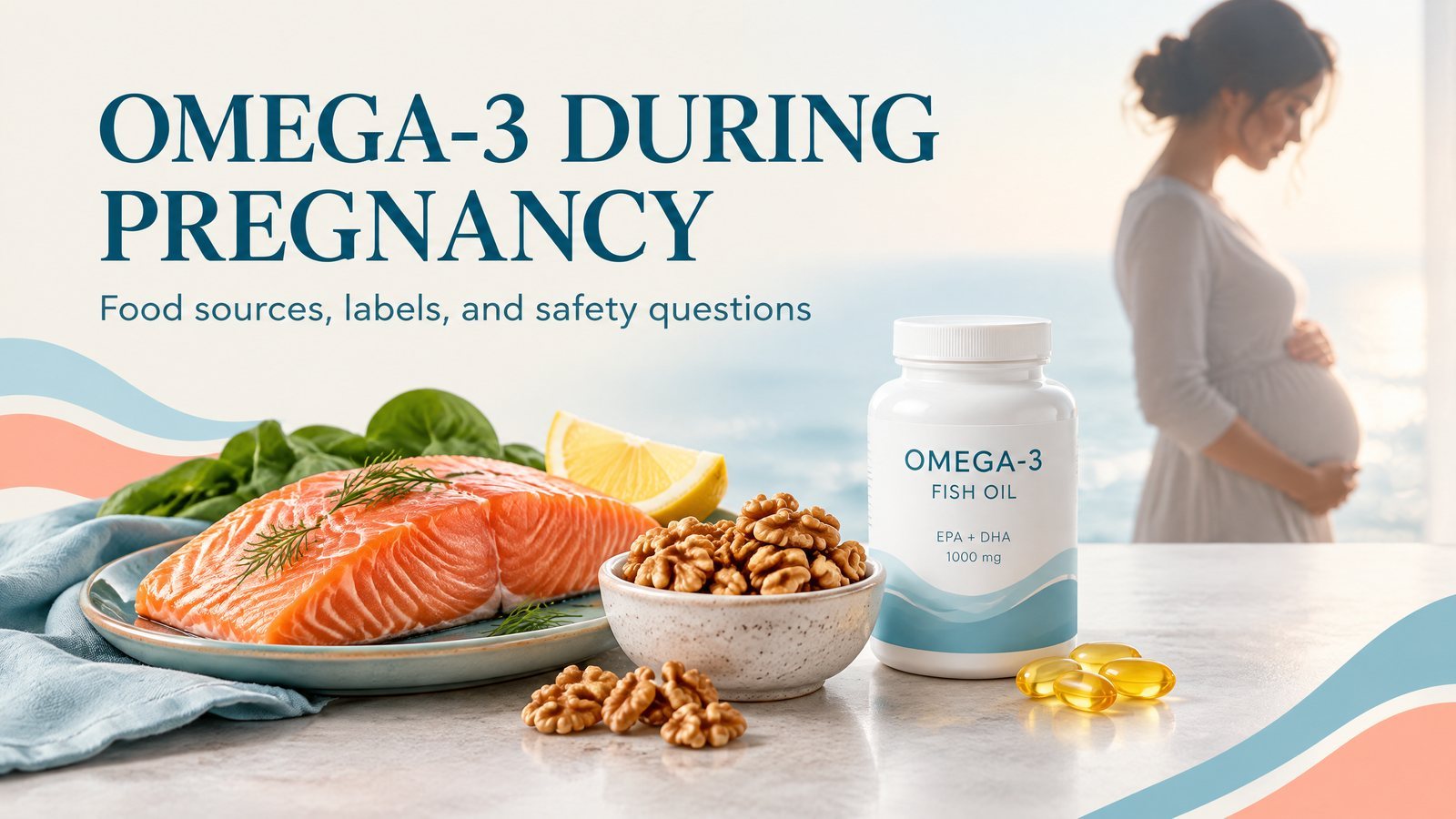
- EPA and DHA: Fatty fish (for example, salmon, sardines, trout) and some shellfish are the main food sources. Algal oils provide DHA and are available as vegetarian supplements.
- ALA: Plant foods such as flaxseed, chia seeds, walnuts, and soybean oil contain ALA, a short‑chain omega‑3 that the body can partially convert to DHA and EPA.
Choosing a variety of sources can help supply different omega‑3s. If you eat fish, be mindful that some seafood can contain environmental contaminants; guidance on fish choices is often part of pregnancy nutrition advice.
Supplements: types and what the label tells you
Omega‑3 supplements on the market typically list the source and the amounts of EPA and DHA. Common types include:
- Fish oil: Contains varying amounts of EPA and DHA. Labels may list total omega‑3s and individual EPA and DHA milligram amounts.
- Cod liver oil: A form of fish oil that can provide vitamin A as well as omega‑3s; vitamin A (retinol) supplements are sometimes restricted in pregnancy, so check the label and discuss with your clinician before use.
- Algal oil: A plant‑based source of DHA (and sometimes EPA) made from microalgae; often used by people who do not eat fish.
- Flaxseed or chia oil supplements: Provide ALA rather than preformed EPA/DHA.
When reading supplement labels, consider these points (based on U.S. consumer guidance for dietary supplements):
- Ingredient details: A reliable label names the source (e.g., fish oil, algal oil) and lists amounts of EPA and DHA per serving.
- Other nutrients: Check for added vitamin A or vitamin D, which can have pregnancy‑specific safety considerations. If present, discuss with your clinician.
- Claims vs. evidence: Dietary supplement claims are not the same as medical approvals. The label may make structure/function claims (for example, “supports brain health”) but that does not mean the product is proven to prevent or treat a condition.
- Third‑party testing: Because supplements are not regulated as drugs, independent testing and certification seals (for purity and label accuracy) can provide extra assurance. Look for testing by reputable organizations and check what the seal covers.
- Reporting problems: If you experience adverse effects, the U.S. Food and Drug Administration (FDA) maintains reporting channels for dietary supplement adverse events.
Safety questions specific to pregnancy
Pregnancy raises a few common safety concerns about omega‑3s and seafood:
- Contaminants in fish: Some fish can contain mercury, PCBs, or other environmental contaminants. Public health guidance typically encourages choosing lower‑contaminant seafood and limiting intake of higher‑mercury species. If you have questions about which fish to eat, consult your clinician or local advisories.
- Raw or undercooked seafood: Raw shellfish and sushi carry a higher risk of foodborne illness. People who are pregnant are often advised to avoid raw or undercooked seafood because infections can cause more severe illness in pregnancy.
- Supplement quality and contaminants: Fish‑oil supplements can concentrate environmental contaminants if not purified. Choosing products tested for purity by independent labs can reduce that risk.
- Vitamin A in some products: Some marine‑derived supplements (not all fish oils) contain preformed vitamin A (retinol). High intake of preformed vitamin A is a concern in pregnancy, so check labels and ask your health care provider before taking such supplements.
- Drug interactions and medical conditions: If you take blood thinners or have bleeding disorders, tell your clinician before starting omega‑3 supplements, since omega‑3s can affect bleeding risk in some contexts.
Practical advice
- Talk with your prenatal care provider about whether you should aim to get EPA and/or DHA from foods or a supplement. Your clinician can advise based on your diet, health history, and medication use.
- If you choose a supplement, prefer products that clearly list EPA and DHA amounts, disclose other active ingredients (for example, vitamin A), and have independent quality testing when possible.
- When eating fish, follow local and national guidance on fish choices and safety during pregnancy. Avoid raw or undercooked seafood and be aware of locally posted advisories about fish caught in local waters.
- Keep one record of your supplements and medications and bring it to prenatal visits so your clinician can review safety and necessity.
When to seek care
Contact your prenatal care provider if you experience: unusual bleeding after starting an omega‑3 supplement, symptoms you suspect are an allergic reaction (hives, swelling, difficulty breathing), persistent gastrointestinal upset after a product change, or any other concerning change after starting a new supplement or eating a new type of seafood.
Also report any suspected adverse event from a dietary supplement to your health care professional and consider reporting it to the FDA through the voluntary reporting system described on the FDA website.
Takeaway
EPA and DHA are available from fatty fish, algal oils, and some supplements. During pregnancy, it is important to balance the potential benefits of omega‑3s — particularly DHA — with safety concerns about contaminants, raw seafood, and supplement quality. Discuss food choices and any supplements with your prenatal clinician, read labels carefully, and choose products that disclose EPA/DHA amounts and any added vitamins.