In this guide
- Key takeaways
- What to check before buying an imported supplement
- Where to check official warnings and product records
- Red flags when shopping
- Practical steps for safer purchases
- When to contact a clinician
- How to report problems
- Limitations and realistic expectations
- Safety disclaimer
- Final notes
- Safety disclaimer
- References
- Related VitaEvidence reading
Category: Consumer Protection and Product Verification
Many people buy vitamins, herbal products, protein powders, and other supplements from international retailers or marketplaces. Cross-border purchases can be attractive because of price or availability, but they may make it harder to verify the seller, labeling, storage, traceability, and the exact product received. Imported status alone does not prove that a supplement is unsafe. This guide explains practical checks to make before you buy, how to verify information, and when to seek medical advice.
Key takeaways
- The U.S. Food and Drug Administration (FDA) generally does not approve dietary supplements for safety and effectiveness before marketing; consumers should verify the product, seller, label, and safety information rather than assume approval or danger. (FDA)
- Look for clear Supplement Facts labels, manufacturer contact information, lot numbers and expiration dates, and reputable testing claims; verify suspicious claims using FDA and FTC resources.
- Some imported products have been found to contain hidden active drug ingredients or contaminants. Check FDA health-fraud notifications and the health fraud product database before buying.
- If you have health conditions, take medications, are pregnant or breastfeeding, or experience an adverse reaction, contact a clinician promptly and consider reporting the product to the FDA.
Why extra caution with imported supplements?
– Regulation: In the U.S., dietary supplements are regulated differently from prescription drugs. The FDA provides guidance on how supplements are defined and what manufacturers are responsible for, but it does not approve supplements for safety or effectiveness before they go to market. See the FDA’s overview of dietary supplements for details. (FDA)
– Variable manufacturing standards: Manufacturing standards and oversight vary by country. That can increase the chance of contamination, inconsistent ingredient amounts, or mislabeling.
– Documented problems: The FDA has issued notifications about specific products — for example, honey-based supplements and some sexual-enhancement or energy products — that were found to contain hidden active drug ingredients or adulterants. These are product-specific findings and do not automatically apply to other products with similar names. Check the FDA’s lists and notifications before purchase. (FDA) (FDA)
What to check before buying an imported supplement
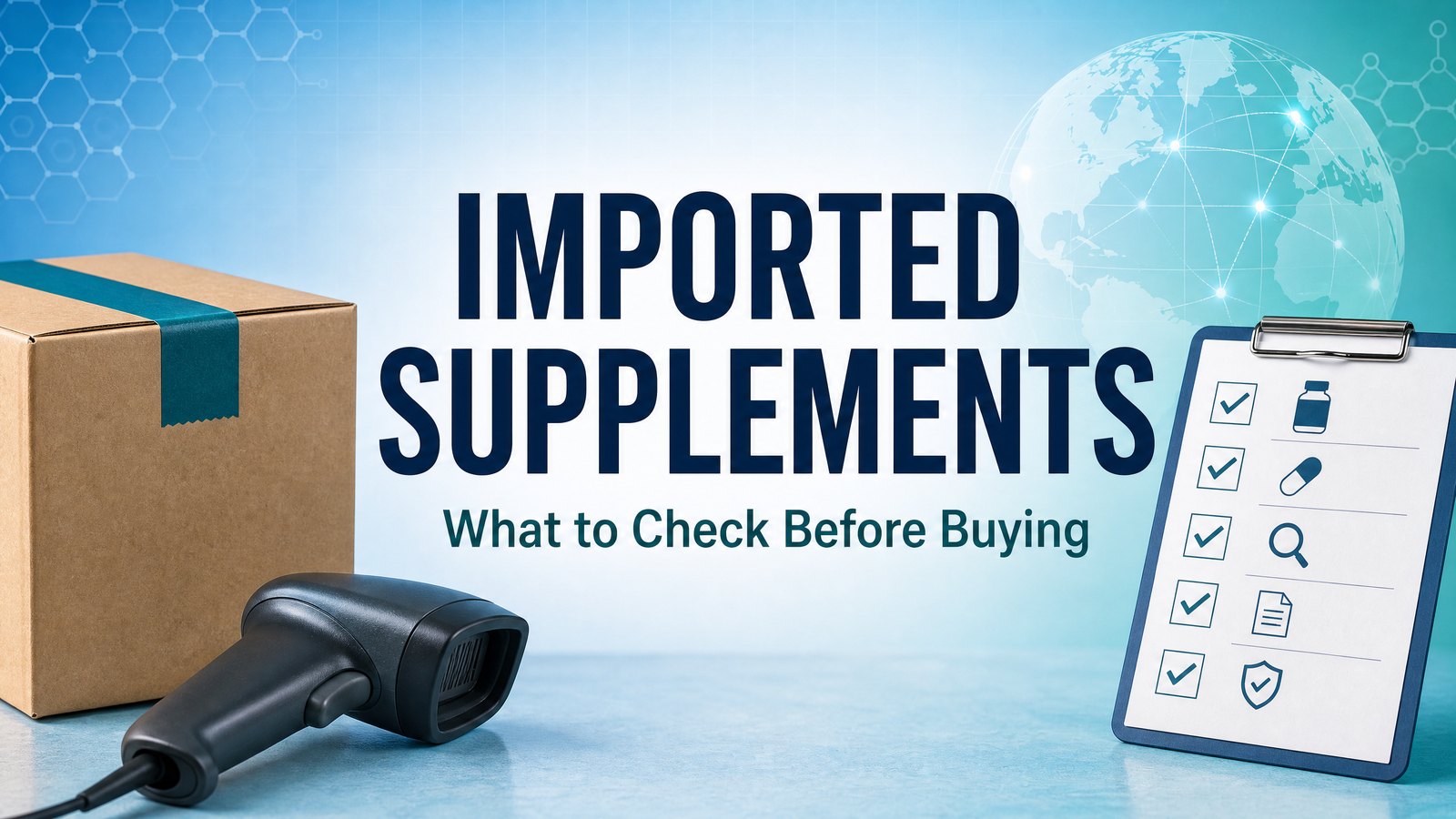
Use the checklist below before you buy from an international seller or an online marketplace.
| What to check | Why it matters | How to verify |
|---|---|---|
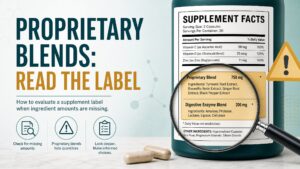
| Supplement Facts panel (dose, serving size, ingredient list) | Ensures you know what and how much you would be taking | Look for a legible “Supplement Facts” label. Compare active ingredient amounts to common U.S. formulations. See our primer on reading labels: /how-to-read-supplement-facts-label/ |
| Manufacturer name and contact info (address, phone, website) | Valid contact details let you ask questions and support traceability | Products sold legally should list a manufacturer/packer/distributor and contact method. Call or email to confirm. |
| Lot number and expiration date | Needed to identify a batch in case of recalls or adverse events | Make sure this information is printed on the package and matches the product listing. |
| Country of manufacture | Helps assess regulatory context and potential import issues | The label should indicate where the product was made or packaged. |
| Claims on the label and marketing | Misleading or disease-treatment claims are red flags | Avoid products that claim to “cure,” “treat,” or “prevent” disease. The FTC and FDA provide guidance on permitted claims. (FTC) (FDA) |
| Third-party testing and seals | Independent testing can reduce risk of contamination and verify ingredient amounts | Look for clear, verifiable test results from recognized labs. Be cautious of vague “certified” claims without a source. |
| Price and product presentation | Extremely low prices or copycat packaging can signal counterfeit or adulterated goods | Compare to typical U.S. retail prices and to manufacturer’s official site if available. |
| FDA notifications and health-fraud database entries | Shows known problems with specific products or ingredients | Search the FDA’s health fraud product database and medication-health-fraud notifications for product names or ingredients. (FDA) (FDA) |
Where to check official warnings and product records
- FDA health fraud product database: search for product names, ingredients, or companies to see past warnings and notices. (FDA)
- FDA medication health fraud notifications and sexual-enhancement/energy product notifications: these pages list specific products that were found to contain hidden drug ingredients or other illegal substances. (FDA) (FDA)
- FDA guidance on avoiding products contaminated with hidden ingredients: practical tips from the FDA about what to watch for and how to respond. (FDA)
Hidden ingredients and tainted products: a caution
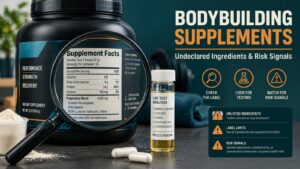
The FDA has documented cases where specific imported supplements — including certain honey-based products and some sexual-enhancement or energy supplements — contained hidden active drug ingredients or undeclared pharmaceuticals. These are specific findings about particular products; they do not mean every imported product is unsafe. Still, these examples show why verifying ingredients and searching FDA resources matters before you buy. (FDA) (FDA)
Red flags when shopping
- Claims that sound too good to be true (rapid weight loss, guaranteed disease cure, “miracle” effects). Refer to FTC guidance on health claims and advertising. (FTC)
- No manufacturer or distributor contact information on the label.
- Labels in unclear English or with inconsistent translations.
- Missing Supplement Facts panel, inaccurate dosage information, or nonstandard units.
- Excessive health claims paired with small print disclaimers.
- Multiple sellers offering the same product with different labels or packaging.
- Very low price or pressure to buy multiple bottles to “save” money.
Practical steps for safer purchases
- Read the label carefully. Confirm the Supplement Facts panel, serving size, and ingredient list. Use our label-reading guide for help: /how-to-read-supplement-facts-label/.
- Search FDA databases. Enter the product name, brand, or ingredients into the FDA’s health fraud product database and review medication-health-fraud notifications. (FDA) (FDA)
- Look for verifiable third-party testing. If a product claims third-party certification (e.g., for purity or ingredient verification), follow the certifier’s name to confirm that the test covers the specific product and lot.
- Check seller authenticity. Buy from reputable retailers or the manufacturer’s official site when possible. Review the seller’s return policy and contact options.
- Compare ingredient amounts. If the product contains active compounds that may interact with medications or conditions, compare amounts to common doses discussed in U.S. product labeling and consult a clinician where appropriate. See our resource on supplements and medication interactions: /supplements-medication-interactions-questions/.
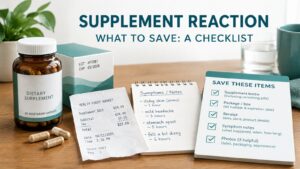
- Preserve packaging. Keep the bottle, label, lot number, and purchase records in case you need to report an adverse event or request a recall.
When to contact a clinician
- You are pregnant, breastfeeding, have chronic medical conditions (heart disease, diabetes, high blood pressure, liver or kidney disease), or take prescription medications. Supplements can interact with medicines and change their effects.
- You develop new symptoms after starting a supplement — especially palpitations, dizziness, severe headache, fainting, rash, breathing difficulty, jaundice, or unexpected bleeding.
- You are unsure whether a supplement could affect your prescribed medications or conditions. Your clinician can advise whether the product is safe for you to try.
How to report problems
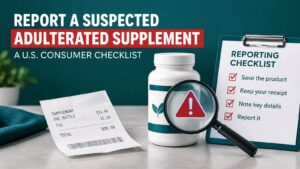
If you suspect a product is contaminated, contains hidden ingredients, or caused harm, the FDA accepts reports from consumers. The FDA provides ways to contact them about suspected problems with drugs and similar products. Reporting helps protect others and can trigger an investigation. (FDA)
Limitations and realistic expectations
- FDA oversight: the FDA monitors products on the market and investigates reports of adulteration or mislabeling, but it does not test every supplement sold, and supplements do not require premarket approval in the U.S. (FDA)
- Third-party testing is helpful but not foolproof. Independent lab testing can reduce risk, but certification varies in scope and standards.
- Not all safety hazards are obvious. Some contaminants or hidden pharmaceutical ingredients require laboratory analysis to detect.
Safety disclaimer
This article provides general information about consumer precautions and does not replace professional medical advice. It does not diagnose, treat, or prevent any disease.
Final notes
Imported supplements can be safe and useful, but they require an added layer of scrutiny. Checking labels, verifying seller and manufacturer information, consulting FDA resources, and speaking with a clinician when you have health concerns are practical steps to reduce risk.
Safety disclaimer
This article provides general information and is not medical advice. It is not a substitute for professional medical evaluation. If you have health concerns, consult a licensed clinician.
References
- https://www.fda.gov/drugs/medication-health-fraud/avoiding-products-contaminated-hidden-ingredients
- https://www.fda.gov/consumers/health-fraud-scams/tainted-honey-based-products-hidden-active-drug-ingredients
- https://www.fda.gov/consumers/health-fraud-scams/health-fraud-product-database
- https://www.fda.gov/food/dietary-supplements
- https://www.fda.gov/food/information-consumers-using-dietary-supplements/questions-and-answers-dietary-supplements
- https://www.fda.gov/food/dietary-supplements-guidance-documents-regulatory-information/dietary-supplement-labeling-guide
- https://www.fda.gov/drugs/medication-health-fraud-notifications/sexual-enhancement-and-energy-product-notifications
- https://www.fda.gov/drugs/medication-health-fraud/medication-health-fraud-notifications
- https://www.ftc.gov/news-events/topics/truth-advertising/health-claims
- https://www.ftc.gov/business-guidance/resources/health-products-compliance-guidance
- https://www.fda.gov/about-fda/cder-contact-information/ways-consumers-contact-fda-about-human-drugs
Last reviewed: August 2026
VitaEvidence Editorial Team