In this guide
Snacks can help bridge the time between meals, steady energy, and support concentration — when they are practical, balanced, and safely handled. This guide explains how to combine protein and fiber, choose portions that fit your day, read labels quickly, and keep snacks safe for work or school.
Why combine protein and fiber?
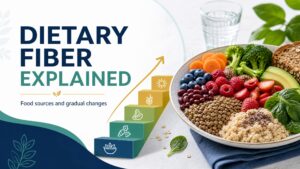
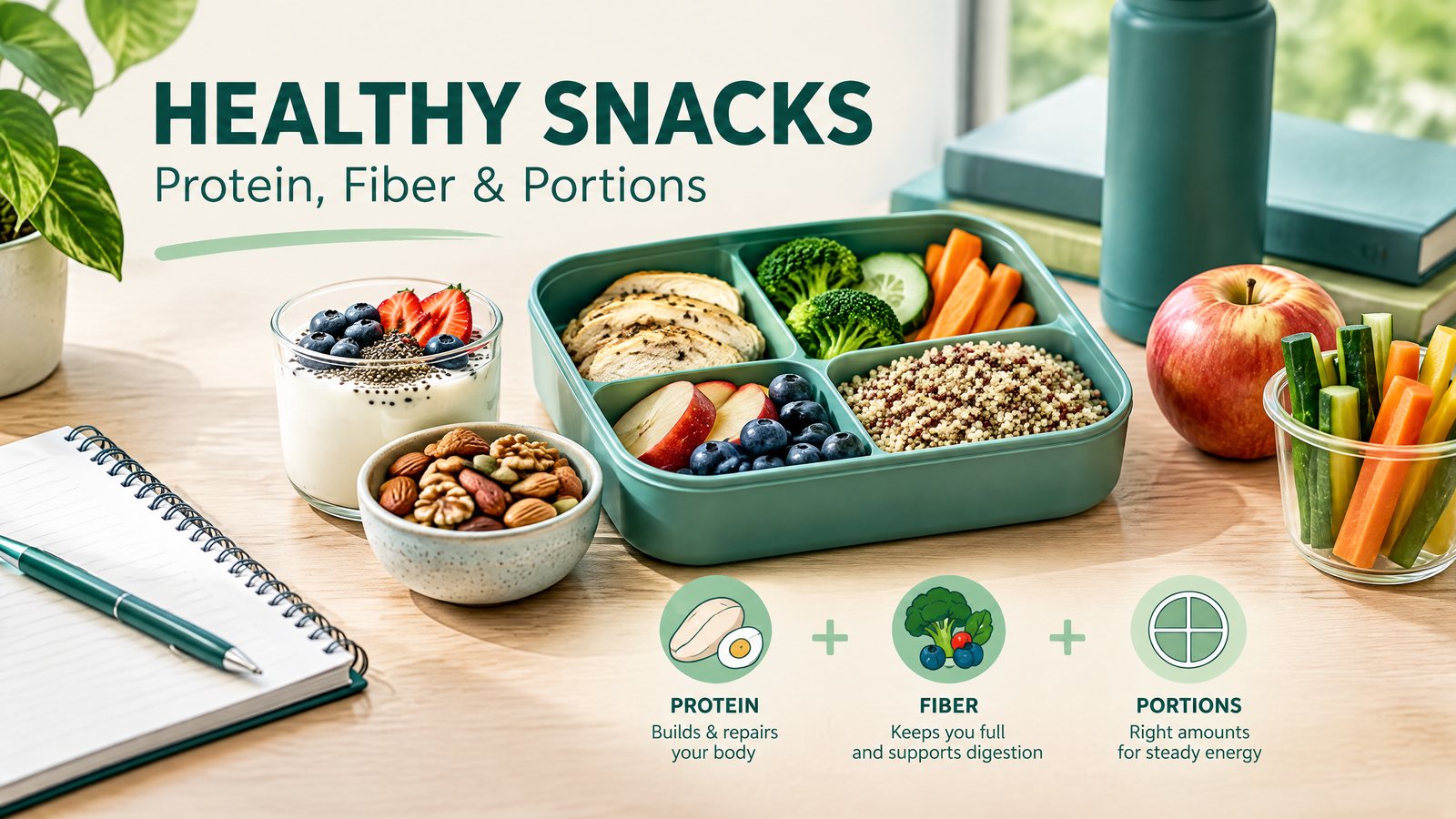
Protein contributes to tissue repair and helps you feel satisfied after eating; fiber supports digestion and regularity and tends to slow how quickly foods are absorbed. Choosing snacks that include both can help you stay comfortable and focused between meals. These roles of protein and fiber are described in authoritative nutrient resources.
Quick principles for picking snack combos
- Pair a protein source with a fiber-rich carbohydrate: protein + fruit, vegetables, legumes, or whole grains.
- Aim for minimally processed foods when possible: nuts, yogurt, fresh fruit, cut vegetables, hummus, canned beans, or whole-grain crackers.
- Think convenience and storage: select non-perishables for long days, or pack perishable items in an insulated lunchbox with a cold source.
Portable snack examples
- Greek-style yogurt or cottage cheese with fresh berries or a small portion of high-fiber cereal.
- Apple or pear slices with peanut or other nut butter (watch for allergy rules in schools).
- Hummus with carrot sticks or whole-grain pita or crackers.
- A hard-boiled egg (kept cold) and a piece of fruit.
- A small bag of mixed nuts and a dried-fruit portion for fiber (choose unsalted or low-sodium versions).
- Whole-grain toast or crackers with canned tuna or salmon (packed with an ice pack if needed).
Practical portion guidance
Portion needs vary by age, activity and hunger. Rather than strict calorie targets, aim for snack portions that satisfy until your next planned meal without replacing it. Typical practical units include a piece of fruit, a small cup of yogurt, a handful of nuts, a couple of tablespoons of hummus, or a single-serve package of canned tuna. For children, use smaller versions of adult snacks and follow any school guidance on permitted foods.
How to read a Nutrition Facts label for snacks
- Check the serving size first — the package may contain more than one serving.
- Look at the grams of protein and the grams of dietary fiber to see how much of each the serving provides.
- Scan the ingredient list for whole-food ingredients (e.g., nuts, whole grains) and for allergens, and check the added sugars line if you want lower-sugar choices.
These elements of the label help you compare packaged snacks quickly when you’re shopping or packing for the week.
Food safety and packing tips
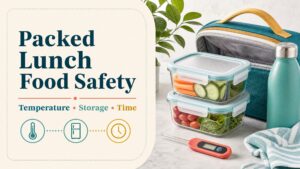
- Pack perishable items (dairy, meat, eggs, cut fruit/vegetables) in an insulated lunchbox with a refrigerated element or ice pack so they stay cool until eaten.
- Wash hands or use hand sanitizer before handling snacks; keep utensils and surfaces clean.
- Avoid cross-contact of allergens by using separate containers and cleaning shared surfaces and utensils if someone has a food allergy.
- If you take leftovers or prepared foods, store and transport them in sturdy, sealed containers to reduce spills and contamination.
Follow workplace or school policies about refrigerated storage and allergy rules.
Allergies and school rules
If you or your child has a food allergy, always read labels for the Food Allergen statement and the ingredient list. Many schools have specific rules — for example, nut-free tables or classrooms — so coordinate with administrators and caregivers. For suspected or known allergies, have an action plan and any prescribed medications available as directed by your health provider.
When to seek care
- Seek immediate medical attention for signs of a severe allergic reaction such as difficulty breathing, swelling of the face or throat, or loss of consciousness.
- See a health professional if you develop severe stomach pain, persistent vomiting, high fever, or dehydration after a meal — these can be signs of a foodborne illness that may need medical care.
- Talk to a registered dietitian or clinician about special nutrition needs (e.g., growth concerns in children, older-adult nutrition, or long-term medical conditions).
Bottom line
Choose snacks that combine a protein source and a fiber-rich food to help bridge meals. Use simple portion cues (a piece of fruit, a small cup of yogurt, a handful of nuts), read Nutrition Facts and ingredient lists when choosing packaged items, and follow school or workplace rules about allergies and refrigeration. Pack perishables with an insulated carrier and keep hands and surfaces clean. These practical steps make snacks more satisfying, safer, and easier to manage for busy days.