In this guide
- Key Takeaways
- What basal body temperature is—and why it changes
- How to measure BBT more consistently
- What the pattern can tell you
- It can suggest that ovulation already happened
- It can be combined with other fertility signs
- What the pattern cannot tell you reliably
- It cannot pinpoint the fertile window in advance
- It cannot diagnose a condition from one unusual chart
- Common factors that blur interpretation
- Safety and when to seek care
- A practical way to use a BBT chart
- References
Basal body temperature (BBT) tracking is a low-cost way to observe one small sign of the menstrual cycle: the slight temperature rise that often follows ovulation. It can help you look back at whether ovulation probably occurred and notice how your cycles vary. It is less useful as a stand-alone way to forecast ovulation, diagnose a hormone problem, or guarantee that a day is “safe” from pregnancy.
Treat a BBT chart as one piece of information—not a medical test or a substitute for contraception or clinical evaluation.
Key Takeaways
- BBT is your temperature at rest, measured consistently—usually immediately after waking and before getting out of bed.
- After ovulation, progesterone commonly causes a small, sustained rise in temperature. The shift is usually seen after ovulation, not before it.
- A chart may support the conclusion that ovulation occurred, but it cannot reliably predict the exact day in advance.
- Illness, fever, disrupted sleep, alcohol, travel, changing measurement times, and some medicines can make a chart difficult to interpret.
- BBT alone is not a reliable method for preventing or achieving pregnancy. If pregnancy prevention matters, use a method with evidence for that purpose and consider STI protection.
What basal body temperature is—and why it changes
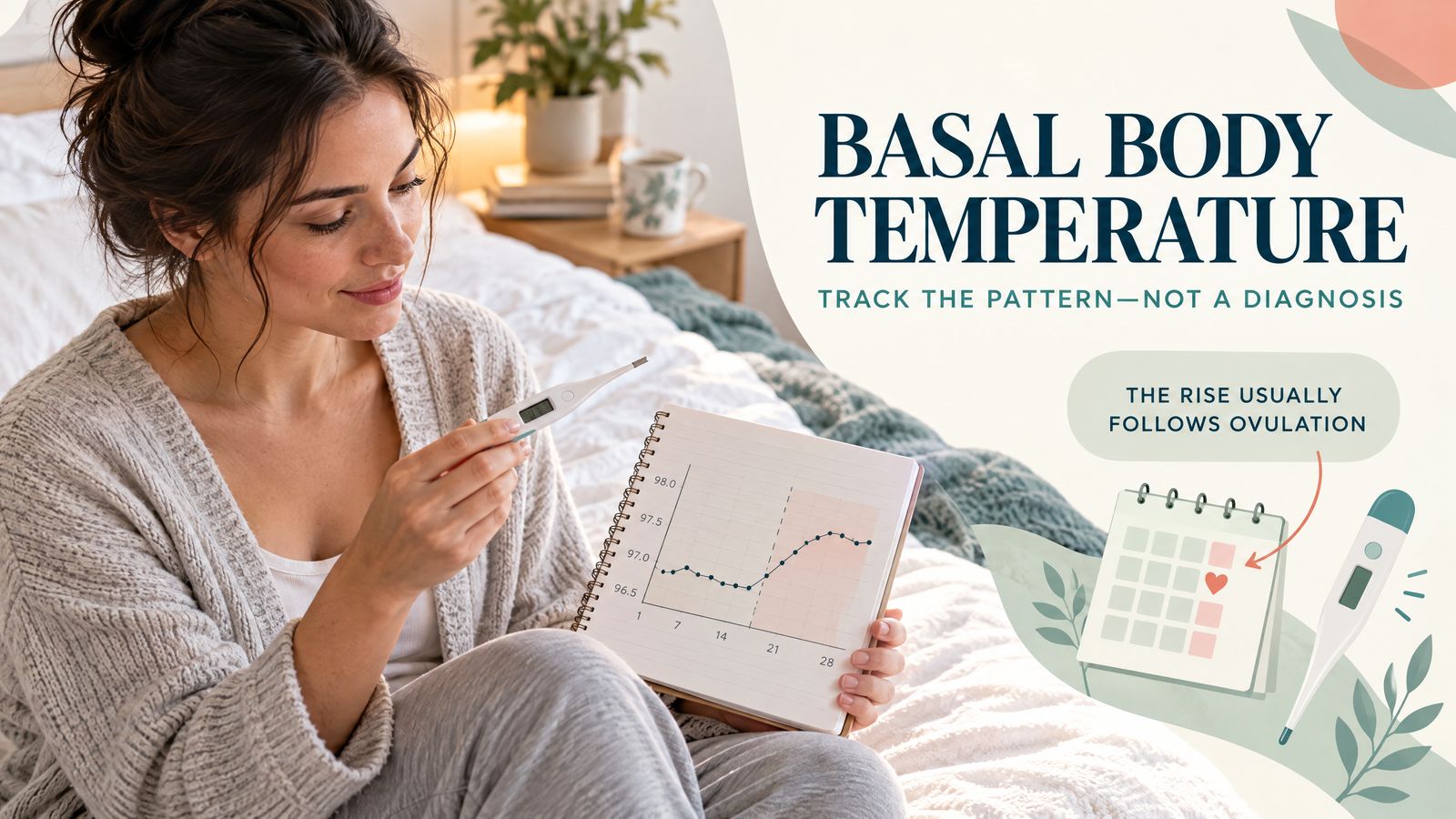
BBT is the body’s temperature when you are fully at rest. During the first part of many cycles, temperatures tend to remain in a lower range. After ovulation, the hormone progesterone has a warming effect, so temperatures often move modestly higher and remain elevated until the next period. The American College of Obstetricians and Gynecologists (ACOG) describes a typical increase of about 0.5–1°F, although an individual pattern may be smaller, larger, less clear, or absent in a particular cycle.
The menstrual cycle is counted from the first day of bleeding to the first day of the next period. The Office on Women’s Health considers cycles of about 24–38 days regular for many adults.
How to measure BBT more consistently
Consistency matters more than chasing a particular number:
- Use a thermometer that displays small temperature differences and choose one measurement site, such as oral measurement, for the whole chart.
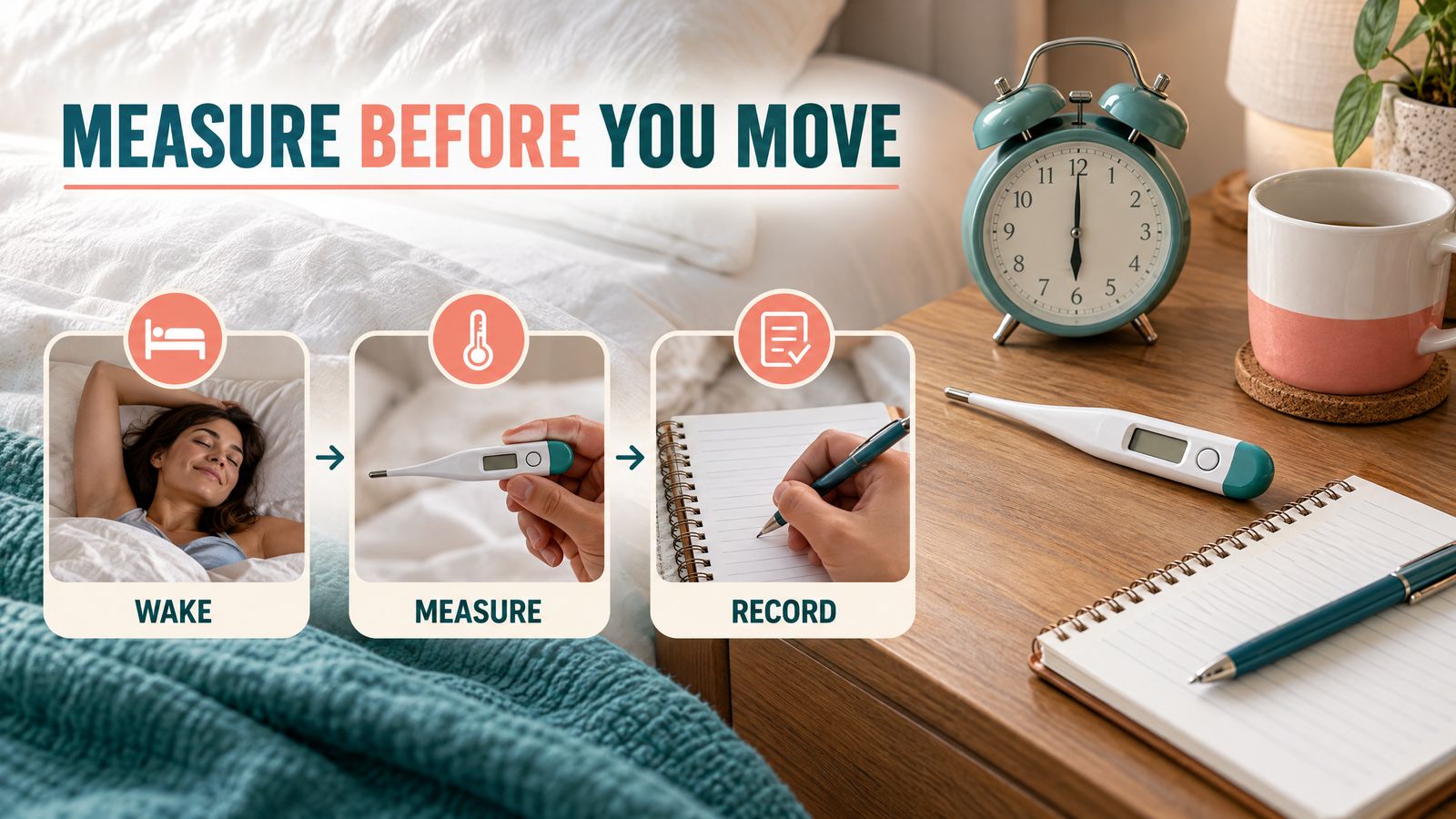
- Take the temperature every morning immediately after waking, before sitting up, walking, eating, drinking, or exercising.
- Aim for a similar time and a reasonably uninterrupted period of sleep when possible.
- Record the temperature and note anything that might affect it, such as fever, illness, late or fragmented sleep, alcohol, travel, a night shift, or a change in measurement time.
- Mark the first day of menstrual bleeding and continue for several cycles rather than drawing conclusions from one month.
What the pattern can tell you
It can suggest that ovulation already happened
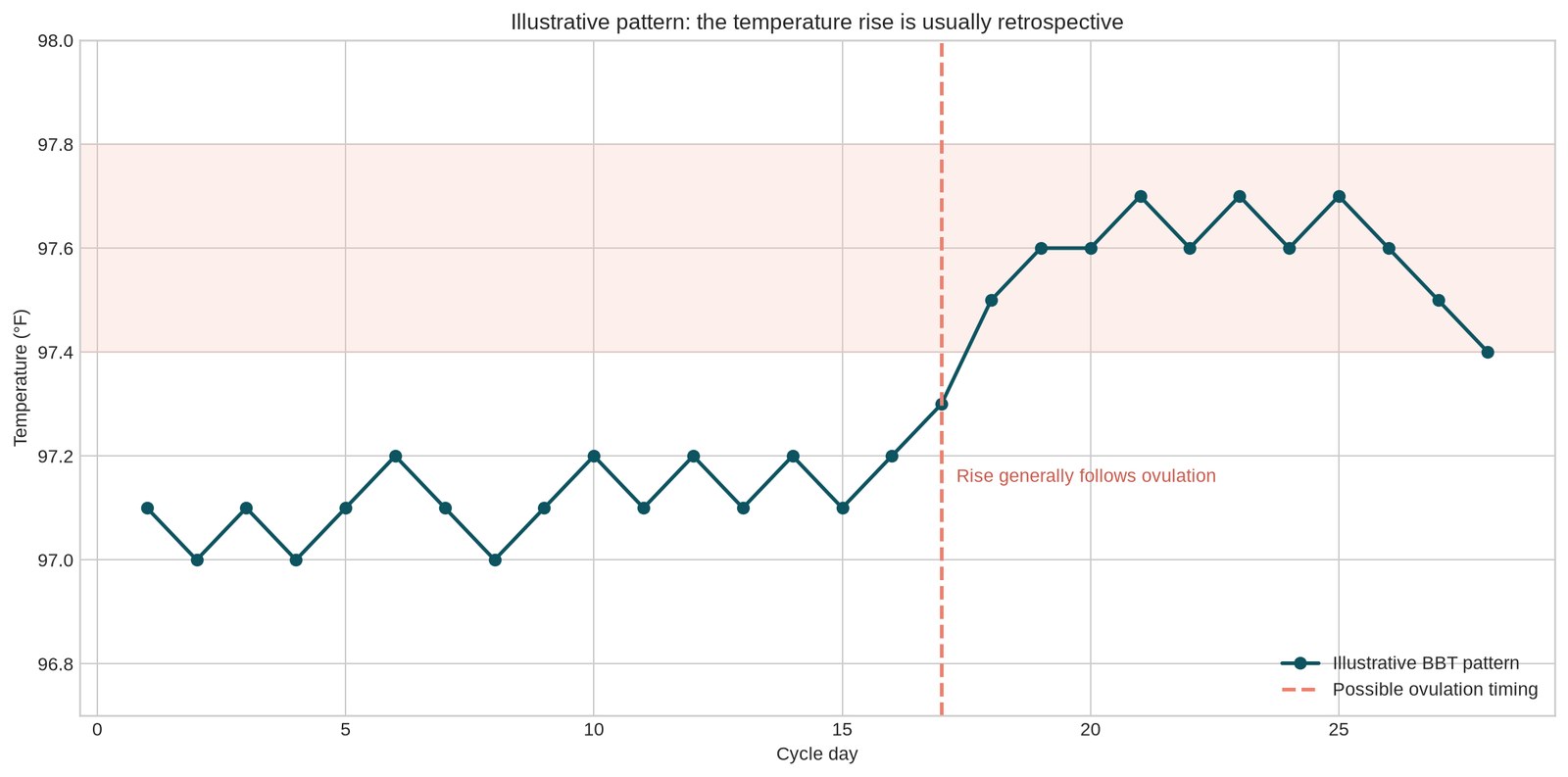
A sustained upward shift after a lower-temperature baseline is compatible with ovulation having occurred. A clinician may use charting over two or three cycles as part of an infertility history. ACOG notes that charting monthly temperature changes can confirm ovulation in some cases, but it cannot predict ovulation.
The rise generally follows release of the egg, so the chart is retrospective rather than a dependable advance alert.
It can be combined with other fertility signs
Cervical mucus often becomes clearer, wetter, and more slippery before ovulation. Urine tests for luteinizing hormone (LH) detect a preceding surge; a positive result suggests ovulation may occur within roughly 24–48 hours, though it is not a guarantee. Combining signs may provide more information than BBT alone, but requires careful learning and consistent use.
What to record with each measurement: Keeping this context makes an unusual reading easier to interpret.
| What to record | Why it matters |
|---|---|
| Measurement time | A different wake time can shift the reading. |
| Sleep and illness | Fragmented sleep or fever may make the value less comparable. |
| Alcohol, travel, or night work | These can add context to an unusual point. |
What the pattern cannot tell you reliably
It cannot pinpoint the fertile window in advance
Sperm can survive in the reproductive tract for several days, while the egg remains viable for a much shorter period after ovulation. Because BBT generally rises after ovulation, waiting for the rise can miss the days when pregnancy is possible. A calendar prediction based only on past cycles can also be wrong when ovulation shifts.
For people trying to conceive, BBT may help identify a pattern after the fact, but cervical-mucus observations, LH testing, and—when indicated—clinical tests may be more useful for identifying the fertile period. For people avoiding pregnancy, BBT alone is not a dependable contraceptive plan. ACOG reports higher pregnancy rates with typical use than with perfect use, and the CDC notes that these methods do not protect against sexually transmitted infections. Condoms can reduce STI risk, but no tracking method replaces a contraception conversation suited to your needs.
It cannot diagnose a condition from one unusual chart
A missing temperature rise may reflect an anovulatory cycle, but it may also reflect inconsistent measurement, disrupted sleep, a different thermometer or site, or illness. A temperature rise does not prove that an egg was released, establish egg quality, or show that other parts of reproduction are functioning normally.
Likewise, a higher temperature does not automatically mean pregnancy. Fever, alcohol, stress, travel, and other factors can affect readings. A chart is not a replacement for a pregnancy test or medical assessment.

Common factors that blur interpretation
The CDC specifically cautions that diseases that elevate body temperature can make temperature-based fertility-awareness methods difficult to interpret. Acute illness and fever are obvious examples. Other practical disruptors include:
- waking much earlier or later than usual;
- sleeping fewer hours or waking repeatedly;
- overnight work or jet lag;
- alcohol use the evening before;
- a different thermometer, measurement site, or technique;
- medications or health conditions that affect temperature or cycle regularity; and
- postpartum, breastfeeding, adolescence, or perimenopause, when cycle patterns may be less predictable.
When a reading is unusual, record the possible reason rather than deleting it; a note such as “fever” gives useful context.
Safety and when to seek care
BBT tracking is generally noninvasive, but it should not delay care. Contact a clinician if cycles repeatedly fall outside your usual range, are shorter than 24 days or longer than 38 days, or change substantially. Also seek evaluation for bleeding between periods, very heavy bleeding, severe pain, or symptoms that disrupt normal activities.
If you are trying to become pregnant, bring several months of charts to a clinician. Ask about an evaluation if pregnancy has not occurred after 12 months of regular unprotected intercourse when under 35, or after 6 months when 35 or older; seek advice sooner for very irregular or absent periods or known reproductive conditions. If you may be pregnant and have severe pain, fainting, or heavy bleeding, seek urgent care.
A practical way to use a BBT chart
Start with a simple goal: observe, do not grade yourself. Measure under similar conditions, record context, and look for trends across multiple cycles. Use the chart to prepare focused questions—for example, “I rarely see a sustained shift,” or “My cycles have become much less predictable”—rather than to label a condition.
The bottom line is that BBT can make the post-ovulation temperature pattern more visible. It can support a conversation about cycle timing and, in some circumstances, help confirm that ovulation likely occurred. It cannot reliably forecast ovulation on its own, diagnose an irregular pattern, confirm pregnancy, or provide STI protection. Used with those limits in mind, it is a useful observation tool—not a verdict about fertility or health.
References
- American College of Obstetricians and Gynecologists: Fertility Awareness-Based Methods of Family Planning
- American College of Obstetricians and Gynecologists: Evaluating Infertility
- Office on Women’s Health: Your Menstrual Cycle
- CDC: Classifications for Fertility Awareness-Based Methods
- Thijssen et al., “Fertility Awareness-Based Methods and Subfertility: A Systematic Review” (NIH/PubMed Central)