
In this guide
Why compare caffeine across drinks?
Caffeine is present in many commonly consumed beverages. Because amounts vary by beverage type, serving size, and brand, it’s easy to underestimate total daily intake if you consume several caffeine-containing items. Comparing totals helps you stay within recommended limits for your situation and avoid unwanted side effects such as jitteriness, sleep disruption, or digestive upset.
What authoritative sources say
The Office of Dietary Supplements (ODS) at NIH summarizes typical caffeine amounts in common beverages and notes that for most healthy adults, daily intakes up to about 400 milligrams are not associated with increased health risks. ODS also highlights that caffeine content varies widely and that pregnant people should limit intake (see references).
Estimating caffeine in common beverages
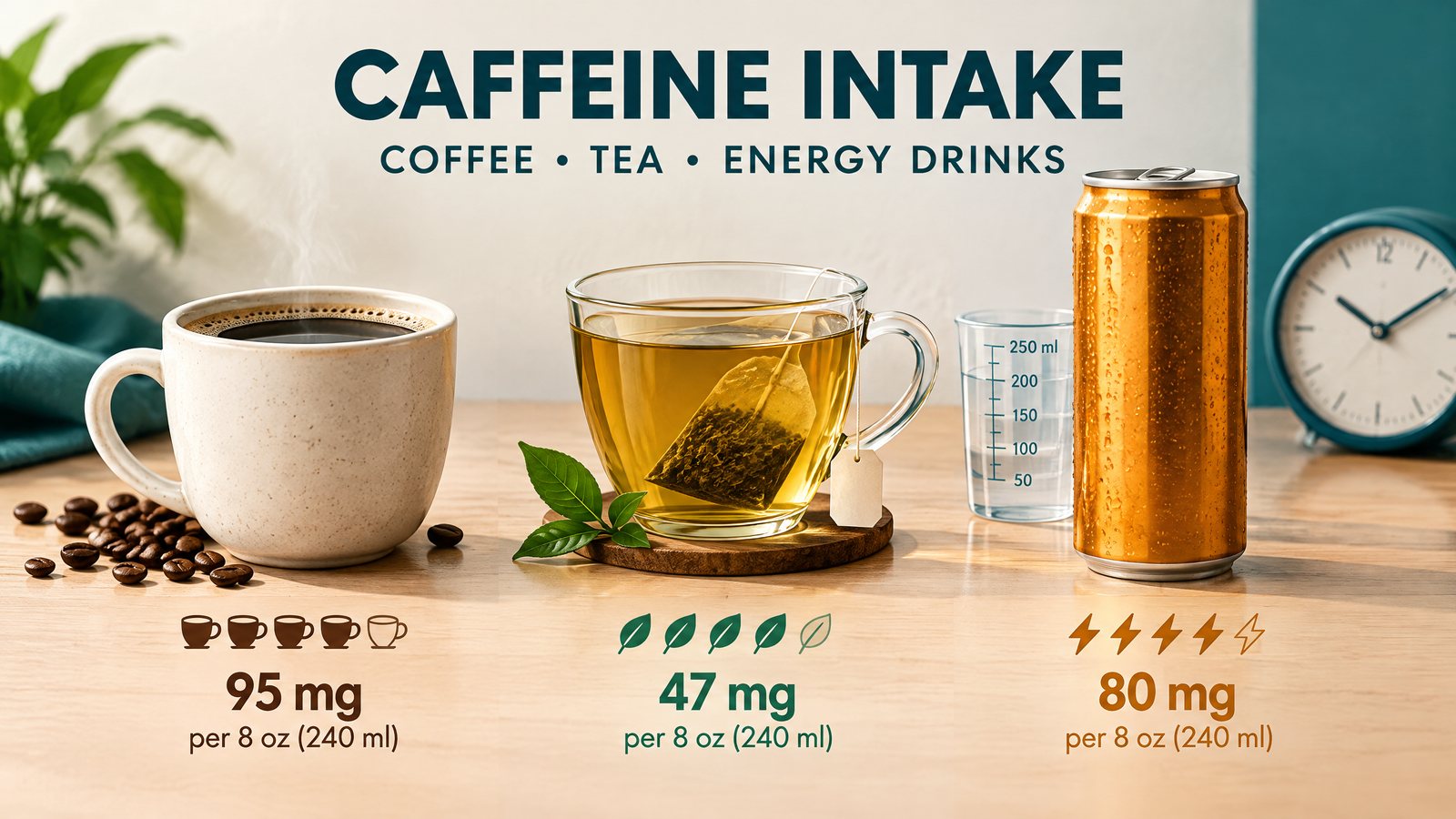
Caffeine content can be estimated using typical reference values, but remember that actual amounts vary by brewing method, portion size, and brand. For example, ODS reports typical values such as:
- 8-oz brewed coffee: about 95 mg
- 8-oz black tea: about 47 mg
- 12-oz cola: about 35 mg
Energy drinks and specialty coffee beverages vary widely in caffeine content; some have amounts comparable to or higher than a cup of brewed coffee. ODS emphasizes that variability and recommends checking product-specific information when available.
How to add up your total caffeine safely
- Start with serving sizes. Compare what you drink to the standard serving (for example, an 8‑oz cup or a 12‑oz can). Many coffee shop servings are larger than 8 oz and can contain multiple espresso shots.
- Check the label or manufacturer information. Some packaged beverages list caffeine per serving on the label; others show it on the company website. The FDA’s guidance on the Nutrition Facts label explains how to use serving size and nutrition information; note that caffeine is not always listed on the Nutrition Facts panel.
- Use standard estimates when label info isn’t available. Use reference values (like those summarized by ODS) to estimate amounts per typical serving, and add them up across all beverages consumed that day.
- Include less obvious sources. Chocolate, some medications, and flavored drinks can contain caffeine. Check ingredient lists and product information.
- Watch for concentrated forms. Espresso shots, energy shots, and some highly concentrated cold-brew products can add substantial caffeine in a small volume.
Example calculation
If you have one 8‑oz brewed coffee (~95 mg), one 8‑oz black tea (~47 mg), and a 12‑oz cola (~35 mg) during the day, the total would be about 177 mg using typical reference values. If you then add an energy drink, check its label—many list caffeine per serving online—before adding that number to your daily total.
Practical tips for label reading and planning
- Look at the serving size first, then the caffeine amount (if listed). Multiply if you drink more than one serving.
- When a product doesn’t list caffeine, use the manufacturer’s website or contact customer service for details.
- If you’re monitoring intake (for sleep, pregnancy, or sensitivity), keep a simple log for a few days: beverage, serving size, and estimated mg. That helps spot patterns.
- Follow overall healthy eating patterns recommended by federal guidance when choosing beverages, and treat caffeine-containing drinks as part of your total beverage plan.
Who should be more cautious?
Caffeine sensitivity varies. The ODS notes that pregnant people should limit caffeine intake and that some individuals—children, adolescents, people with certain medical conditions, or those taking specific medications—may need lower limits or guidance from a clinician. If you have a health condition, are pregnant, breastfeeding, or are considering caffeine restriction for another reason, ask a health professional for personalized advice.
When to seek care
- Seek immediate medical help for severe symptoms after caffeine intake, such as fainting, chest pain, severe palpitations, difficulty breathing, or seizures.
- Talk to your clinician if you notice persistent symptoms you think are linked to caffeine (trouble sleeping, ongoing heart palpitations, severe anxiety, or unexplained digestive symptoms).
- If you are pregnant, breastfeeding, caring for children, or taking medications, discuss safe caffeine limits with your health-care provider.
Bottom line
Caffeine amounts vary across coffee, tea, soda, and energy drinks. To compare total intake, check serving sizes, use label or manufacturer information when available, and use standard reference values cautiously when they aren’t. For most healthy adults, commonly cited guidance indicates that daily intakes up to about 400 mg are not associated with increased health risks, while pregnant people are advised to limit intake further. If you have health concerns or symptoms related to caffeine, consult your clinician.
References
Selected official sources used in this article: