
In this guide
- Why cereal labels matter
- Key label elements to check
- Serving size
- Calories and total carbohydrate
- Fiber
- Iron
- Sugar (total and added)
- Common label-reading traps and how to avoid them
- Practical label-reading examples
- Tips for older adults and people with digestive concerns
- When to seek care
- Bottom line
- References
This draft is for editorial review. It offers practical, evidence-based guidance on reading breakfast cereal labels so you can compare fiber, iron, added sugar, and serving-size information. It does not provide individualized medical advice.
Why cereal labels matter
Packaged breakfast cereals vary widely in whole-grain content, fiber, iron fortification, and sugar. The Nutrition Facts label and ingredient list are the best tools for comparing products. Official U.S. guidance—such as the Dietary Guidelines and MyPlate—encourages making choices that fit your overall eating pattern and nutrient needs rather than relying on marketing claims alone.
Key label elements to check
Serving size
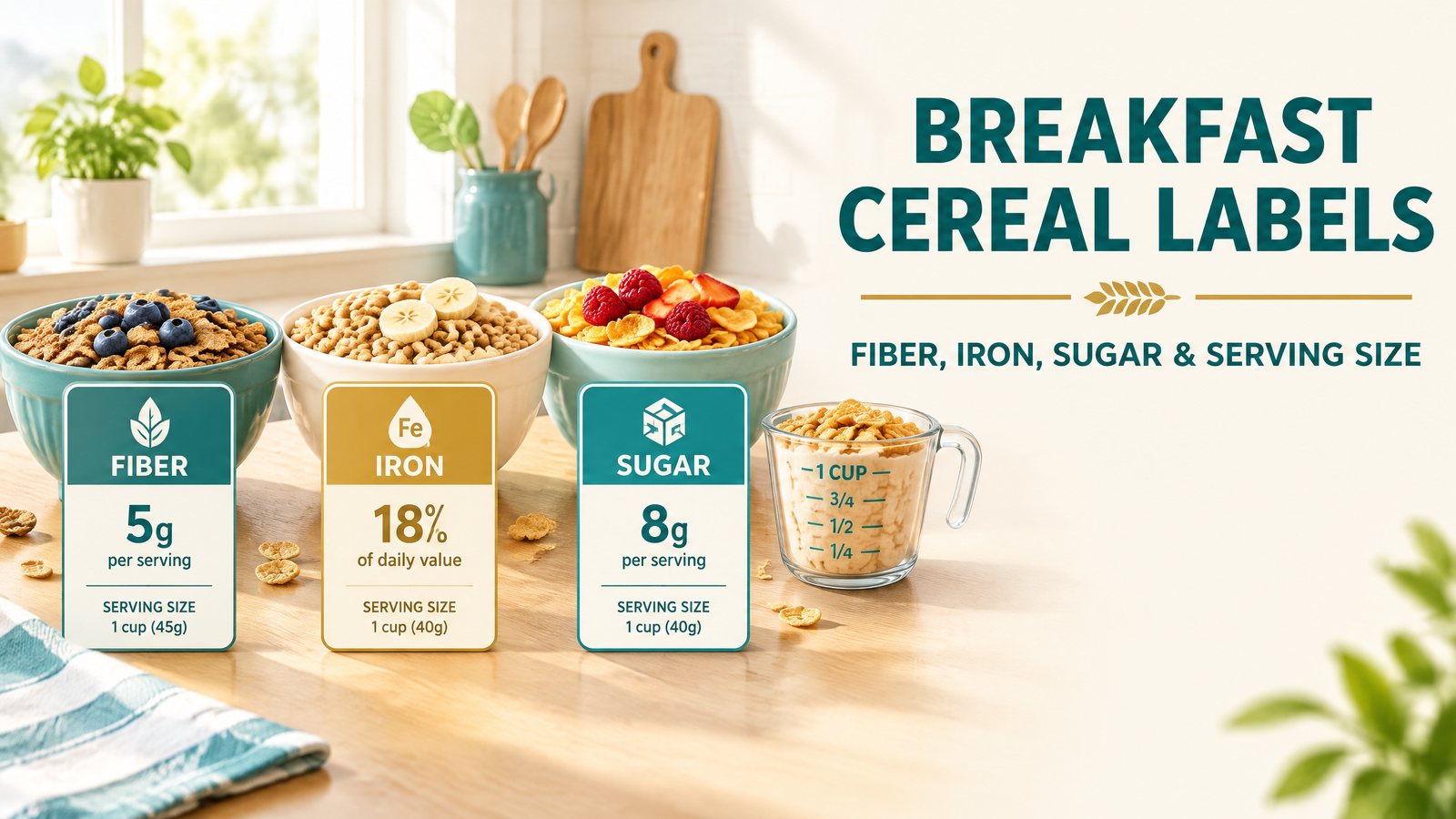
The serving size at the top of the Nutrition Facts label is the amount manufacturers use to calculate calories and nutrients. Compare the serving size to what you actually eat. If you pour 1.5 times the labeled serving, multiply the listed calories, sugar, and other nutrients by 1.5 to get the real intake.
Calories and total carbohydrate
Calories come from carbohydrate, protein, and fat. For cereals, total carbohydrate includes fiber and sugars. If you are watching carbohydrate for health reasons, pay attention to both total carbohydrate and fiber.
Fiber
Fiber on the Nutrition Facts label reflects the amount per serving. Higher fiber can help with regularity and feeling full, but increases in fiber intake are best made gradually and with adequate fluids. The Office of Dietary Supplements provides reliable information on fiber types and how they affect digestion.
Iron
Many ready-to-eat cereals are fortified with iron. The label shows iron amount and the % Daily Value (%DV). Fortified cereals can be a practical source of iron, especially for people with higher needs. Check the %DV to see how much a serving contributes to daily iron needs and consider how cereal fits with other iron sources in your diet.
Sugar (total and added)
Nutrition Facts lists total sugars and, when present, added sugars. The Dietary Guidelines advise limiting added sugars as part of a healthy eating pattern. A cereal with similar calories may differ dramatically in added sugar—for example, two cereals with the same calories per serving can have very different amounts of added sugar.
Common label-reading traps and how to avoid them
- Small serving sizes: Check if the listed serving is unusually small. Multiply nutrients to reflect what you actually eat.
- Whole-grain marketing: Terms like “made with whole grain” can mean varying amounts. Look for whole grain listed near the top of the ingredient list (ingredients are listed by weight).
- Fiber claims vs. whole-grain content: Some cereals add isolated fibers (like inulin or resistant starch) to boost fiber numbers. That increases labeled fiber but may have different effects than intact whole grains.
- Iron fortification: Fortified iron makes a cereal look nutrient-rich. Consider iron relative to other nutrients and age-appropriate needs.
Practical label-reading examples
When comparing two boxes, line up these items:
- Serving size (is it 3/4 cup or 1 1/4 cups?).
- Total and added sugars per labeled serving.
- Total fiber (grams) and the %DV for iron.
- Ingredient order—look for whole grain as a top ingredient and the presence of added sugar or syrups near the beginning of the list.
If you want more sustained fullness, a cereal with higher fiber and pairing it with a protein source (for example, milk or yogurt) can help make breakfast more balanced within your overall eating pattern.
Tips for older adults and people with digestive concerns
The National Institute on Aging highlights planning meals that fit changes in appetite and nutrient needs over time. If you increase fiber, do so gradually and drink extra fluids to reduce the likelihood of gas or constipation. The National Institute of Diabetes and Digestive and Kidney Diseases provides guidance on how dietary fiber affects constipation and gas.
When to seek care
- Unexpected or severe abdominal pain, persistent vomiting, or difficulty swallowing.
- Signs of iron overload or iron-deficiency concerns—talk with a clinician before using fortified foods or supplements to treat a medical condition.
- Possible allergic reactions to cereal ingredients (for example, nuts or wheat): seek immediate care for hives, swelling, trouble breathing, or fainting.
Bottom line
Use the Nutrition Facts label and ingredient list to compare cereals on serving size, fiber, iron, and added sugar. Watch for serving-size tricks, prefer whole-grain ingredients near the top of the list, and increase fiber gradually. Consider cereal as one piece of your overall eating pattern, and consult a clinician for individualized concerns about iron or digestive symptoms.