In this guide
Canned vegetables, beans, soups, and prepared foods can be convenient and economical. They can also be an important source of nutrients such as fiber and protein. But many canned foods contain added sodium, which some people try to limit. This article explains how to compare canned food labels, practical rinsing options, and how to use canned foods in lower-sodium eating patterns.
Why check sodium on canned foods?
Federal dietary guidance encourages limiting excess sodium as part of a healthy eating pattern. The Nutrition Facts label and ingredient list on canned foods are the best place to start when comparing products and planning meals.
How to read the Nutrition Facts label for sodium
- Start with the serving size. The Nutrition Facts panel lists a serving size and the number of servings per container. If you eat more than the listed serving, you’ll get more sodium than the label shows for one serving.
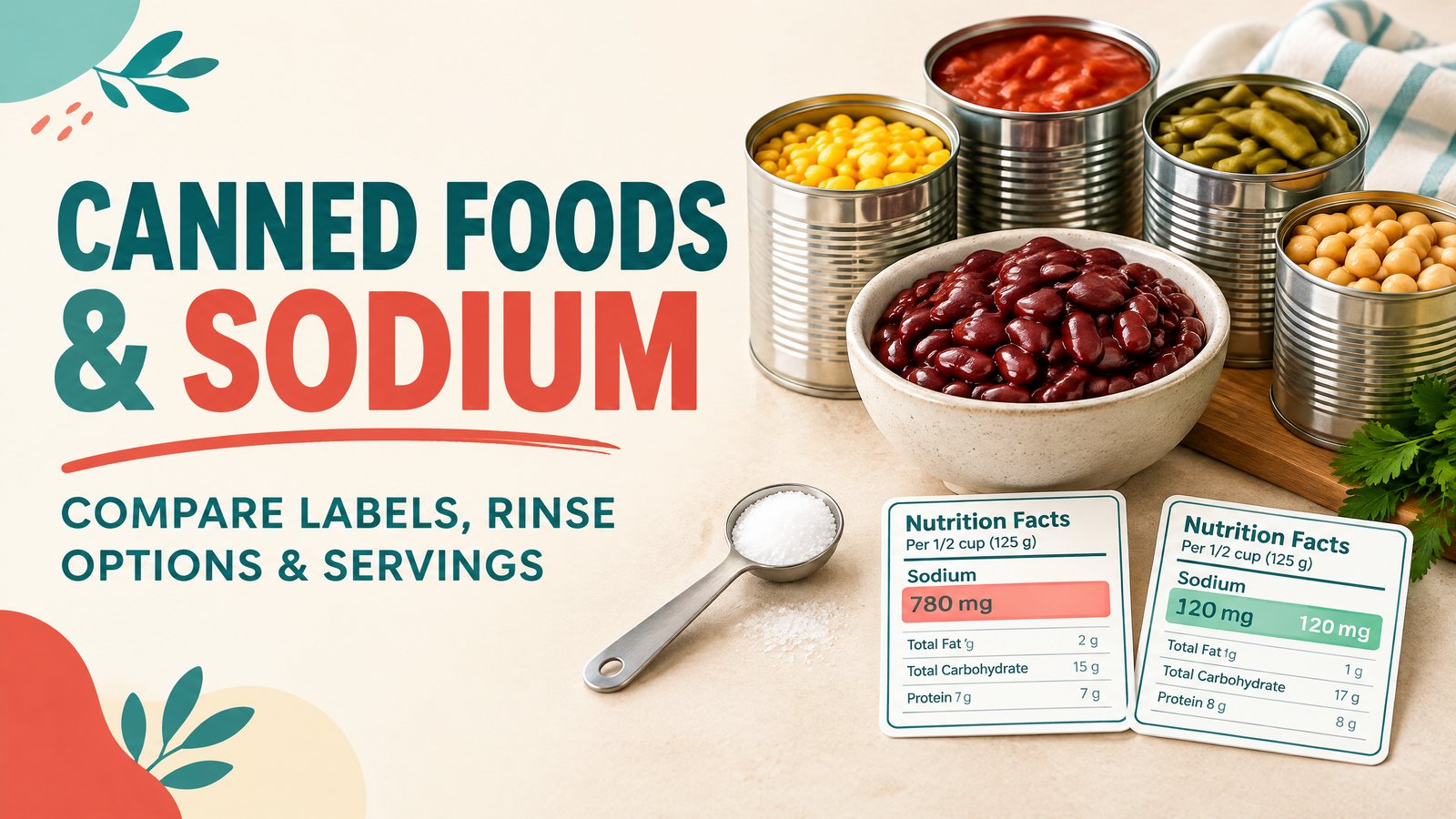
- Look at sodium in milligrams and % Daily Value (%DV). The label lists sodium in milligrams and often shows the %DV. %DV helps you judge whether a serving is high or low relative to a typical daily amount.
- Compare similar products by the same serving amount. To compare brands, make sure you’re looking at the same serving size. If one label uses a smaller serving, scale the numbers so you’re comparing apples to apples before deciding.
- Check the ingredient list. Ingredients are listed in order by weight. Words like “salt,” “sodium,” or other sodium-containing terms indicate added sodium sources.
Practical steps to compare canned items
- Pick the product category (for example, canned green beans vs canned tomato sauce) so you compare similar foods.
- Note the serving size and multiply if you’ll eat more than one serving per sitting (or per recipe).
- Compare sodium per serving and %DV across brands. Favor lower sodium and lower %DV for the portion you’ll actually eat.
- Look for labels such as “no salt added,” “low sodium,” or “reduced sodium” when available, and check their Nutrition Facts to confirm they meet your needs.
- Plan recipes to balance sodium: pair canned foods with fresh or frozen unsalted ingredients, herbs, acid (lemon or vinegar), and spices instead of adding extra salt.
What about draining and rinsing canned foods?
Draining and rinsing canned foods is a common strategy people use to reduce surface sodium. The amount of sodium removed by rinsing can vary by product and how it was processed. Rinsing may help reduce some of the sodium that’s in the packing liquid, and draining reduces added liquid volume in recipes.
Because the sodium content and the effect of rinsing vary, consider these practical tips:
- If a product lists a high sodium amount and you plan to use it in a recipe, draining and rinsing may lower some of the sodium that accompanies the food. Check the label and, when in doubt, opt for lower-sodium or no-salt-added varieties.
- For canned beans, draining and rinsing are commonly used steps before adding them to soups or salads. For canned vegetables and sauces, the texture and flavor change after rinsing, so test a small amount first.
- When a recipe relies on the canning liquid for flavor or body (for example, some soups or sauces), substituting low-sodium broth or water allows you to control added salt.
Label-reading examples and planning ideas
- Buy a can labeled “no salt added” for tomato products and use herbs and citrus to build flavor.
- Choose lower-sodium canned beans and rinse them before adding to salads, chili, or casseroles; combine with fresh vegetables for fiber and variety.
- When comparing canned soups, match serving sizes. If the serving is half the can and you typically eat a whole can, double the sodium and %DV to reflect what you’ll eat.
Food safety and handling
Follow safe food-handling practices when using canned foods: store unopened cans in a cool, dry place, inspect cans for severe dents or leaks before use, and heat prepared canned foods according to package directions. For general food-safety steps to prevent foodborne illness, follow guidance from public health agencies.
When to seek care
- Seek immediate care for signs of a severe allergic reaction after eating a packaged food (such as difficulty breathing, swelling of the face or throat). See allergen labeling information on packaged foods and follow up with a health professional.
- If eating certain canned foods consistently causes digestive problems such as severe, persistent abdominal pain, vomiting, or dehydration, contact your health care provider.
- If changes in diet—such as increasing beans—cause ongoing bothersome gas or constipation, discuss adjustments with a clinician or registered dietitian. Trusted digestive health resources can help explain common causes and strategies.
Bottom line
Canned foods are convenient and can be part of a healthy eating pattern. Use the Nutrition Facts label and ingredient list to compare sodium per serving and %DV, choose lower-sodium or no-salt-added versions when available, and consider draining and rinsing to reduce some surface sodium. Combine canned foods with fresh or unsalted ingredients and seasonings to control overall sodium in recipes. For allergy or severe digestive concerns, seek appropriate medical care.