
In this guide
This article offers practical, evidence-informed guidance on including protein at breakfast. It explains why protein matters for meals, suggests realistic targets people commonly use, lists foods that count as protein sources, and gives label-reading and safe-handling tips. This is general information, not personalized medical or dietetic advice.
Why think about protein at breakfast?
Protein is one of the three macronutrients your body uses for structure and function. Official resources explain that protein foods are an essential part of a healthy eating pattern and that choices should be varied across food groups (MyPlate, Dietary Guidelines, NIA Healthy Eating). How much protein you need depends on age, sex, body size, health conditions, and activity level; the Office of Dietary Supplements describes the basis for daily needs and the recommended dietary allowance (RDA) concept (ODS Protein Fact Sheet).
How much protein is practical at breakfast?
Specific daily needs vary. The RDA gives a per-day reference (see the ODS fact sheet), but practical meal planning often focuses on spreading protein across eating occasions. Many people and meal-planning resources use a practical breakfast target in the neighborhood of 15–30 grams of protein as a simple goal to help include a meaningful protein portion early in the day. This is not a formal federal rule or clinical prescription — individual targets should be adjusted for personal needs, and you can confirm amounts using food labels or databases (FDA: Nutrition Facts label guide).
Putting that into practice
- Include one or more protein foods at breakfast (see the list below).
- Read the Nutrition Facts label or use a trusted database to check grams of protein per serving.
- Combine protein sources if needed — e.g., yogurt plus nuts, or eggs plus whole-grain toast with peanut butter.
Which foods count as protein at breakfast?
Protein foods come from animal and plant sources. The following are common breakfast options; all can contribute to your protein target. Check labels for exact amounts.
- Eggs or egg dishes (scrambled, hard-boiled)
- Dairy: milk, yogurt (regular or Greek-style), cottage cheese
- Lean cooked breakfast meats (in small amounts), poultry, or fish aa
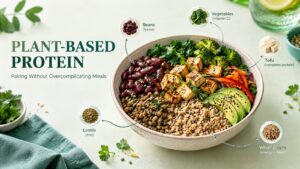
- Plant-based: tofu, tempeh, canned or cooked beans and lentils
- Nut butters and nuts (usefully paired with whole grains or fruit)
- Fortified or high-protein cereals and plant-based milks (check the label)
- Protein-fortified products or powders (if you choose them, read labels and ingredient lists)
Combine items to reach a practical total (for example, yogurt plus a tablespoon of peanut butter or two eggs plus a slice of whole-grain toast). Use the Nutrition Facts label to confirm protein grams per serving (FDA resources on food labeling and allergies).
Label-reading and planning tips
- Look at the “Protein” line on the Nutrition Facts label to see grams per serving and compare products (FDA label guide).
- Check serving sizes — a container may contain more than one serving.
- For packaged breakfast items (cereals, bars, plant milks), check added sugars and sodium as part of overall patterning advised in the Dietary Guidelines (Dietary Guidelines).
- Plan simple combinations that are easy to prepare on busy mornings—e.g., hard-boiled eggs made in advance, Greek-style yogurt with sliced fruit and nuts, overnight oats made with milk or a soy beverage.
Tip: If you have trouble chewing or swallowing, choose softer protein sources such as yogurt, cottage cheese, scrambled eggs, or pureed beans; consult a clinician or registered dietitian for personalized help.
Food safety and allergy reminders
Follow safe handling for foods often eaten at breakfast: refrigerate perishable items, cook eggs and meats thoroughly, and follow safe-handling guidance for dairy and prepared dishes (USDA FSIS safe handling, FDA safe food handling, CDC prevention). If you or someone you serve has a food allergy, review ingredient statements and the FDA’s food allergy resources before introducing new products (FDA: Food allergies).
When to seek care
- If you experience signs of a severe allergic reaction after eating (difficulty breathing, swelling of the face or throat, hives, or dizziness), seek emergency care immediately.
- See a clinician or registered dietitian if you have unexplained weight loss, difficulty chewing or swallowing, or questions about protein needs related to a medical condition (kidney disease, metabolic concerns, or recovery from illness).
- If you develop persistent digestive symptoms after changing your breakfast pattern (severe constipation, prolonged gas, or abdominal pain), contact a health professional; the National Institute of Diabetes and Digestive and Kidney Diseases has guidance on digestive symptoms (NIDDK constipation and diet, NIDDK gas and the digestive tract).
Bottom line
Including a meaningful protein source at breakfast is a practical way to help meet daily protein needs and vary your eating pattern. A commonly used practical target is roughly 15–30 grams of protein at breakfast, but individual needs vary and federal resources describe daily recommendations and healthy eating patterns. Use Nutrition Facts labels to check exact amounts, choose a mix of animal and plant proteins if desired, and follow safe-handling and allergy guidance.