In this guide
This article is a draft for editorial review and not medical advice. It summarizes federal health agency information about pantothenic acid (vitamin B5) and its use in supplements marketed for “energy.” It distinguishes established facts from uncertainty and explains practical steps for people considering these products.
What is pantothenic acid?
Pantothenic acid, commonly called vitamin B5, is an essential nutrient found widely in foods. It is a component of coenzyme A, a molecule involved in biochemical pathways that help the body break down carbohydrates, fats, and proteins for energy. Because of that role, pantothenic acid is sometimes included in supplements promoted to boost or support “energy.” The National Institutes of Health Office of Dietary Supplements (ODS) provides background on vitamins and minerals and where to find authoritative nutrient information.
What do makers of “energy” supplements claim?
Manufacturers of multi‑ingredient “energy” supplements often list pantothenic acid alongside other B vitamins, amino acids, caffeine, and herbal stimulants. Claims generally imply improved energy, reduced fatigue, or enhanced physical performance. Federal agencies note that dietary supplement labels may make structure/function claims (for example, “supports energy metabolism”) but are not evaluated by the U.S. Food and Drug Administration (FDA) for treatment or prevention of disease.
What does the scientific evidence show?
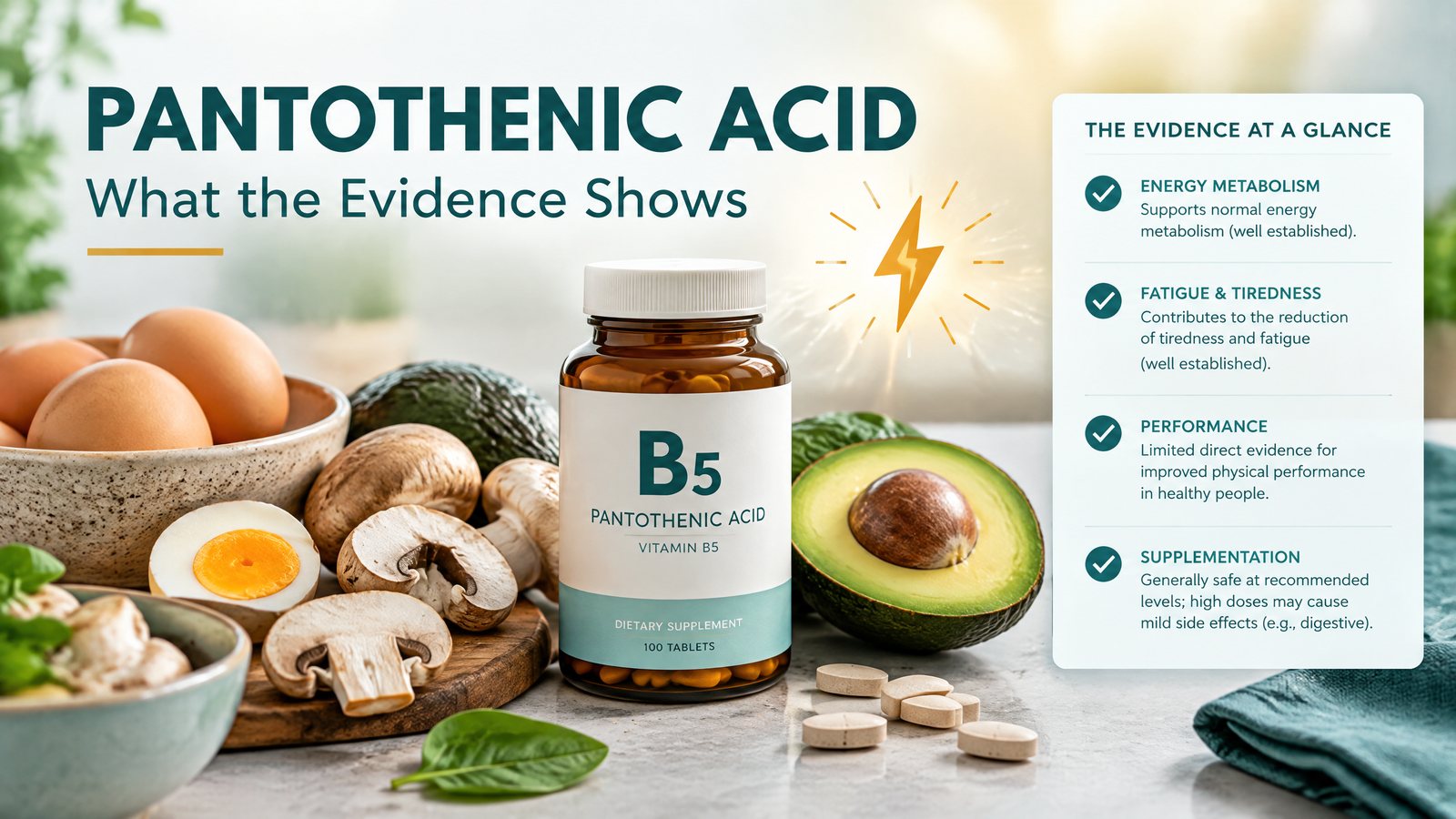
There is clear biochemical evidence that pantothenic acid is required for normal metabolism because of its role in coenzyme A. However, that biochemical role does not by itself prove that taking additional pantothenic acid as a supplement will increase energy levels in otherwise healthy people who get enough vitamin B5 from food.
Federal information notes that pantothenic acid deficiency is rare in people who eat a varied diet; most healthy people obtain sufficient amounts from foods. Evidence supporting the use of pantothenic acid supplements to boost subjective energy, reduce routine fatigue, or enhance athletic performance in well‑nourished individuals is limited or lacking. Where meaningful deficiency exists, correcting it with appropriate nutrition or supplementation can resolve symptoms related to deficiency, but routine supplementation beyond dietary needs has not been shown to be a cure for low energy.
Who might need supplements?
- People with documented dietary insufficiency or malabsorption may require targeted nutrient replacement under medical supervision.
- Most healthy adults who consume a varied diet are unlikely to need pantothenic acid supplements.
- If you are considering supplements because of persistent fatigue, discuss evaluation with a clinician to look for underlying causes rather than self‑treating with vitamins alone.
How to read the label
- Look for the ingredient name: “pantothenic acid,” “pantothenate,” or “calcium pantothenate.”
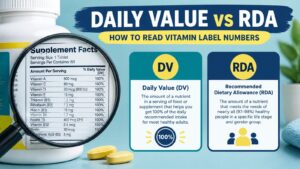
- Check the Supplement Facts panel for the amount per serving and the percent Daily Value (DV). ODS and FDA provide guidance on nutrient recommendations and DVs.
- Note other active ingredients. Many “energy” products contain caffeine, niacin, or stimulants; niacin can cause flushing and stimulants can increase heart rate or blood pressure in some people.
- Beware of multi‑ingredient products that provide multiple B vitamins at high levels; consider cumulative intake from diet and other supplements before combining products.
- Remember: dietary supplements are regulated as foods, not drugs, and manufacturers are responsible for label accuracy; the FDA does not approve supplements for safety or effectiveness before marketing.
Safety, interactions, and contraindications
Pantothenic acid taken in commonly available supplement forms is generally considered low risk for most people, but high intakes of any nutrient or supplement can cause adverse effects in some individuals. Reports have associated very large intakes of pantothenic acid with gastrointestinal symptoms such as diarrhea. Supplements can interact with medications or medical conditions; for example, stimulants or added caffeine in energy products can interact with heart conditions, anxiety disorders, and certain prescription drugs.
If you are pregnant, breastfeeding, taking prescription medications, have chronic medical conditions, or are preparing for surgery, consult your clinician before starting any supplement.
When to seek care
- See a clinician if you have persistent or worsening fatigue, unexplained weight change, shortness of breath, chest pain, fainting, or other concerning symptoms.
- Seek immediate care for signs of a severe allergic reaction (hives, swelling of face or throat, difficulty breathing) after taking a supplement.
- If you experience severe gastrointestinal symptoms, rapid heartbeat, new or worsening anxiety, or other adverse effects after taking an “energy” supplement, stop the product and contact your healthcare provider.
Bottom line
Pantothenic acid is an essential B vitamin with a proven role in metabolic pathways. For most people who eat a balanced diet, deficiency is rare and taking extra pantothenic acid is unlikely to produce noticeable increases in energy. Supplements marketed for “energy” often combine pantothenic acid with stimulants and other ingredients; these combinations carry the potential for side effects and interactions. If you are concerned about low energy, persistent fatigue, or considering supplements, discuss evaluation and safe options with your healthcare provider.
References
- NIH Office of Dietary Supplements — Vitamins and Minerals
- NIH Office of Dietary Supplements — All Fact Sheets A–Z
- NIH ODS — Nutrient Recommendations: Dietary Reference Intakes (DRI)
- NIH ODS — Daily Value (DV) Reference
- U.S. FDA — Dietary Supplements
- U.S. FDA — “It’s Really FDA‑Approved?” (consumer guidance on claims)