In this guide
Digestive enzyme supplements contain enzymes such as proteases, lipases, amylases, and lactase that manufacturers say help break down food. People take them for a range of complaints—bloating, gas, indigestion, and food intolerances—and some products are sold for general digestive support.
What the official guidance and evidence say
U.S. government resources make three main points:
- Dietary supplements, including digestive enzyme products, are regulated differently from prescription or over‑the‑counter drugs. Manufacturers are responsible for safety and labeling, and most supplements are not reviewed or approved by the U.S. Food and Drug Administration (FDA) before they are marketed. (FDA: Dietary supplements)
- Some people have medical conditions that require prescription enzyme therapy (for example, pancreatic enzyme replacement in confirmed exocrine pancreatic insufficiency). Over‑the‑counter enzyme supplements are not the same as prescription products and are not approved to treat diseases. (FDA: It’s really not FDA‑approved)
- The composition and activity of enzymes in over‑the‑counter products can vary. Databases maintained by federal agencies show that supplement labels and actual content sometimes differ, and that ingredient lists are needed to evaluate a product. (DSLD: Dietary Supplement Label Database)
In short: while enzyme supplements are available and inexpensive, the evidence supporting their use for many common digestive complaints is limited or inconsistent. For recognized medical enzyme deficiencies (which require clinical diagnosis), clinicians usually recommend specific, regulated therapies rather than general supplements.
Where enzyme supplements may help—and where they probably won’t
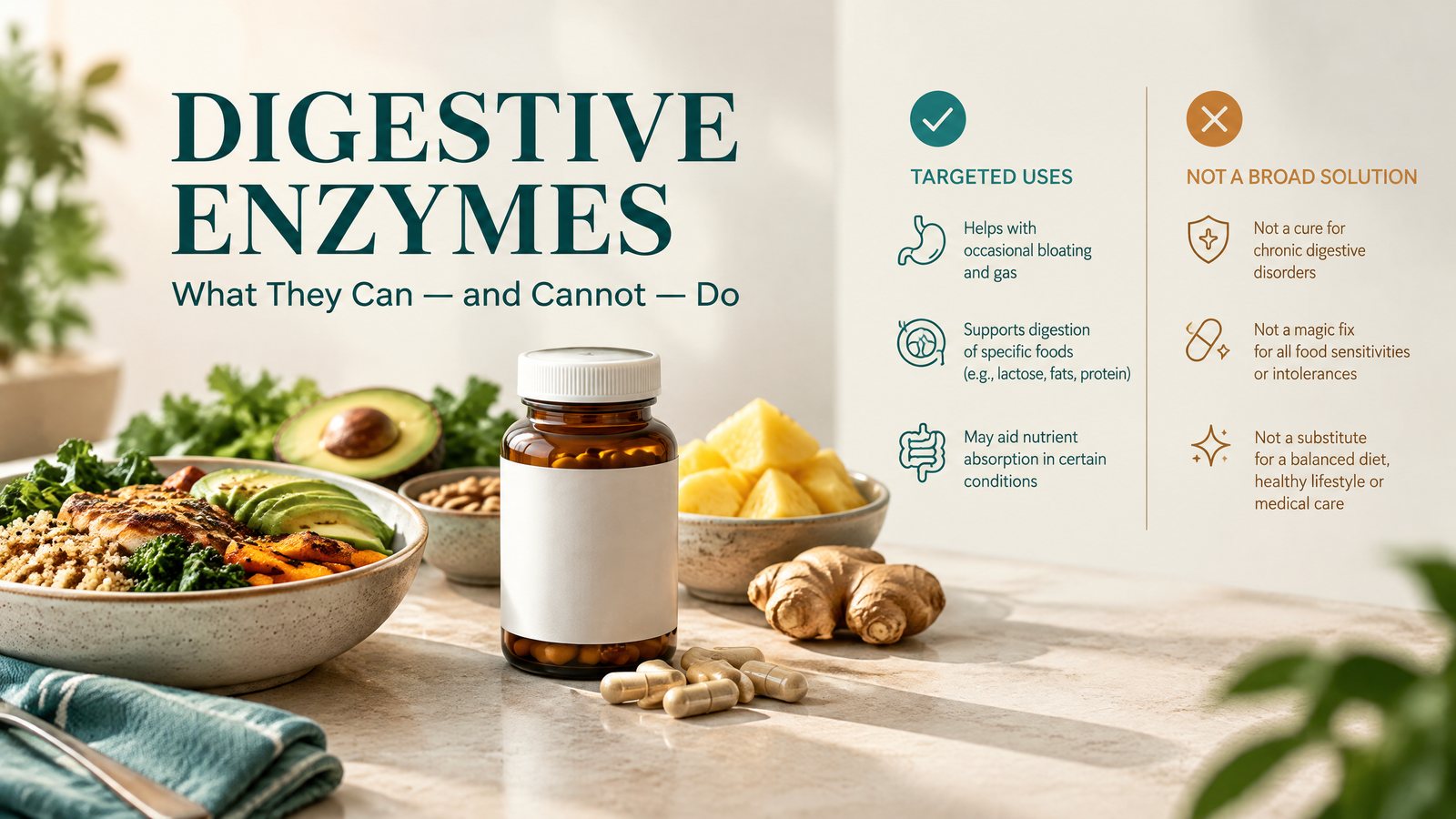
- Potentially helpful: Some people report symptom relief with enzymes for particular food intolerances (for example, isolated lactase for lactose intolerance). However, whether a supplement will help depends on the individual problem and on product quality. Official information emphasizes the need for condition‑specific diagnosis and treatment planning. (ODS: What You Need To Know About Dietary Supplements)
- Unproven or unsupported: Routine use of broad‑spectrum digestive enzyme supplements for nonspecific bloating, heartburn, or general “digestive support” lacks consistent high‑quality evidence in government summaries and is not an approved treatment for disease. (NCCIH: A–Z Index)
Practical label‑reading tips
Because supplements vary, learn to read the label before buying:
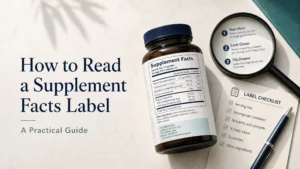
- Check the Supplement Facts panel for active ingredients and expressed activity (for enzymes, this may be in units rather than milligrams). If the label lacks clear enzyme names or units, the product offers limited information.
- Look for the source of the enzymes (plant, fungal, or animal) and any allergen statements (for example, milk, soy, or gluten).
- Find manufacturer name, lot number and expiration date, and contact information—these are important if you need to report a problem.
- Note any third‑party testing seals. Third‑party testing shows an independent group analyzed a batch, but such seals do not mean the FDA has approved or endorsed the product. (DSLD, FDA)
Interactions and cautions
Government guidance about supplements emphasizes general precautions:
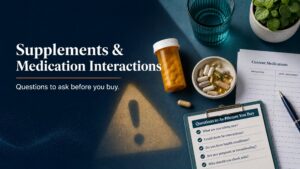
- Supplements can interact with prescription medicines or affect medical conditions. If you take other drugs or have chronic health problems, discuss enzyme supplements with a clinician. (ODS: WYNTK)
- Because dietary supplements are not pre‑approved by the FDA, their safety and label accuracy are not guaranteed. Report adverse events to your clinician and to the FDA’s Safety Reporting Portal if you suspect harm. (FDA)
- Be cautious when pregnant, breastfeeding, or treating infants and children—talk with a healthcare professional before use.
When to seek care
See a healthcare provider if you have persistent or worsening digestive symptoms, unintentional weight loss, severe abdominal pain, high fever, signs of nutrient deficiency, fatty stools, or bleeding. If a clinician suspects an enzyme deficiency or another underlying condition, they can order appropriate tests and advise on prescription therapies or safe supplement use.
How government resources can help
Official federal resources can help you check product labels, learn about regulation, and find objective information on supplements:
- Dietary Supplement Label Database (DSLD) to examine marketed product labels. (DSLD)
- Office of Dietary Supplements (ODS) consumer guidance on supplements, safety, and interactions. (ODS WYNTK)
- FDA pages explaining how supplements differ from FDA‑approved drugs and what that means for safety claims. (FDA, FDA consumer update)
Digestive enzyme supplements may help in specific, well‑defined situations, but they are not a substitute for medical care or for prescription enzyme therapies when those are indicated. Use label information, consult trusted federal resources, and talk with your clinician before starting any supplement.
Bottom line
Digestive enzyme supplements are widely marketed for bloating, food intolerance, and other GI complaints. This article summarizes what is known from official U.S. government sources about their benefits, limits, safety, and how to read product labels.
References
- Office of Dietary Supplements — What You Need To Know About Dietary Supplements (consumer fact sheet)
- U.S. Food and Drug Administration — Dietary supplements
- FDA — It’s really not FDA‑approved: What the difference means for dietary supplements
- Dietary Supplement Label Database (DSLD), NIH
- National Center for Complementary and Integrative Health — A–Z index