In this guide
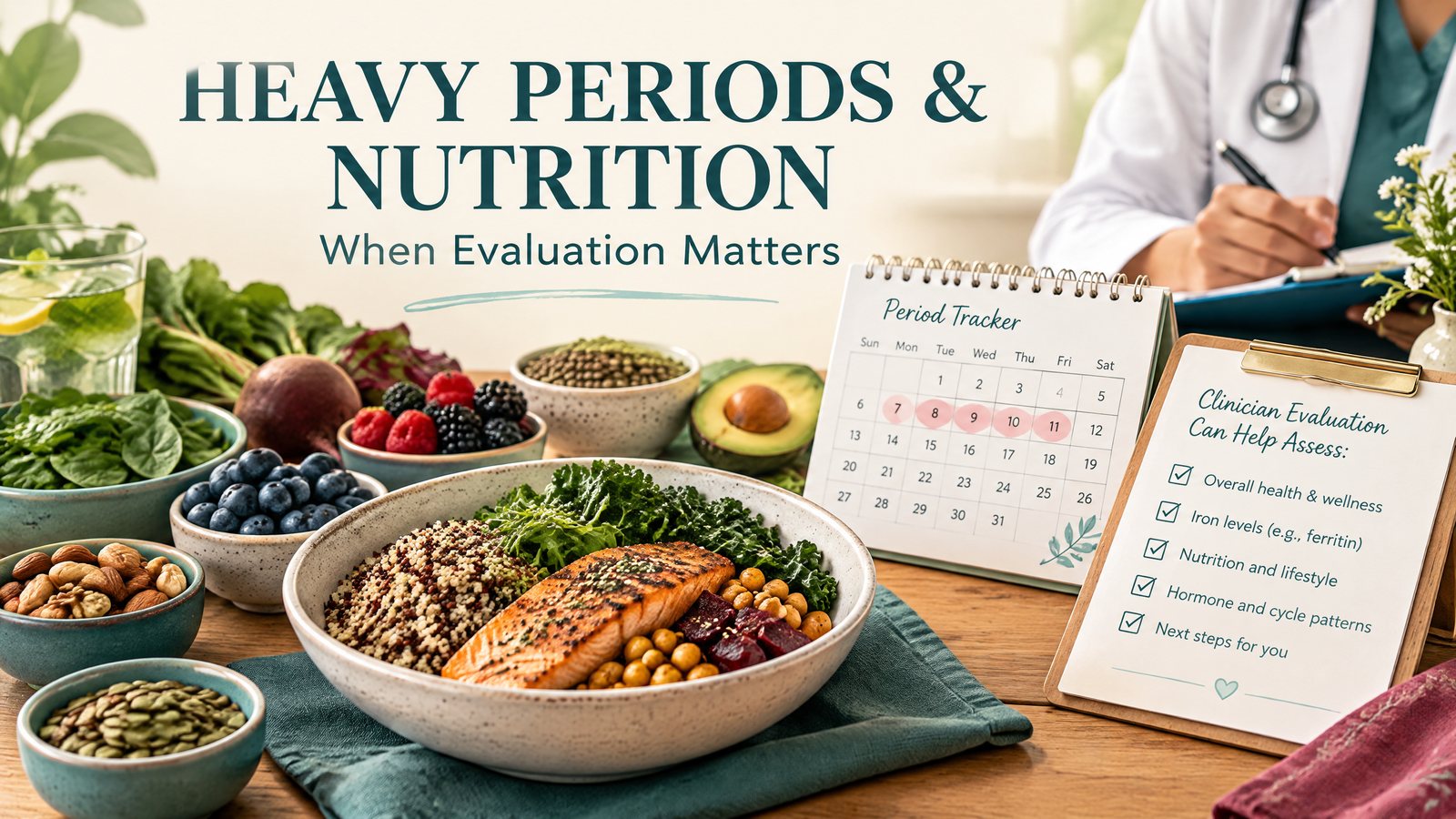
Many people look to food and supplements for relief when their periods are heavier than usual. Nutrition can matter — especially because heavy menstrual bleeding may cause or worsen iron deficiency — but eating differently is not a substitute for medical evaluation. Heavy or abnormal uterine bleeding has many possible causes and sometimes needs treatment beyond diet. This article explains the role of nutrition, practical dietary steps, and why you should see a clinician when bleeding is heavy, new, or worrying.
What counts as heavy or abnormal bleeding?
The term “heavy periods” (also called heavy menstrual bleeding or menorrhagia) describes bleeding that is heavier or lasts longer than what is normal for you. Causes range from hormonal changes and pregnancy-related problems to structural issues in the uterus and bleeding or clotting disorders. Because the reasons are varied, a clinical evaluation is usually needed to identify the cause and the most appropriate care.
Authoritative guidance on abnormal uterine bleeding emphasizes that medical assessment is important when bleeding changes from your usual pattern or accompanies symptoms such as dizziness, shortness of breath, or very heavy flow. A clinician can check for underlying problems and offer treatments when needed.
How nutrition fits in
Nutrition does not cure most causes of heavy bleeding, but it can help address consequences and support overall health while you pursue evaluation and care.
Iron and blood loss
The most direct nutrition-related concern with heavy bleeding is iron loss. When periods are heavy, people can lose enough iron to develop iron-deficiency anemia, which can cause fatigue, shortness of breath, palpitations, and low energy. Assessing iron status (typically with blood tests ordered by a clinician) is the first step to knowing whether dietary changes or iron supplements are needed.
Dietary sources of iron include heme iron from animal foods (red meat, poultry, fish) and nonheme iron from plant foods (beans, lentils, tofu, spinach, iron-fortified cereals). Combining nonheme iron sources with vitamin C–rich foods (such as citrus fruit, tomatoes, or bell peppers) can increase iron absorption. A clinician can advise whether an iron supplement is appropriate and, if so, which product and dose are best for you.
General nutrient needs and menstrual health
A balanced eating pattern supports energy, immune function, and wound healing. Following general healthy-eating guidance — a variety of vegetables and fruits, whole grains, lean protein sources, and adequate fluids — helps maintain nutritional reserves while your health care team evaluates bleeding. If pregnancy is possible, folate (folic acid) is important for fetal neural tube development; discuss folate supplementation with your clinician.
Practical dietary steps you can try
- Include good food sources of iron regularly (lean meats, poultry, fish, beans, lentils, dark leafy greens, and iron-fortified cereals).
- Pair plant-based iron sources with vitamin C–rich foods to help absorption (for example, spinach salad with orange segments or a bell-pepper side).
- Eat a balanced mix of protein, whole grains, fruits and vegetables to support energy and overall nutrition.
- Stay hydrated and prioritize foods high in nutrients rather than empty calories, especially if fatigue is a concern.
- If you follow a vegetarian or vegan pattern, be aware of iron and possibly vitamin B12 considerations and discuss testing with your provider.
Use supplements cautiously
Supplements can be helpful when a clinician identifies a deficiency, but they are not a safe shortcut for undiagnosed heavy bleeding. The U.S. Food and Drug Administration notes that dietary supplements are regulated differently from prescription medicines and can vary in quality and content. Iron supplements in particular can cause side effects and should usually be started based on blood test results and medical advice.
If your clinician recommends an iron supplement, follow their instructions and report any side effects. Also tell your clinician about any other supplements or medications you take to avoid interactions.
When to seek medical care
See a health care professional promptly if:
- You experience a noticeable increase in menstrual bleeding or a change from your normal pattern.
- Your bleeding causes fatigue, lightheadedness, fainting, or shortness of breath.
- You pass large blood clots or are soaking through menstrual protection much faster than usual.
- You have bleeding after menopause or bleeding between periods.
- You have known risk factors such as a bleeding disorder, are taking blood thinners, or have other health conditions that affect bleeding.
Prompt evaluation can identify treatable causes and prevent complications such as iron-deficiency anemia.
Other practical notes
- If you are diagnosed with iron-deficiency anemia, your clinician will guide treatment, which may include dietary change, oral iron, or other interventions depending on cause and severity.
- Avoid assuming that over-the-counter supplements alone will fix heavy bleeding without evaluation; some causes need medical or surgical treatment.
- If you have a weakened immune system or other chronic conditions, follow food-safety guidance and discuss any diet changes with your health team.
Bottom line
Nutrition matters when periods are heavy, mainly because of the risk of losing iron and becoming anemic. Eating iron-rich foods and following a balanced eating plan can help support recovery and energy, but food and supplements are not substitutes for a medical evaluation when bleeding is heavy, new, or accompanied by symptoms. Talk with your clinician about testing for anemia, appropriate treatment, and whether any supplements are right for you.
When to seek care
If bleeding is heavier than normal for you, causes symptoms such as dizziness or shortness of breath, or there is any new or worrying change, contact your health care provider or seek urgent care. Timely evaluation helps identify underlying causes and guide safe, effective treatment.