In this guide
- What this guide covers
- Key points at a glance
- Recovering the day after a bad night
- Strategies to protect the next night
- Judicious use of short‑term sleep aids and supplements
- Behavioral tools that work for occasional sleeplessness
- How to compare products later
- Limitations and when to ask a clinician
- Bottom line
- Editorial note
- References
- Related VitaEvidence reading
Worried about what to do after a bad night of sleep? This guide gives practical, evidence‑calibrated steps to recover that day, protect the next night’s sleep, and use sleep aids or supplements more safely when truly needed.
What this guide covers
- Quick daytime strategies after one poor night and simple ways to recover energy.
- Sleep‑friendly habits to protect the next night and short, safe approaches to occasional sleep aids.
- How to compare sleep products later and clear signals for when to seek medical help.
Key points at a glance
- Short, strategic naps (20–30 minutes) and careful caffeine use can reduce daytime impairment without wrecking the following night.
- Behavioral measures (consistent wake time, light exposure, stimulus control) are the first-line way to stabilize sleep after an off night [1].
- Overusing OTC sedating antihistamines or high-dose supplements risks daytime sedation, tolerance, and interactions; use lowest effective short-term approaches and check safety information [2][4].
- If poor sleep recurs, or you have breathing pauses, loud snoring, leg movements, severe daytime sleepiness, or mood/medical concerns, see a clinician.
Recovering the day after a bad night
Quick energy management (practical examples)
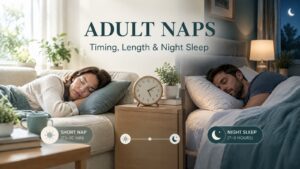
– Nap selectively: a 20–30 minute nap in the early afternoon can restore alertness without deep sleep inertia. Avoid naps >60 minutes or late afternoon naps that shift your sleep pressure.
– Caffeine timing: one or two modest coffee servings upon waking can help, but avoid caffeine after mid‑afternoon (aim for at least 6–8 hours before planned bedtime). Individual sensitivity varies.
– Move: short sessions of moderate physical activity (a brisk 10–20 minute walk) boost alertness and mood without harming nighttime sleep when done earlier in the day [3].
H3: Work and safety adjustments
– If your job requires high concentration or driving, treat yourself as potentially impaired after a poor night—delay critical tasks when possible, use breaks, and avoid operating heavy machinery if extremely sleepy.
Strategies to protect the next night
H3: Keep wake time consistent
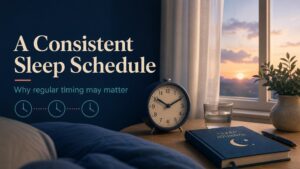
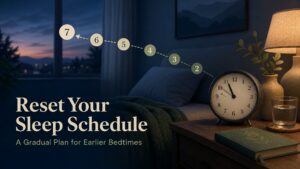
– Stick to your regular wake time even after poor sleep. Consistent wake times help restore sleep‑wake rhythms faster than sleeping in, which can delay recovery sleep.
H3: Light and screen exposure
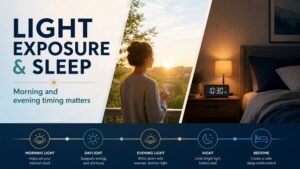
– Morning daylight exposure helps anchor circadian timing; get natural light within the first hour after waking. In the evening, dim lights and avoid bright screens for 60–90 minutes before bed to reduce circadian disruption [1].
H3: Bedtime routine and stimulus control
– If you can’t fall asleep within ~20 minutes, get up, do a quiet nonstimulating activity (reading, breathing exercises) in dim light, and return when sleepy. Avoid turning the bed into a place for wakeful worry or work.
Judicious use of short‑term sleep aids and supplements
H3: General safety principles
– OTC sedating antihistamines (e.g., diphenhydramine, doxylamine) are widely available but can cause next‑day drowsiness, cognitive slowing, and risk for older adults. They are not recommended for regular nightly use and can be unsafe with some medical conditions or when mixed with alcohol or other sedating drugs [2].
– Dietary supplements marketed for sleep (melatonin, valerian, magnesium, herbal blends) have mixed evidence; meta‑analyses suggest some may modestly improve sleep quality but effects vary by product, dose, and population [5][6]. The FDA does not evaluate dietary supplements for safety and effectiveness in the same way it does prescription drugs—labels and purity can vary [2].
H3: Practical approach to short‑term use
– Reserve pharmacologic or supplement use for short periods when you need to function the next day or break a cycle of acute insomnia. Try one change at a time so you can judge benefit and side effects.
– Use the lowest effective dose and test timing (e.g., melatonin is more effective when timed for circadian issues than when taken arbitrarily); consult a clinician for dosing advice if you are pregnant, breastfeeding, a child, older adult, or have liver/kidney disease or take other prescription medicines [4].
H3: Avoiding dependence and rebound
– Avoid nightly reliance on sedating OTC pills or alcohol. Some agents cause tolerance (reduced effect) and rebound insomnia when stopped. If you find yourself relying on a sleep aid more than a few times per week, talk with your clinician about alternatives, including behavioral options.
Behavioral tools that work for occasional sleeplessness
H3: Relaxation and brief cognitive techniques
– Practice simple breathing (4–6 breaths per minute), progressive muscle relaxation, or a brief mindfulness exercise at bedtime to reduce arousal. These can be done in a few minutes and are low risk.
H3: When to try stimulus control and sleep restriction
– Stimulus control (going to bed only when sleepy, leaving the bed if awake) can rapidly reduce conditioned wakefulness. Sleep restriction is more structured and generally used for persistent problems; consider it only under guidance if brief behavioral measures don’t help.
How to compare products later
When you are considering an OTC sleep product or supplement, compare labels on these attributes:
– Active ingredient(s) and amount per dose.
– Formulation type (tablet, immediate vs. extended release) and ingredients listed under “other ingredients.”
– Warning and contraindications on the label, especially for pregnancy, breastfeeding, driving, and mixing with other sedatives.
– Evidence of third‑party testing or a Certificate of Analysis to check for purity and accuracy of contents.
– Expiration date, batch number, and storage instructions.
– Interaction potential with prescription medicines and underlying conditions—if in doubt, ask a pharmacist or clinician.
[Affiliate product comparison block—add verified iHerb links after approval]
Limitations and when to ask a clinician
- If poor sleep becomes frequent (several nights per week across several weeks), or you have severe daytime sleepiness, loud snoring with gasping, witnessed breathing pauses, restless legs that disrupt sleep, or mood changes, seek evaluation. These can be signs of sleep apnea, restless legs syndrome, circadian disorders, depression, or medication effects that need specific treatment.
- Consult a clinician before using supplements or sleep medications if you are pregnant, breastfeeding, a child, older adult (higher medication sensitivity), have kidney or liver disease, significant heart or lung disease, an eating disorder, or take prescription medicines that could interact [2][4].
- This guide focuses on occasional insomnia tips and short‑term recovery; chronic insomnia commonly requires structured behavioral treatment such as cognitive‑behavioral therapy for insomnia (CBT‑I), which clinicians can arrange.
Bottom line
One poor night doesn’t have to become a week of bad sleep. Use short, practical daytime strategies (brief naps, careful caffeine use, movement), protect your next night with consistent wake times and light management, and favor behavioral/relaxation tactics over routine medication or supplement use. If sleep problems persist, are severe, or accompany breathing or movement symptoms, seek a clinician’s evaluation.
Editorial note
VitaEvidence Editorial Team. Last reviewed: August 2026. For general education, not personal medical advice. Read our Editorial Policy.
References
[1] Centers for Disease Control and Prevention. About Sleep. https://www.cdc.gov/sleep/about/index.html
[2] U.S. Food & Drug Administration. Dietary Supplements. https://www.fda.gov/food/dietary-supplements
[3] U.S. Department of Health and Human Services; Physical Activity Guidelines. https://www.cdc.gov/physical-activity/about/index.html
[4] NIH Office of Dietary Supplements. Fact Sheets. https://ods.od.nih.gov/factsheets/list-all/
[5] Nutrients. Mini‑review: Sleep, Nutrition and Supplementation. https://doi.org/10.3390/nu17111779
[6] Nutrients. Systematic Review and Meta‑analysis of Dietary Supplement Interventions and Sleep Quality. https://doi.org/10.3390/nu17243952