In this guide
What the evidence can and cannot show
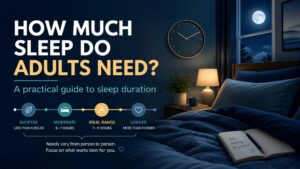
Sleep advice should start with timing, environment, routines, and possible medical contributors—not with an assumption that a supplement is needed. The exact title question is practical, but individual responses vary with age, health conditions, medications, schedule, baseline fitness, and environment. Public-health guidance can describe population-level recommendations; it cannot guarantee an outcome for a particular reader.
A useful distinction is between a factor that is associated with better sleep or performance and an intervention proven to cause that change. A tracker, supplement, routine, shoe, food, or timing strategy may be reasonable to test, but a single successful experience is not proof that it works for everyone. Avoid replacing evaluation of a possible sleep disorder, injury, or medical condition with a consumer product.
How to apply the idea safely
- Define the outcome before changing anything: easier sleep onset, fewer awakenings, more consistent energy, improved training tolerance, or a specific functional goal.
- Keep a short two-week log of bedtime, wake time, awakenings, naps, alcohol or caffeine timing, medicines, and daytime sleepiness. Change one variable at a time so the pattern remains interpretable.
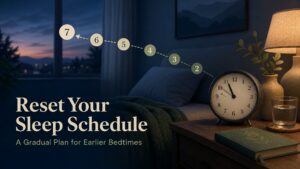
- Use a gradual approach. Sudden large changes in sleep timing, training volume, heat exposure, or supplement intake can make symptoms harder to interpret and may increase risk.
- Review relevant personal factors with a qualified clinician or pharmacist, including pregnancy, chronic disease, prescribed medicines, previous injury, and use of sedating or stimulating products.
Common overinterpretations
Marketing often turns a narrow finding into a universal promise. “Natural,” “optimal,” “recovery,” “detox,” “deep sleep,” “fat burning,” or “peak performance” are not self-validating evidence categories. The same applies to a single wearable score, a social-media routine, or a narrow timing rule presented as mandatory. If two sources disagree, check whether they studied different populations, outcomes, doses, or time periods.
For sleep, more time in bed does not automatically mean better sleep, and a supplement should not be the first response to possible sleep apnea or persistent daytime impairment. For exercise, soreness or a temporary scale change does not automatically indicate a productive or harmful program. Context, trend, and function matter more than one number.
Practical checklist
- Choose a small, observable change and keep the rest of the routine reasonably stable.
- Track both benefits and downsides, including fatigue, pain, headaches, gastrointestinal symptoms, mood changes, or next-day impairment.
- Use official guidance for general recommendations and ask a professional about individualized decisions.
- Do not drive, work at height, or perform risky exercise when unusually sleepy, dizzy, confused, overheated, or unwell.
- Do not treat an absence of symptoms today as proof that a product or routine is safe long term.
When to seek care
Loud habitual snoring, witnessed pauses in breathing, gasping, severe daytime sleepiness, persistent insomnia, or symptoms that impair driving or work deserve clinical assessment. A suspected supplement reaction, persistent sleep disruption, or exercise problem should be documented with timing, dose or workload, symptoms, relevant products, and any medical care received. This information helps a professional assess the situation without assuming causation.
Bottom line
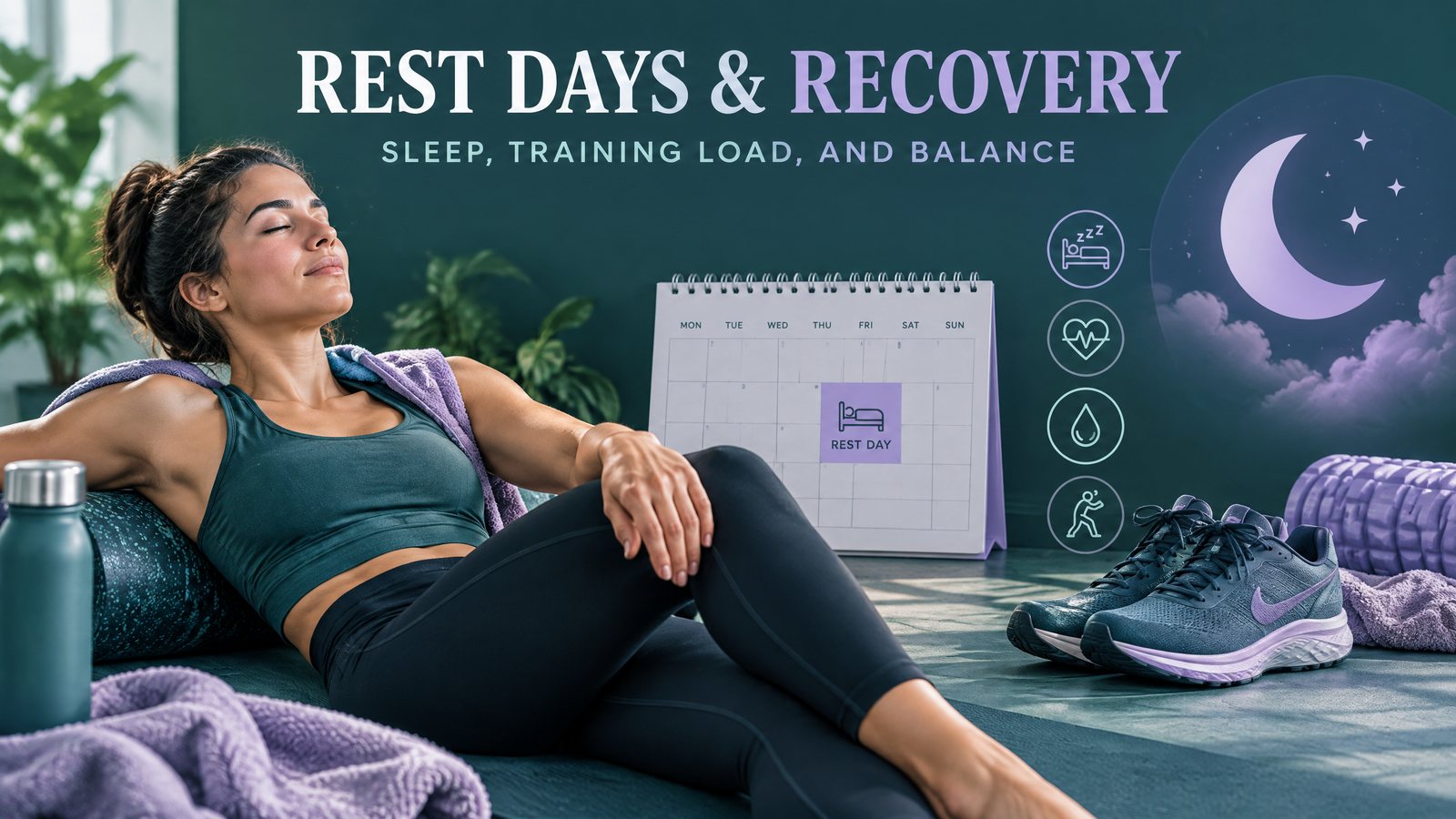
Rest Days, Sleep, and Recovery: How Much Does Training Load Matter? is best approached as an experiment with clear limits, gradual changes, and attention to symptoms—not as a guaranteed shortcut. Evidence can inform the decision, but it cannot replace individualized medical assessment.
Planning, measurement, and uncertainty
Use the smallest useful change first and define what would count as improvement before beginning. A sleep or training log should capture context as well as the target outcome, because a late night, unusual workload, illness, travel, heat, stress, or a change in medication can affect the result. Looking at a trend over several days or weeks is generally more informative than reacting to one poor night, one sore session, one wearable score, or one reading on a scale. The purpose of tracking is not to create a perfect score; it is to notice patterns and decide whether the plan is helping, neutral, or creating problems.
Evidence-based guidance also has limits. Recommendations are usually designed for broad groups and may need adjustment for age, disability, pregnancy, chronic conditions, previous injury, medication use, or a diagnosed sleep disorder. If a routine repeatedly worsens symptoms, reduce the demand and seek appropriate advice rather than trying to compensate with a larger dose, harder session, or more restrictive rule.
References
CDC: About Sleep NIH NHLBI: Sleep Deprivation and Deficiency NIOSH: Shift Work and Long Hours NCCIH: Melatonin and Sleep