In this guide
- What this guide covers
- Key points at a glance
- Why warm up and cool down?
- Evidence summary and limits
- What each movement phase is for
- How to build an effective warm up
- Static stretching and “stretching before workout”
- How to cool down after exercise
- Comparison framework: dynamic warm up vs static stretching
- Practical examples (2 brief templates)
- Session sequence
- Limitations and when to ask a clinician
- How to compare products later
- Bottom line
- Editorial note
- References
- Warm-up, stretching, and cool-down
- Related VitaEvidence reading
A practical look at what warm up and cool down routines can realistically do for performance, safety, and recovery—and what the evidence does not support. This guide gives simple, evidence‑calibrated routines and a comparison framework so you can choose what fits your goals.
What this guide covers
- The physiological purpose of warm-ups and cool-downs
- Evidence‑based benefits and limits (performance, injury risk, soreness)
- Practical warm‑up and cool‑down examples for common workouts
- A quick comparison of dynamic vs. static approaches and when to use each
- Safety flags and when to talk with a clinician
Key points at a glance
- A short dynamic warm up (5–10 minutes) that raises heart rate and muscle temperature can improve movement quality and readiness for higher‑intensity exercise. Evidence on injury prevention is limited and mixed.
- Long static stretching immediately before maximal strength or power tasks can reduce short‑term force production; save longer holds for after exercise.
- A light active cool down (5–10 minutes) helps the body transition toward resting conditions and can reduce dizziness after intense exercise; evidence that cool‑downs prevent delayed‑onset muscle soreness (DOMS) is weak.
- Tailor warm‑ups to the sport or session: mobility and movement patterns for skill work, higher‑intensity buildup for sprints or heavy lifts. Consult a clinician if you have cardiovascular symptoms, uncontrolled chronic disease, pregnancy, or recent injury.
Why warm up and cool down?
Warm-ups and cool‑downs prepare and restore the body by changing circulation, muscle temperature, joint mobility, and nervous‑system readiness. A warm up is primarily about preparing the body and brain for the demands to come; a cool down is primarily about a gradual return toward baseline and improving flexibility or comfort after exercise.
Evidence summary and limits
What each movement phase is for
| Phase | Practical purpose |
|---|---|
| Dynamic warm-up | Prepare movement and gradually raise effort. |
| Static stretching | Use when flexibility work is the focus. |
| Cool-down | Transition from activity toward rest. |
- Performance: Short dynamic warm-ups that raise body temperature and include movement patterns relevant to the activity commonly improve subjective readiness and may translate to better speed, agility, and power in the short term. However, the magnitude of benefit varies by activity and how the warm up is done.
- Strength and power: Multiple studies show that prolonged static stretching (holding stretches 60+ seconds) immediately before maximal strength or power tasks can temporarily reduce performance. Brief mobility work and dynamic movement are preferred pre‑event.
- Injury prevention: High‑quality evidence that warm-ups reduce injury risk across all populations is limited and inconsistent; some programs that include dynamic movement, strength, and neuromuscular training have reduced injuries in specific groups (for example youth athletes). Warm-ups alone should not be treated as a complete injury‑prevention strategy.
- Recovery and soreness: Systematic reviews indicate that cool‑downs have little or inconsistent effect on DOMS. Active recovery can help clear metabolic byproducts and reduce acute lightheadedness.
(These conclusions reflect consensus in exercise guidance and research reviews; results can vary by age, health status, and sport.)
How to build an effective warm up
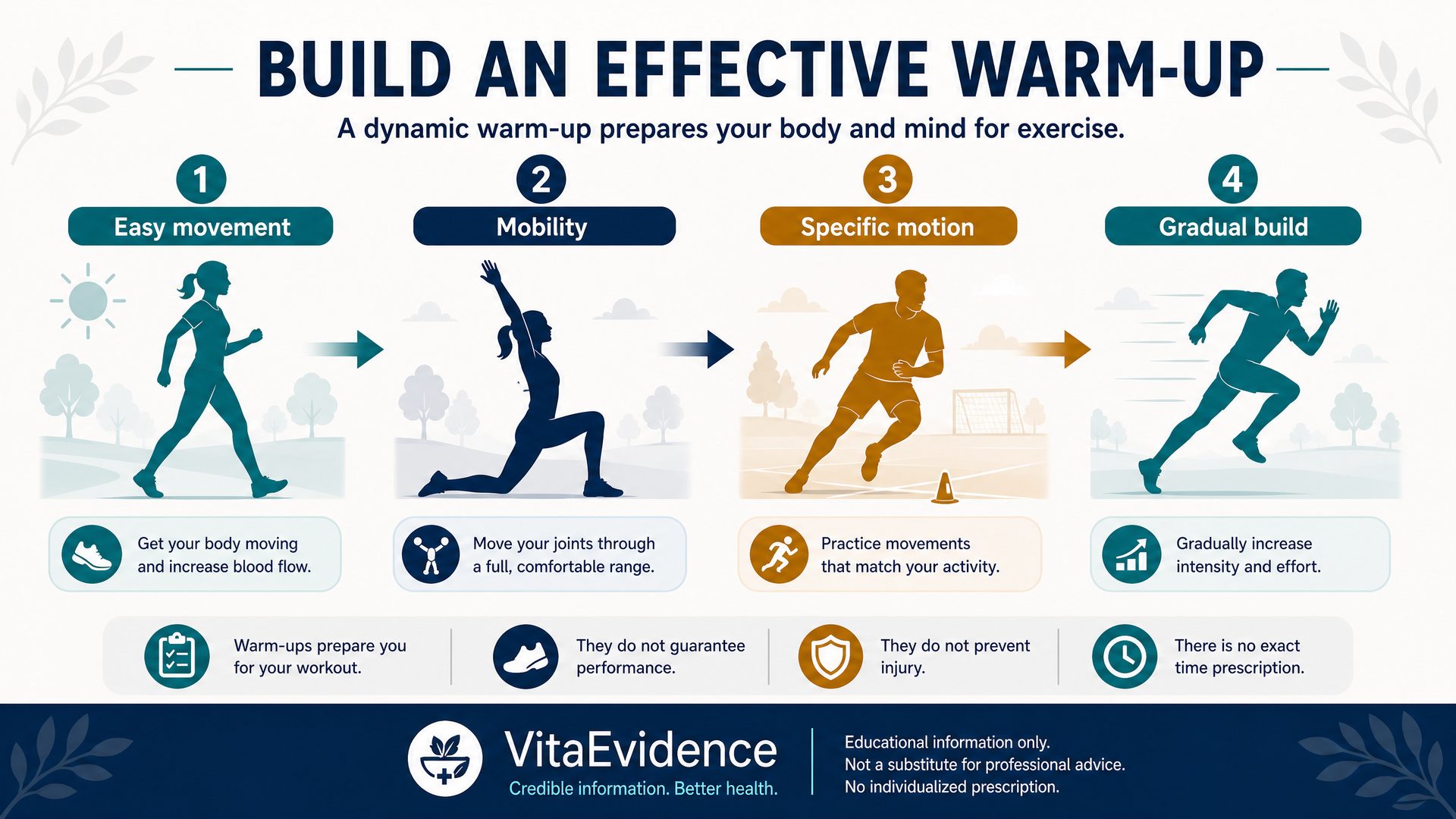
Principles first: raise heart rate, increase muscle and core temperature, mobilize joints, and rehearse key movement patterns progressively.
H3: A general 5–10 minute dynamic warm-up (beginner to intermediate)
– 2–3 minutes brisk walking or light jogging (or cycling at low resistance) to raise heart rate
– 6–8 dynamic mobility moves, 30–45 seconds each: leg swings (front-to-back and side-to-side), walking lunges with torso twist, inchworms (walk hands out to plank and back), hip circles, shoulder circles, arm swings
– 2–3 sport‑ or task‑specific drills at increasing intensity: light skipping, high‑knees, submaximal sprints, or empty‑bar reps for weightlifting
H3: Warm-up for heavy lifting or short sprints
– Include progressive sets with the exercise movement: e.g., a few sets of squats with an empty bar or light load, increasing to working weight; for sprints, add 2–4 short accelerations (30–60% then 70–90% intensity).
H3: Time and intensity guidance
– 5–15 minutes is typical; longer for cold environments or older adults. The warm‑up should feel like a steady ramp, not an all‑out effort before the main session.
Static stretching and “stretching before workout”
H3: Where static stretching fits
– Static stretching (holding a position for 15–60 seconds) is effective for improving range of motion when done regularly, but long holds immediately before maximal power or strength testing can transiently blunt force. If your goal is flexibility, plan longer static stretches after training or as a separate session.
– If short static holds (10–15 seconds) are used within a warm up for problem areas, they are less likely to impair performance than long holds.
How to cool down after exercise
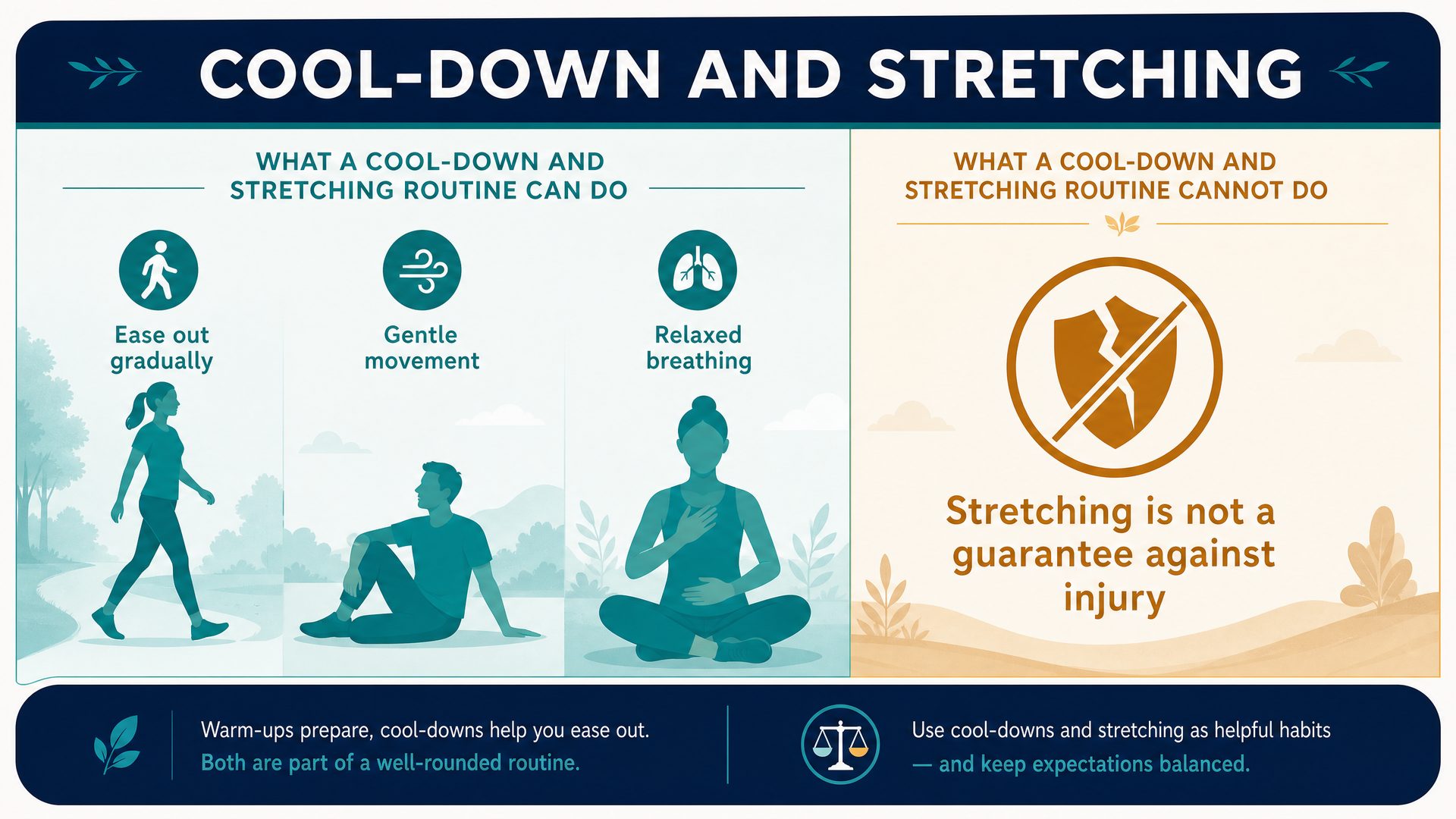
H3: Active cool-down (5–10 minutes)
– Light aerobic activity (walking, gentle cycling) that gradually reduces intensity helps stabilize blood pressure and circulation and reduces dizziness risk after intense sessions.
H3: Follow with targeted flexibility or mobility
– After the active cool down, 2–4 minutes per major muscle group in comfortable static stretches (15–45 seconds each) can help maintain or improve flexibility. Foam rolling or self‑myofascial techniques may be included for comfort; evidence for performance or soreness benefits is mixed.
H3: When to use more recovery strategies
– For very long or intense sessions, include nutrition (carbohydrate + protein within an hour, when appropriate for goals), hydration, and sleep—these have stronger evidence for recovery than cool‑down alone. See dietary and activity guidance for specifics.
Comparison framework: dynamic warm up vs static stretching
- Purpose: Dynamic warm up = readiness and movement rehearsal; Static stretching = flexibility gains.
- Timing: Dynamic = pre‑exercise; Static = post‑exercise or separate session.
- Effect on performance: Dynamic = neutral-to‑positive for power/strength; Static (long holds) = can reduce maximal power temporarily.
- Best use case: Dynamic for sport/intensity prep; Static for improving ROM and after exercise.
Use this quick checklist when choosing a routine:
– Is the session high‑intensity or power‑focused? Prioritize dynamic warm up and progressive skill reps.
– Is flexibility the primary goal? Reserve longer static stretches for after the session or another day.
– Are there specific joints/muscles that limit movement? Add targeted mobility drills in the warm up.
Practical examples (2 brief templates)
Session sequence
- Start with easy movement.
- Add activity-specific preparation.
- Complete the main session.
- Reduce intensity gradually and finish with appropriate mobility work.
- Gym strength session (60–90 min): 5 minutes bike at easy pace → hip mobility (leg swings, lunges) 3 minutes → movement prep with unloaded sets (squat/hinge) 5–8 minutes → main sets. Cool down: 5 minutes easy walking + targeted static stretches (quads, hamstrings, chest) 5–10 minutes.
- Run workout (intervals): 8 minutes easy jog → dynamic drills (high knees, butt kicks, strides) 5 minutes → 3–5 accelerations building to race pace → intervals. Cool down: 5–10 minutes easy jog/walk + calf and hip stretches 4–6 minutes.
Limitations and when to ask a clinician
- If you have chest pain, unexplained shortness of breath, fainting, irregular heart rhythm, or new severe joint pain with exercise, stop and seek medical evaluation.
- Pregnant people, those with uncontrolled hypertension, heart disease, diabetes with complications, severe asthma, or recent surgery or fracture should ask a clinician for tailored guidance before starting new high‑intensity routines.
- If an old injury flares during warm up (sharp pain, instability), stop activity and seek professional input (physician, physical therapist).
- For children, older adults, or people taking medications that affect heart rate or blood pressure, warm‑up and cool‑down plans may need adjustments—ask a clinician.
How to compare products later
If you later shop for warm‑up or recovery tools (resistance bands, foam rollers, massage devices, compression garments), compare objectively on these label or specification attributes: materials, size/dimensions, resistance levels (for bands), recommended use and contraindications, cleaning instructions, warranty/return policy, third‑party safety or testing claims, and clear user instructions or contraindications. Also check user manuals for recommended session times and clinician warnings if provided. [Affiliate product comparison block—add verified iHerb links after approval]
Bottom line
Warm-ups and cool‑downs are practical parts of a safe, effective exercise routine. Use a brief dynamic warm up to raise heart rate, mobilize joints, and rehearse movements—especially before power or high‑speed work—and save longer static stretching for after exercise or separate flexibility sessions. Cool‑downs that include light active recovery and gentle stretching can ease the transition to rest but do not eliminate soreness or prevent every injury. When in doubt because of health conditions or unusual symptoms, consult a clinician for personalized advice.
Editorial note
VitaEvidence Editorial Team. Last reviewed: August 2026. For general education, not personal medical advice. Read our Editorial Policy.
References
[1] Centers for Disease Control and Prevention. Physical Activity. https://www.cdc.gov/physical-activity/index.html
[2] National Institutes of Health, Office of Dietary Supplements. Exercise and Athletic Performance — Health Professional Fact Sheet. https://ods.od.nih.gov/factsheets/ExerciseAndAthleticPerformance-HealthProfessional/
[3] U.S. Department of Health and Human Services and U.S. Department of Agriculture. Dietary Guidelines for Americans 2020–2025. https://www.dietaryguidelines.gov/
[4] U.S. Department of Agriculture. MyPlate. https://www.myplate.gov/
[5] U.S. Food and Drug Administration. Dietary Supplements. https://www.fda.gov/food/dietary-supplements
[6] Frontiers in Nutrition. Systematic review: supplements and elite-athlete performance (2025). https://doi.org/10.3389/fnut.2025.1675654