In this guide
- What this guide covers
- Key points at a glance
- How vitamin A works and why it matters
- Vitamin A food sources (primary search focus)
- Retinol vs beta‑carotene: conversion and safety
- Vitamin A supplements: forms, who might need them, and risks
- Daily needs and safe limits
- How to compare products later
- Limitations and when to ask a clinician
- Bottom line
- Editorial note
- References
- Related VitaEvidence reading
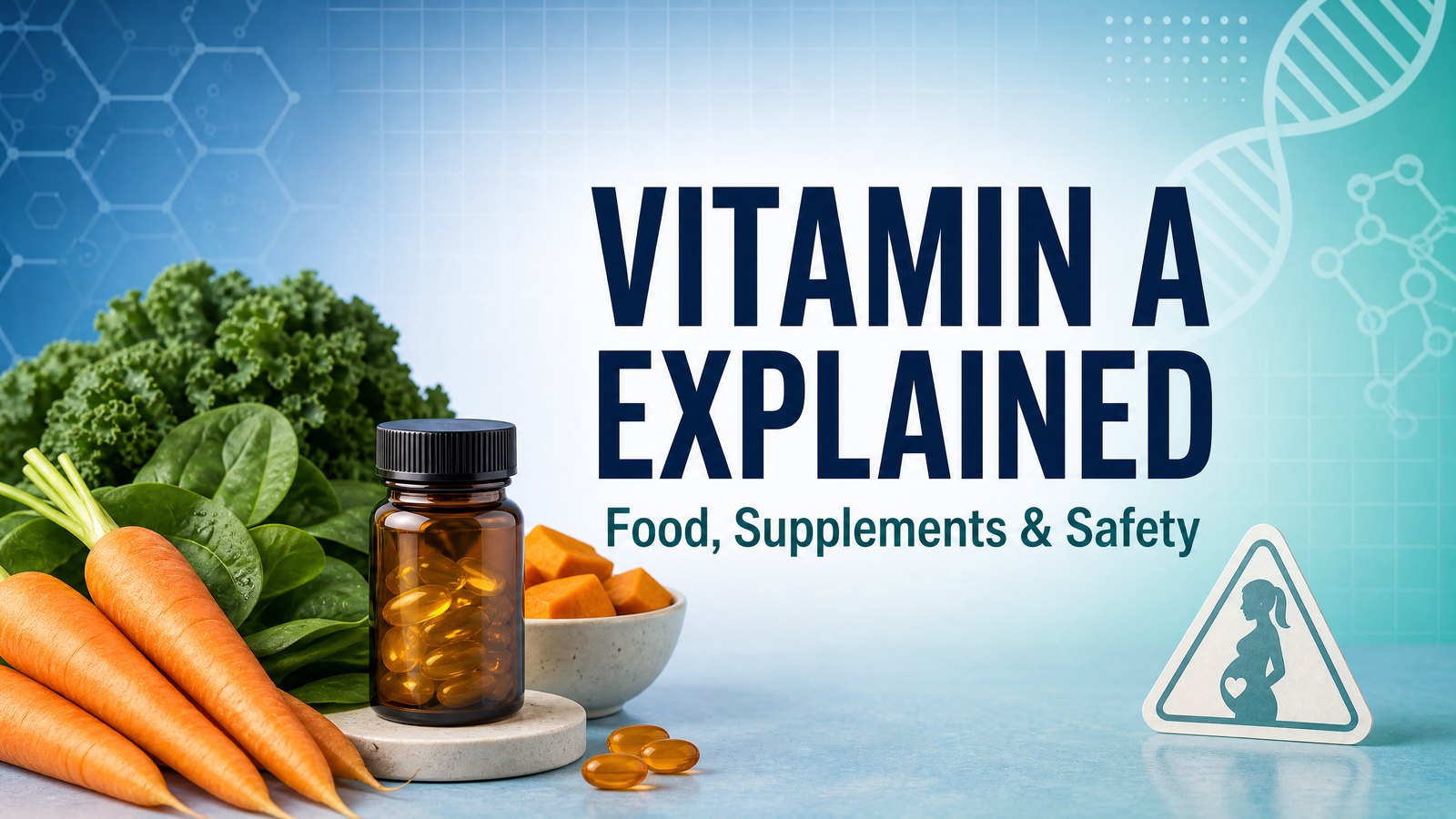
Vitamin A supports vision, immune function, and cell growth; many people can meet needs through a varied diet, but supplement form and dose matter of animal and plant foods, but supplements carry distinct benefits and risks depending on the form. This guide explains vitamin A food sources, differences between retinol and beta‑carotene, safe intake levels, and practical ways to compare supplements if you consider taking them.
What this guide covers
- How vitamin A works and why it matters.
- Practical vitamin A food sources and how the body converts provitamin A carotenoids.
- Key differences: retinol (preformed vitamin A) versus beta‑carotene (provitamin A).
- When supplements may help, safety concerns (including pregnancy and toxicity), and how to compare product labels.
Key points at a glance
- Vitamin A occurs as preformed vitamin A (retinol) in animal foods and as provitamin A carotenoids (like beta‑carotene) in plant foods; the body converts carotenoids to active vitamin A at variable efficiency [1].
- The Recommended Dietary Allowance (RDA) for adults is 900 µg RAE/day for men and 700 µg RAE/day for women; the Tolerable Upper Intake Level (UL) for preformed vitamin A is 3,000 µg RAE (about 10,000 IU) for adults [1].
- High intakes of preformed vitamin A (from supplements or frequent liver consumption) can cause toxicity and, in pregnancy, birth defects; beta‑carotene from food is not linked to this risk, but high‑dose beta‑carotene supplements increased lung cancer risk in smokers in clinical trials [1].
- Supplements are not tightly regulated like drugs; check dose, form (retinol vs carotenoid), third‑party testing, and interactions before use [2].
How vitamin A works and why it matters
Vitamin A refers to a group of compounds important for:
– Vision (retinal is essential for low‑light vision).
– Immune function and mucous barrier integrity.
– Growth, reproduction, and cell differentiation.
These functions are well supported by nutrient biology and public health guidance; deficiency is uncommon in the U.S. but can occur in restrictive diets or certain medical conditions [1].
Vitamin A food sources (primary search focus)
To search effectively for vitamin A food sources, think in two categories: preformed vitamin A (retinol) and provitamin A carotenoids.
H3: Preformed vitamin A (retinol)
– Found mainly in animal foods: liver (beef, chicken, pork), fish liver oils (e.g., cod liver oil), whole milk and fortified dairy, eggs.
– Foods with preformed vitamin A deliver active retinol that the body uses directly; this form is the one most associated with toxicity at high intakes [1].
H3: Provitamin A carotenoids (beta‑carotene and others)
– Found in orange and dark‑green plant foods: carrots, sweet potatoes, pumpkin, spinach, kale, collards, red peppers, mango, and cantaloupe.
– The body converts these carotenoids to vitamin A as needed; conversion efficiency varies by carotenoid type, food matrix, fat in the meal, and individual factors (age, genetics, health status) [1,4].
Practical example of a day of food sources
– Breakfast: two scrambled eggs + fortified milk (retinol from eggs/dairy).
– Lunch: salad with grated carrots, spinach, and a dressing with olive oil (plant carotenoids + fat helps absorption).
– Dinner: roasted sweet potato and a portion of fish or lean meat (combines provitamin A and modest preformed vitamin A).
– Occasional liver (e.g., pâté or liver sauté) can supply very high retinol — limit frequency to avoid exceeding safe daily limits [1].
Retinol vs beta‑carotene: conversion and safety
- Retinol (preformed vitamin A): directly active, stored in the liver, and responsible for most toxicity cases when intake is excessive (supplements or very frequent liver consumption). The UL applies to preformed vitamin A [1].
- Beta‑carotene (a provitamin A carotenoid): converted to retinol by the body. Beta‑carotene from foods does not carry the same toxicity risk as preformed vitamin A. However, clinical trials showed that high‑dose beta‑carotene supplements increased lung cancer risk in current and former smokers, so supplements of isolated high‑dose beta‑carotene are not recommended for smokers [1].
Conversion note (used in dietary recommendations)
– Dietary Reference Intakes use retinol activity equivalents (RAE). For example, 1 µg RAE = 1 µg retinol = 12 µg dietary beta‑carotene = 24 µg other dietary provitamin A carotenoids; supplemental beta‑carotene converts differently. See NIH ODS for full conversion details [1].
Vitamin A supplements: forms, who might need them, and risks
H3: Common supplement forms
– Retinol or retinyl esters (preformed vitamin A) — often labeled as “vitamin A” or “retinyl palmitate.”
– Beta‑carotene or mixed carotenoids — labeled as provitamin A forms.
– Cod liver oil and some fish oil products can contain significant vitamin A (retinol) in addition to vitamin D.
H3: Who might consider supplementation
– People with diagnosed deficiency, certain malabsorption conditions, or specific clinical recommendations from a healthcare professional.
– Otherwise healthy adults with varied diets typically meet needs without supplements [1,3,4].
H3: Main safety concerns
– Hypervitaminosis A: headache, nausea, dizziness, liver abnormalities, and in severe cases raised intracranial pressure. Chronic excess preformed vitamin A carries real risk [1].
– Pregnancy: high intakes of preformed vitamin A from supplements or drugs (isotretinoin) are associated with birth defects; pregnant people should not take high‑dose preformed vitamin A supplements and should discuss any supplement use with a clinician [1].
– Drug interactions and condition considerations: some medications (such as acne retinoids) and medical conditions can change risk; always check with a clinician [2].
Daily needs and safe limits
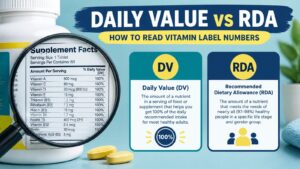
- RDA (adults): Men 900 µg RAE/day; Women 700 µg RAE/day. Requirements differ for children, pregnant and breastfeeding people — see the NIH ODS tables for age‑specific RDAs [1].
- UL (adults): 3,000 µg RAE/day (about 10,000 IU) for preformed vitamin A; the UL applies to retinol and retinyl esters but not to carotenoids from food. Supplements can push total intake above the UL when combined with high‑retinol foods (e.g., frequent liver) or multiple products [1].
- Verify label amounts and form: many U.S. products still list IU; use the product label or a conversion chart (manufacturer or NIH ODS) to confirm mcg RAE equivalents.
How to compare products later
When you look at supplement or multivitamin labels in the future, compare these attributes:
– Amount per serving and the form of vitamin A (retinol/retinyl palmitate vs beta‑carotene or mixed carotenoids).
– Percent Daily Value and whether the amount pushes total intake above the UL when added to your diet.
– Presence of cod liver oil or other sources that add vitamin A and vitamin D.
– Third‑party testing or verification seals, batch/lot numbers, expiration date, and clear manufacturer contact information.
– Ingredient list for potential allergens or added fat that affects carotenoid absorption.
– Warnings about pregnancy or smoker status.
[Affiliate product comparison block—add verified iHerb links after approval]
Note: product labels may use IU, mcg, or %DV; if unsure, check a trusted reference or ask a pharmacist or clinician to translate amounts into µg RAE.
Limitations and when to ask a clinician
- Ask a clinician before starting any vitamin A supplement if you are pregnant, breastfeeding, planning pregnancy, a child, have liver disease, kidney disease, malabsorption, an eating disorder, or take prescription retinoids or other interacting medications.
- If you smoke or are a former heavy smoker, do not take high‑dose beta‑carotene supplements because of documented increased lung cancer risk in trials [1].
- If you regularly eat liver or take multiple supplements (e.g., a multivitamin plus cod liver oil), have a clinician or pharmacist check total vitamin A to avoid exceeding the UL.
- Supplements are not regulated like prescription drugs; if you experience symptoms like persistent headaches, vision changes, nausea, or dizziness while taking vitamin A supplements, stop the supplement and seek medical advice [2].
Bottom line
Vitamin A is essential and plentiful in a balanced diet that includes both animal and colorful plant foods. Most people meet needs through food; supplements can help specific deficiencies but carry real risks when they contain preformed vitamin A at high doses — especially in pregnancy and with frequent liver consumption. If you consider a supplement, check the form (retinol vs beta‑carotene), dose, and product verification, and consult a clinician when relevant medical conditions or medications are present.
Editorial note
VitaEvidence Editorial Team. Last reviewed: August 2026. For general education, not personal medical advice. Read our Editorial Policy.
References
[1] NIH Office of Dietary Supplements — Vitamin A (Health Professional Fact Sheet). https://ods.od.nih.gov/factsheets/VitaminA-HealthProfessional/
[2] U.S. Food and Drug Administration — Dietary Supplements. https://www.fda.gov/food/dietary-supplements
[3] USDA/MyPlate — Make half your plate fruits and vegetables; foods and nutrients resources. https://www.myplate.gov/
[4] U.S. Department of Health and Human Services and U.S. Department of Agriculture — Dietary Guidelines for Americans 2020–2025. https://www.dietaryguidelines.gov/
[5] U.S. Food and Drug Administration — Dietary Supplement Labeling Guide for Industry. https://www.fda.gov/food/dietary-supplements/dietary-supplement-labeling-guide-industry