In this guide
- Key takeaways
- Introduction
- What “under review” and FDA notifications mean
- Types of issues the FDA has found
- What the FDA does and how you can follow updates
- Practical guidance for consumers
- Consumer update checklist
- Status is not the same as a final safety conclusion
- Table — Quick consumer guide to suspicious product features and actions
- When to stop use and contact a clinician
- How to report a suspicious product or adverse reaction
- Limitations and what FDA oversight does — and doesn’t — cover
- References
- Related VitaEvidence reading
Category: FDA Warnings and Safety Updates
Key takeaways
- The FDA actively monitors dietary supplements and other health products for mislabeled or tainted ingredients, including undeclared prescription drugs. (See FDA monitoring tools and notifications.)
- Recently, the FDA has reported products — including some honey-based preparations and certain weight‑loss, sexual‑enhancement, and energy products — that were found to contain hidden active drug ingredients. These findings apply to specific products and batches identified by the agency, not to every product category. (See FDA health fraud and tainted‑honey notices.)
- Consumers should check product labels carefully, avoid products making explicit medical claims, consult a clinician before using supplements with prescription medications, and report suspicious products or adverse events to the FDA. (See ways to contact the FDA.)
Introduction
Dietary supplements and over‑the‑counter health products are widely available and often marketed with claims about energy, weight loss, sexual performance, or general wellness. The FDA and other agencies regularly test, evaluate, and notify the public when products contain undeclared or “hidden” active drug ingredients, are mislabeled, or otherwise present health risks. This article summarizes the types of safety concerns currently under review, how the FDA communicates findings, and practical steps consumers can take to reduce risk.
What “under review” and FDA notifications mean
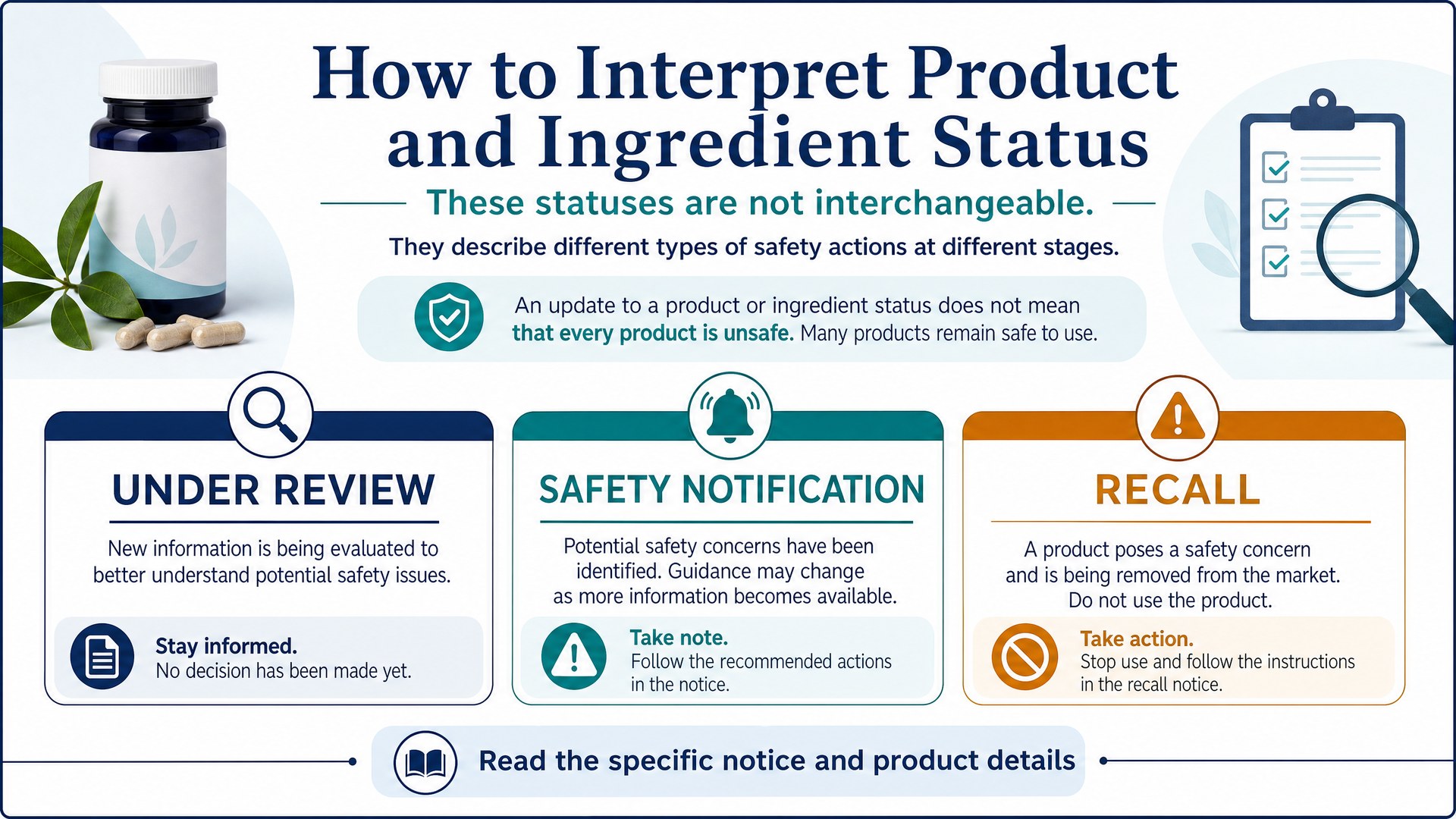
When the FDA identifies a potential problem with a product, the agency may issue a notification, post an entry in its health fraud database, or publish guidance to help the public avoid contaminated or mislabeled products. “Under review” can mean the agency is testing product samples, assessing evidence, or preparing a formal action such as a warning letter, recall, or seizure.
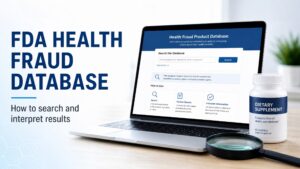
- The FDA maintains a health fraud product database and posts medication‑fraud notifications to inform consumers about products found to contain undeclared or illegal drugs. (FDA health fraud product database; medication health fraud notifications.)
- The agency also publishes targeted notices about specific product types when patterns of contamination appear — for example, honey‑based products that tested positive for active drug ingredients. (FDA tainted honey‑based products.)
Types of issues the FDA has found
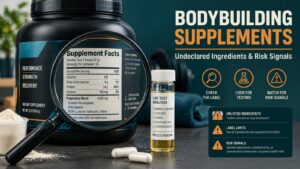
- Hidden or undeclared drug ingredients: The FDA has detected prescription drug ingredients in products marketed as supplements or “natural” remedies. These hidden ingredients have included pharmaceuticals used for sexual enhancement or weight loss and stimulants commonly found in illegal or unapproved products. Such ingredients can interact with other drugs and pose serious health risks. (FDA hidden ingredients guidance; sexual enhancement and energy product notifications.)
- Contaminated or adulterated products: Some products have been found to contain contaminants or active drugs that are not declared on the label. The FDA treats these as adulterated and potentially unsafe. (FDA hidden ingredients guidance; health fraud database.)
- Misleading labeling and unsubstantiated claims: Some products are marketed with claims that go beyond what supplements are legally allowed to state (for example, implying they treat or cure disease). The FTC and FDA both monitor deceptive health claims and take action when advertising is misleading. (FTC health claims; FDA dietary supplements and labeling guide.)
What the FDA does and how you can follow updates
- Testing and laboratory analysis. The FDA and state partners test product samples to identify undeclared or illegal ingredients.
- Public notices. The agency posts health fraud notifications and maintains searchable resources so consumers and health professionals can check whether a product is under review or has been found to contain hidden drugs. (FDA health fraud product database; medication health fraud notifications.)
- Enforcement actions. Depending on the findings, the FDA can issue warning letters, seize products, or work with manufacturers to remove unsafe products from the market. Specific enforcement actions are described on the agency’s notification pages. (FDA medication health fraud notifications.)
Practical guidance for consumers
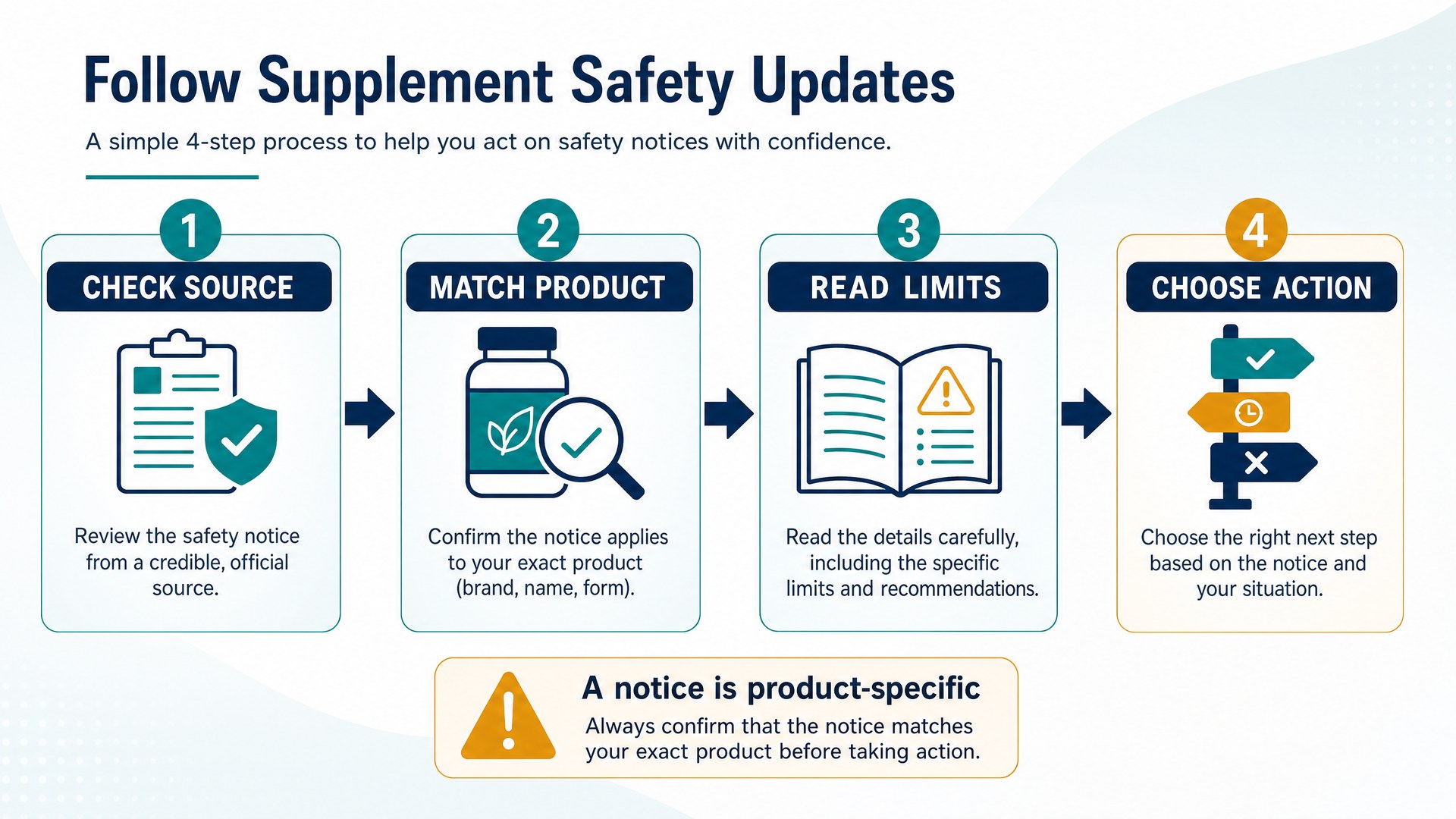
Consumer update checklist
- Use a credible official source.
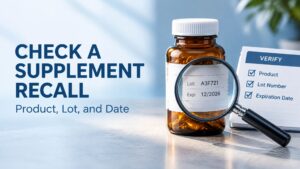
- Match the exact product and lot information.
- Read the notice limits and recommendations.
- Ask a clinician or pharmacist when symptoms or medicines are involved.
Status is not the same as a final safety conclusion
| Status | What to read carefully |
|---|---|
| Under review | What information is being evaluated and whether action is recommended. |
| Notification | The exact product, ingredient, finding, and stated consumer action. |
| Recall | The product or lot identified and the instructions in the notice. |
Below is a short checklist and a table you can use when evaluating supplements or other health products.
Checklist: Before you buy or use a supplement
– Read the Supplement Facts panel and ingredient list. (See our guide: /how-to-read-supplement-facts-label/)
– Be skeptical of products making medical claims (e.g., cures, treatments, or guaranteed results). The FTC and FDA consider many such claims deceptive. (FTC health claims; FDA dietary supplements.)
– Avoid products marketed primarily online that promise rapid weight loss, sexual enhancement, or unusually large performance results — these categories have a higher incidence of hidden ingredients. (FDA sexual enhancement and energy product notifications; tainted honey page.)
– Check the FDA health fraud product database and recent medication‑fraud notifications for any mention of the product or brand. (FDA health fraud product database.)
– If you take prescription medications, ask a clinician about possible interactions before starting a supplement. (See our internal resource: /supplements-medication-interactions-questions/)
Table — Quick consumer guide to suspicious product features and actions
| What you might see | What it could mean | What to do |
|---|---|---|
| Product promises quick weight loss, sexual enhancement, or “miracle” results | These categories have frequently been found to contain undeclared prescription drugs or stimulants | Avoid use; check FDA health fraud database and warnings |
| “All‑natural” or “herbal” but with no clear ingredient list | Product may be mislabeled or contaminated | Don’t assume it’s safe; save label/package and report concerns |
| Labels that include ingredients with unfamiliar chemical names | Could be active drug compounds or analogs | Consult pharmacist/clinician before use; report to FDA |
| Marketed as honey-based remedy with druglike claims | FDA has found some honey products with undeclared active drugs | Avoid such products until you verify FDA testing or notifications |
| Advertising that claims to treat or cure disease | Illegal claim for a dietary supplement | Consider reporting to the FTC and FDA |
When to stop use and contact a clinician
Stop using a supplement and seek immediate medical attention if you experience serious or concerning symptoms such as chest pain, difficulty breathing, fainting, severe allergic reaction, stroke‑like symptoms (sudden numbness/weakness, trouble speaking), or signs of liver injury (jaundice, dark urine, severe abdominal pain). If you have less severe adverse effects (nausea, palpitations, unusual headaches, anxiety) and you suspect they are related to a product, stop use and consult your primary clinician or pharmacist. If you are on prescription medications (particularly blood thinners, antidepressants, blood pressure drugs, or heart medications), talk with your clinician before starting any new supplement because hidden ingredients can cause dangerous interactions. (/supplements-medication-interactions-questions/)
How to report a suspicious product or adverse reaction
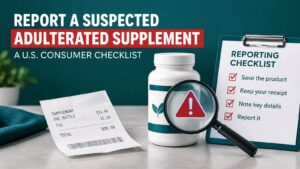
If you find a product you believe is unsafe, mislabeled, or contains hidden ingredients, you can:
– Check the FDA health fraud product database and medication health fraud notifications to see whether the product has been identified. (FDA health fraud product database; medication health fraud notifications.)
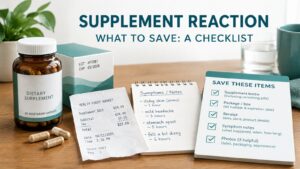
– Report adverse events or concerns to the FDA. The agency provides ways for consumers to contact its Center for Drug Evaluation and Research (CDER) about suspicious human drugs and health products. Save the product container, lot number, and purchase information if possible when you report. (FDA ways to contact CDER about human drugs.)
Limitations and what FDA oversight does — and doesn’t — cover
- Dietary supplements are regulated differently than prescription or over‑the‑counter drugs. Manufacturers are responsible for labeling accuracy and for ensuring safety, but supplements do not require FDA pre‑market approval. The FDA can take action if products are found to be unsafe, mislabeled, or adulterated. (FDA dietary supplements; Q&A on supplements.)
- The FDA cannot test every product on the market. Not all brands or batches have been analyzed, and the absence of a warning does not guarantee a product is safe.
- When the FDA reports an issue, the findings apply to the specific product(s) or lot(s) identified by the agency. Do not generalize a warning about one product or batch to every product with a similar name or branding.
References
- https://www.fda.gov/drugs/medication-health-fraud/avoiding-products-contaminated-hidden-ingredients
- https://www.fda.gov/consumers/health-fraud-scams/tainted-honey-based-products-hidden-active-drug-ingredients
- https://www.fda.gov/consumers/health-fraud-scams/health-fraud-product-database
- https://www.fda.gov/food/dietary-supplements
- https://www.fda.gov/food/information-consumers-using-dietary-supplements/questions-and-answers-dietary-supplements
- https://www.fda.gov/food/dietary-supplements-guidance-documents-regulatory-information/dietary-supplement-labeling-guide
- https://www.fda.gov/drugs/medication-health-fraud-notifications/sexual-enhancement-and-energy-product-notifications
- https://www.fda.gov/drugs/medication-health-fraud/medication-health-fraud-notifications
- https://www.ftc.gov/news-events/topics/truth-advertising/health-claims
- https://www.ftc.gov/business-guidance/resources/health-products-compliance-guidance
- https://www.fda.gov/about-fda/cder-contact-information/ways-consumers-contact-fda-about-human-drugs
Last reviewed: August 2026
VitaEvidence Editorial Team