In this guide
- Key takeaways
- What “test boosters” are — and how they’re regulated
- What the evidence says — cautiously
- How to read a “test booster” label — what to check
- Red flags on labels and in marketing
- Safety, interactions, and when to see a clinician
- Practical tips for consumers
- Limitations of post‑market oversight
- A note on advertising and claims
- When to consider medical testing or prescription treatment
- Safety disclaimer
- References
- Related VitaEvidence reading
Category: Weight-Loss and Bodybuilding Products
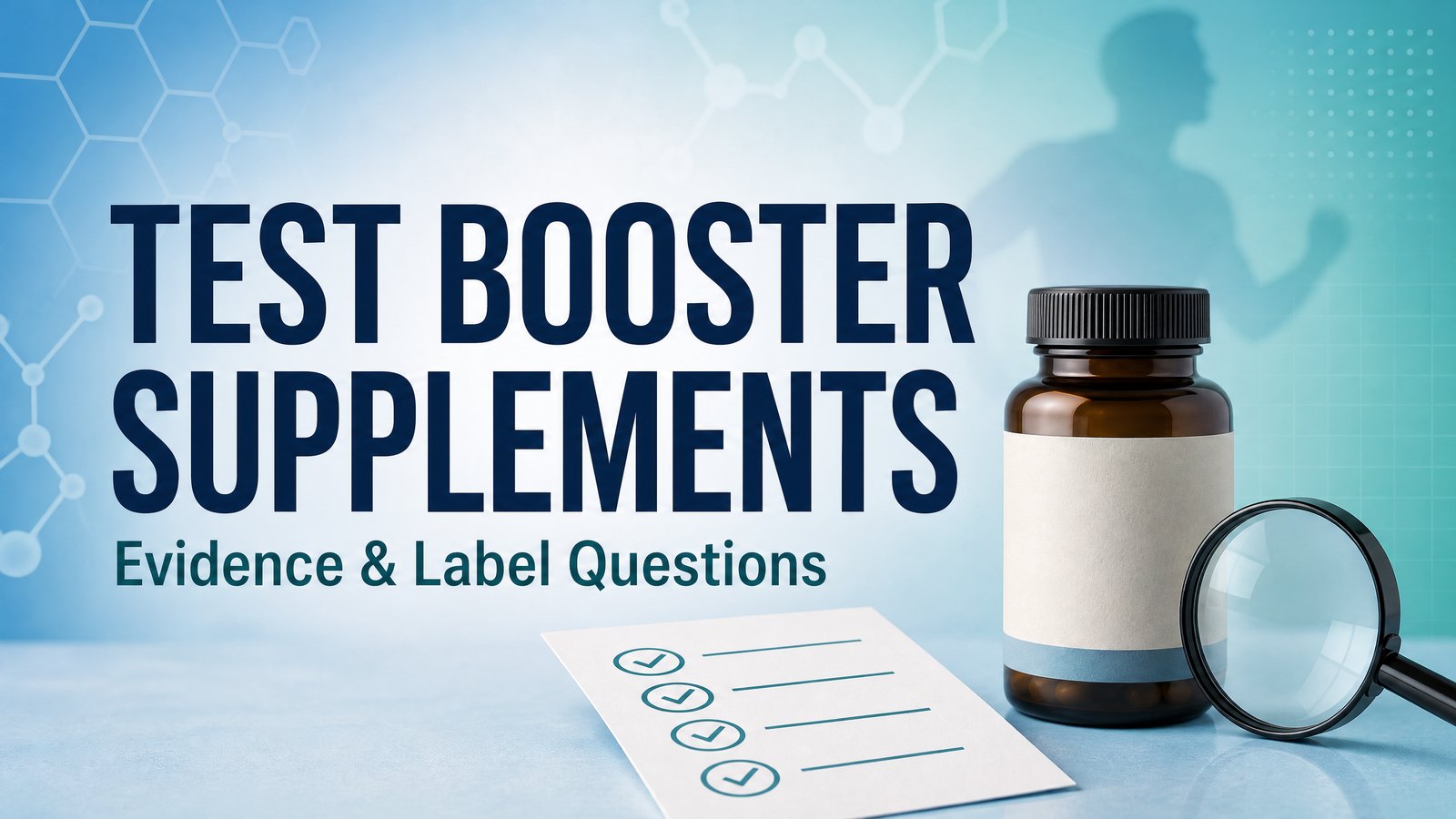
Many over‑the‑counter supplements are marketed as “test boosters” or “testosterone enhancers” for men who want to build muscle, reduce body fat, or improve sexual function. The marketplace includes dietary supplements, powders, capsules, and shots sold online, in gyms, or at retail stores. This article explains what regulators say about these products, what the evidence generally shows, how to read labels, and practical steps to reduce risk.
Key takeaways
- “Test booster” products are usually sold as dietary supplements. The FDA does not approve supplements for effectiveness before they are sold. (See FDA dietary supplements guidance.)
- Clinical evidence for many marketed “test booster” ingredients is limited or mixed. Some nutrients can help if you have a deficiency, but broad claims of large testosterone increases are rarely supported by strong evidence.
- The FDA has found products marketed for sexual performance or energy that contained hidden prescription drugs or other undeclared active ingredients. Always be alert for suspicious or oddly worded labels and claims.
- Check the Supplement Facts panel, ingredient list, dose, and warnings. Avoid products with “proprietary blends” that hide component amounts, and report suspicious products to the FDA.
What “test boosters” are — and how they’re regulated
Most products labeled as “test boosters” are sold as dietary supplements. In the U.S., dietary supplements are regulated differently from prescription or over‑the‑counter drugs. Manufacturers are responsible for ensuring safety and that label claims are truthful, but the FDA does not review or approve supplements for safety or effectiveness before they reach the market. The FDA can take action against unsafe or misbranded products after they are on sale. (See FDA dietary supplements and Questions and answers about supplements.)
The Federal Trade Commission (FTC) requires that health‑related advertising and claims be truthful and backed by competent and reliable scientific evidence. Companies making disease‑treatment claims (for example, “treats low testosterone”) are at higher risk of regulatory action if they lack adequate evidence. (See FTC truth in health claims and FTC compliance guidance.)
Key regulatory risks: hidden or undeclared active ingredients
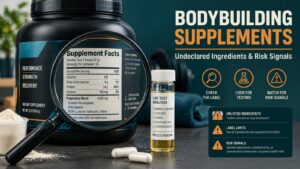
A major safety concern is that some products marketed for sexual enhancement, energy, weight loss, or muscle building have been found to contain hidden prescription drugs or other undeclared active ingredients. The FDA has repeatedly warned consumers after laboratory testing found active drug ingredients that were not listed on labels. These hidden ingredients can be dangerous, especially if you are taking prescription medications or have chronic conditions. (See FDA guidance on avoiding products contaminated with hidden ingredients and FDA medication health fraud notifications.)
To check whether a specific product has been flagged, the FDA maintains a searchable health fraud product database and posts notification letters about tainted sexual‑enhancement and energy products. If you suspect a product is unsafe or misbranded, the FDA provides ways for consumers to report suspicious products. (See the FDA health fraud database, sexual enhancement and energy notifications, and how to contact FDA about human drugs.)
What the evidence says — cautiously
Research on individual ingredients marketed as “test boosters” varies widely. For many ingredients, the quality and consistency of clinical trials are limited. Some points to keep in mind:
– If a person has a documented nutrient deficiency (for example, low zinc or vitamin D), correcting that deficiency can help restore normal hormone function. However, evidence does not establish that these products reliably raise testosterone above normal physiological levels in otherwise healthy men.
– Many commercial “test booster” formulations include multiple ingredients at varying doses. When ingredients are combined, it is difficult to know which—if any—produce an effect, and whether the amounts are sufficient to matter.
– Because marketing claims are not independently verified before sale, the presence of a label claim does not guarantee effectiveness or safety.
Given these limitations, expect modest or no benefit from many over‑the‑counter “test boosters,” and be cautious about products that promise dramatic, fast, or guaranteed increases in testosterone.
How to read a “test booster” label — what to check
Use the Supplement Facts panel and ingredient list as your first tools. Below is a quick reference table for label elements and what they mean.
| Label element | What to check | Why it matters |
|---|---|---|
| Supplement Facts (serving size, amount per serving) | Is the dose of each ingredient listed? | Dose determines potential effect; some labels list ingredients without amounts. |
| Ingredient names | Are specific, recognizable ingredients listed (not only marketing names)? | Vague or unusual names can hide undeclared substances. |
| Proprietary blend | Does the label show a proprietary blend without amounts per ingredient? | Proprietary blends prevent you from knowing how much of each ingredient you get. |
| Other ingredients / excipients | Are additives, fillers, or delivery agents listed? | Some additives may cause allergies or interact with medications. |
| Warnings and contraindications | Are clear warnings about preexisting conditions, drug interactions, or age limits present? | Products lacking warnings may not have been formulated with safety considerations. |
| Manufacturer information | Is a responsible manufacturer/distributor named with contact info? | You should be able to contact the company with questions or adverse events. |
For more detail on reading a Supplement Facts panel, see our guide /how-to-read-supplement-facts-label/.
Red flags on labels and in marketing
- Claims to “restore” or “boost” testosterone dramatically or “double” performance in a short time.
- Promises of being “clinically proven” without citation of reputable trials.
- Lack of ingredient amounts or use of proprietary blends.
- Products marketed for sexual performance or energy that use unusual disclaimers like “not for human consumption” or vague ingredient lists—these can be warning signs the product contains hidden, undeclared drugs. The FDA has issued multiple warnings for sexual‑enhancement and energy products with hidden ingredients. (See FDA sexual enhancement and energy product notifications and the health fraud database.)
Safety, interactions, and when to see a clinician
- Talk with your clinician before starting any supplement, especially if you take prescription medications, have cardiovascular disease, hormone disorders, prostate disease, diabetes, high blood pressure, or clotting disorders. Supplements can interact with medications or exacerbate underlying conditions.
- Stop the product and seek medical attention if you experience concerning symptoms such as chest pain, palpitations, sudden shortness of breath, fainting, severe headaches, visual changes, or new severe mood changes.
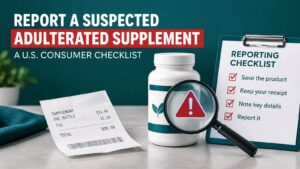
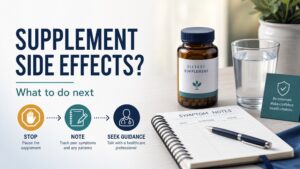
- If you suspect a product contains an undeclared drug (for example, if you experience unexpected effects), stop using it and report the product to the FDA. The FDA provides consumer reporting options. (See ways consumers can contact FDA about human drugs.)
Practical tips for consumers
- Be skeptical of dramatic claims. Treat dramatic or guaranteed claims as a reason to look for reliable evidence rather than as proof that a product is unsafe.
- Read the label carefully: check amount per serving, full ingredient names, and any warnings. If a label hides ingredient amounts behind a proprietary blend, consider avoiding the product.
- Consider getting baseline testing and clinical advice before using a supplement purported to affect hormones. A clinician can assess whether testing or prescription treatment is appropriate.
- Check the FDA health fraud database and notification pages for products that have been flagged. If a specific product has received an FDA warning, that notice applies to that product or lot, not to all products with a similar name. Avoid generalizing a warning for one product to every product with a similar name—look up the exact product and lot if possible. (See FDA health fraud database.)
- Report suspicious products or adverse events to the FDA so regulators can investigate. (See how to contact FDA about human drugs.)
Limitations of post‑market oversight
Because the FDA primarily acts after products are marketed, safety problems may only come to light after people have used a product. Manufacturers are legally responsible for their labels and claims, but enforcement actions occur after the fact. Check FDA lists of notifications and the health fraud product database periodically if you use these products. (See FDA dietary supplements and the health fraud database.)
A note on advertising and claims
Advertisers must have competent and reliable scientific evidence to substantiate claims about health benefits. The FTC enforces standards for truth in advertising and provides guidance for businesses making health claims. If an ad or label promises disease treatment, that may be a regulatory red flag. (See FTC health claims and FTC compliance guidance.)
When to consider medical testing or prescription treatment
If you are concerned about low testosterone (for example, symptoms such as reduced libido, persistent fatigue, or decreased muscle mass), seek medical evaluation. A clinician can order appropriate tests, interpret results in context, and discuss FDA‑approved treatment options when indicated. Over‑the‑counter supplements should not replace clinical evaluation and evidence‑based care.
Safety disclaimer
This article is educational and not medical advice. It does not diagnose, recommend, or treat health conditions. Talk with your clinician before starting supplements, especially if you have medical conditions or take prescription medications.
References
- NIH ODS: Dietary Supplements for Exercise and Athletic Performance
- FDA: Questions and Answers on Dietary Supplements
- FDA: Dietary Supplement Labeling Guide, Chapter IV
- FDA: Avoiding Products Contaminated with Hidden Ingredients
- FDA: Sexual Enhancement and Energy Product Notifications
- FDA: Health Fraud Product Database
- FTC: Health Products Compliance Guidance
Last reviewed: August 2026
VitaEvidence Editorial Team