In this guide
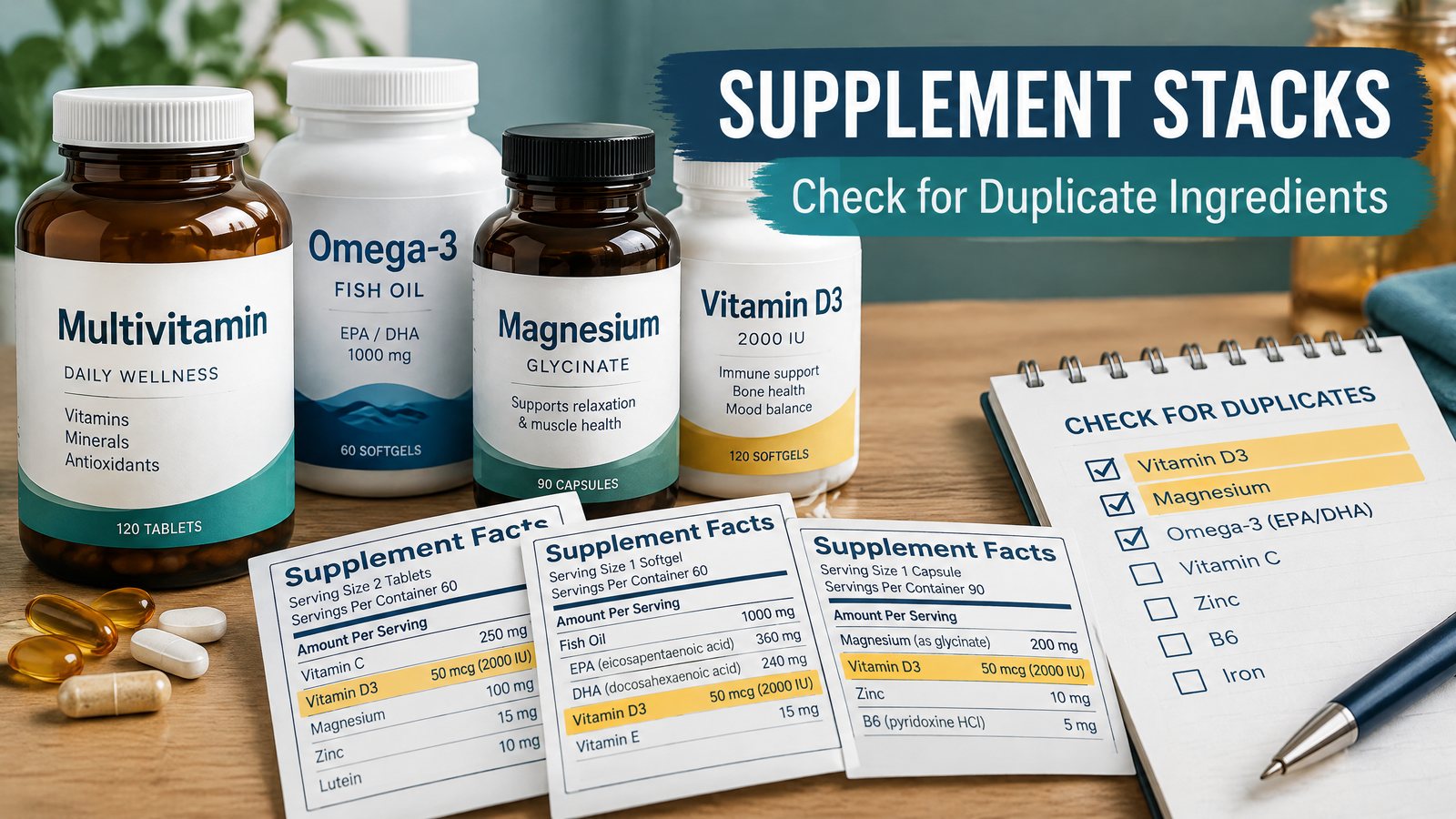
Many people use more than one dietary supplement—vitamin-mineral formulas, protein powders, multi-ingredient “stacks,” or herbal products. When you combine products, the same nutrient or ingredient can appear in more than one label. That can raise the chance of getting more than you intended, or amplify side effects. This article shows practical, evidence-based steps for checking supplements for duplicate ingredients and what to do if you find them.
What the evidence and official guidance say
Federal resources explain that dietary supplements are regulated differently from prescription or over-the-counter drugs, and manufacturers are responsible for labeling accuracy and safety. Unlike drugs, dietary supplements are not reviewed and approved by the U.S. Food and Drug Administration (FDA) before they are marketed. Reliable public databases and fact sheets from the National Institutes of Health (NIH) are useful tools to learn what’s in products and what is known about specific ingredients.
Step-by-step checklist to find duplicate ingredients
- Gather every bottle/packet. Put all supplement labels together or take clear photos of the front, Supplement Facts panel, and ingredient list.
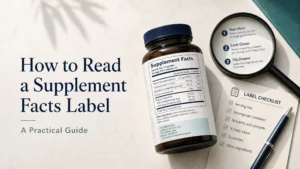
- Read the Supplement Facts panel. Note the serving size, the amount per serving, and the listed ingredients. Look for nutrients (for example, vitamins and minerals) and named herbal extracts or branded blends.
- Watch for different names for the same thing. Botanical ingredients may use common names and Latin names; some nutrients appear as different chemical forms (for example, various forms of vitamin B6). When in doubt, check an authoritative fact sheet or database for synonyms.
- Use public label and ingredient databases to compare labels and amounts:
- Search the Dietary Supplement Label Database (DSLD) to view uploaded product labels and compare the Supplement Facts across items.
- Use the Dietary Supplement Ingredient Database (DSID) to find analytical data on ingredient amounts in certain product types, when available.
- Consult NIH Office of Dietary Supplements (ODS) fact sheets to understand what an ingredient is and general safety considerations.
- Be careful with proprietary blends. Product labels may list a blend with a total amount but not the amount of each ingredient. That makes it hard to tell how much of an ingredient you’re getting from each product.
- Compare total daily intake. Add up the amounts of each nutrient or ingredient across all products for the dose you actually take (not just per serving if you use multiple servings per day).
- If you can’t determine amounts (for example, due to proprietary blends), contact the manufacturer for details or avoid stacking products with the same named ingredients.
Practical label-reading tips
- Look at the “Supplement Facts” panel first—this shows serving size and amount per serving.
- Check the ingredient list for non-nutrient components and botanical names (Latin names can reduce confusion).
- Note “% Daily Value” (%DV) for nutrients, but remember %DV does not equal safety or appropriateness—use it as a guide to relative contribution to a typical adult reference intake.
- Watch for “other ingredients” or proprietary blends; those may affect absorption or safety and often don’t disclose amounts of individual components.
- Keep copies or photos of labels—some product formulations change over time.
Interactions, contraindications, and common concerns
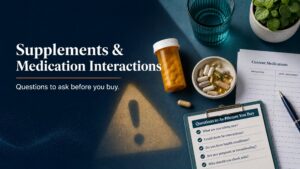
Supplements can cause adverse effects or interact with prescription and over-the-counter medicines, other supplements, or medical conditions. Official sources advise that some ingredients present higher risk in certain populations (for example, pregnant or breastfeeding people, children, and people with chronic conditions), and that any supplement use should be discussed with a health professional familiar with your medications and medical history.
Because dietary supplements are not FDA-approved before marketing, product quality and ingredient amounts may vary between brands and batches. If you take medications or have medical conditions, check with a clinician or pharmacist before combining multiple supplements.
When to seek care
- Stop using the supplement and seek emergency care for severe allergic reactions (trouble breathing, swelling of face or throat) or signs of acute toxicity.
- Contact your clinician if you experience new or worsening symptoms after starting a supplement—especially palpitations, fainting, severe gastrointestinal symptoms, jaundice, or neurologic changes.
- Report serious adverse events to the FDA Safety Reporting Portal so officials can track potential product safety issues.
Putting it together: a short workflow
- Collect labels and note serving-based amounts.
- Search DSLD for label images and DSID for ingredient-level data when available.
- Consult ODS and NCCIH fact sheets for safety information about specific nutrients or herbs.
- Add amounts across products to estimate your total daily intake.
- If totals are uncertain or excessive, stop stacking and ask a clinician or pharmacist for personalized advice.
Remember: Supplements are not held to the same pre-market approval standard as drugs. Use public databases and your health care team to reduce the chance of unwanted duplication or harm.
Bottom line
Taking more than one dietary supplement can lead to the same ingredient appearing in multiple products. This article explains how to identify duplicate ingredients, which databases to use, how to read labels, and when to talk with a health professional.