In this guide
- What psyllium husk is and what evidence shows
- Established evidence
- Uncertainty and limits
- Why the amount of fiber (and total daily intake) matters
- Why water is essential with psyllium
- Medication timing and possible interactions
- Label reading: what to check on a psyllium product
- Interactions, contraindications, and safety points
- When to seek medical care
- Practical next steps
- References
- Bottom line
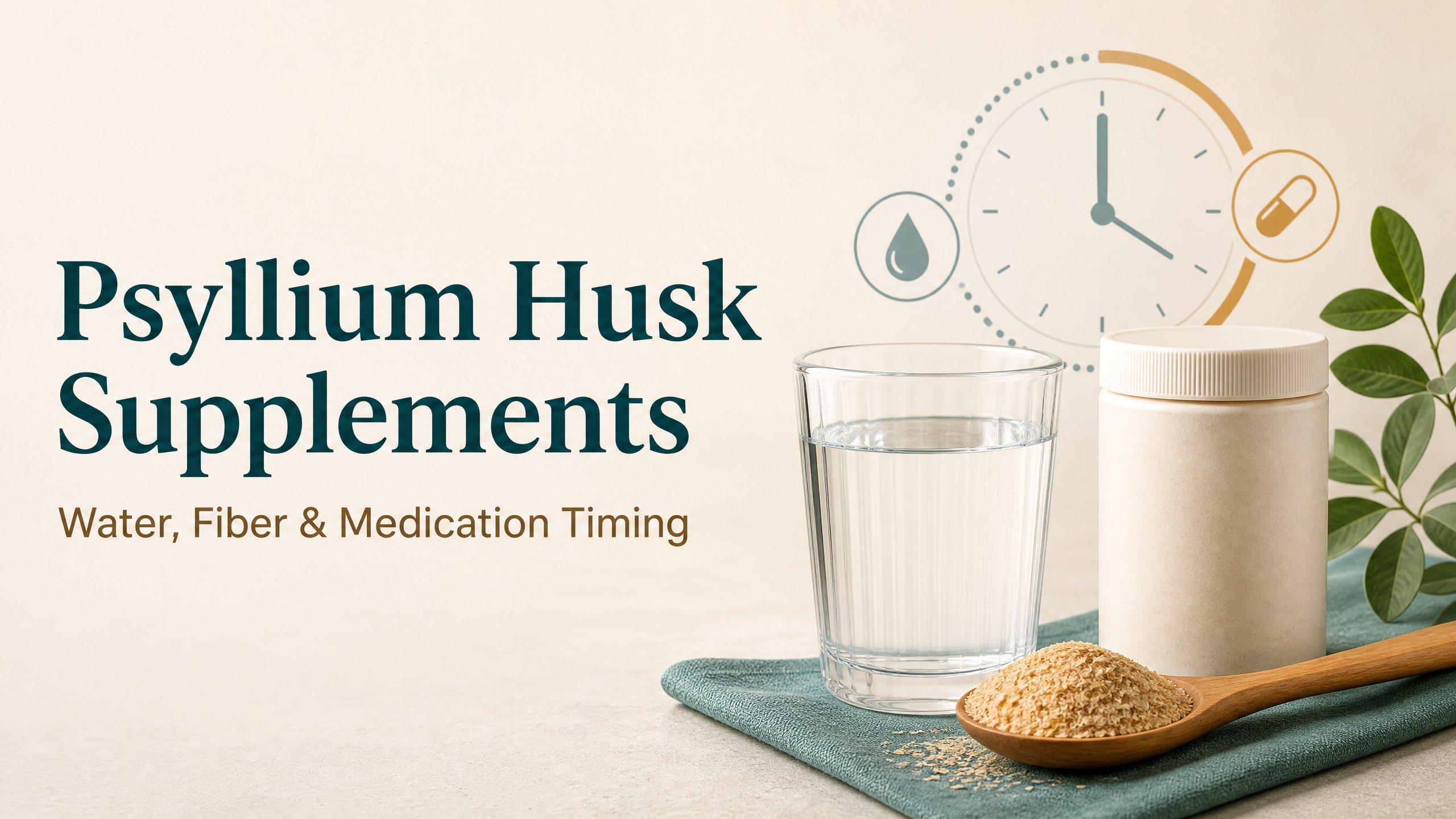
This article is a draft for editorial review and not medical advice. It summarizes official information about psyllium husk as a fiber supplement, focusing on three practical issues: how the total fiber amount matters, why taking psyllium with enough water is important, and how timing can affect medication absorption.
What psyllium husk is and what evidence shows
Psyllium husk is a source of soluble fiber derived from the seeds of the Plantago ovata plant. Soluble fibers absorb water and form a gel-like substance in the gut. Evidence collected by federal health sources indicates that adding soluble fiber to the diet can help with bowel regularity and can have modest effects on blood cholesterol. Fiber supplements are a common option when dietary fiber from foods is insufficient.
Established evidence
- Soluble fibers such as psyllium can improve stool consistency and support regular bowel movements.
- Soluble fiber may help lower blood cholesterol to some extent when included as part of a diet that is otherwise heart-healthy.
- Dietary fiber recommendations focus on obtaining fiber from foods first; supplements are an option when needed.
Uncertainty and limits
- Individual responses vary. Benefits depend on the total daily fiber intake and other dietary and lifestyle factors.
- Evidence does not support treating medical conditions with supplements as an alternative to medical care—talk with a clinician for personalized recommendations.
Why the amount of fiber (and total daily intake) matters
Health effects of psyllium depend on the total amount of fiber you get in a day, not just a single serving. Federal guidance emphasizes trying to meet fiber needs primarily through a varied diet that includes fruits, vegetables, legumes, whole grains, nuts, and seeds. If you use psyllium to increase total fiber, keep track of how a serving contributes to your overall daily intake.
Adding fiber quickly can cause gas, bloating, or cramping. A gradual increase over days to weeks lets your digestive system adapt.
Why water is essential with psyllium
Psyllium absorbs water and expands. Taking psyllium with an adequate amount of liquid helps it move through the esophagus and intestines and reduces the risk of choking or intestinal blockage. Federal consumer guidance and product labeling commonly advise that psyllium supplements be taken with a full glass of water or other liquid.
People who have difficulty swallowing or who have known narrowing of the esophagus or intestinal blockage should not take bulk-forming fibers without advice from a clinician.
Medication timing and possible interactions
Fiber supplements can change the rate at which the gut absorbs some medications. To reduce the chance of interactions, many experts recommend leaving time between taking a fiber supplement and taking prescription or over-the-counter medicines. A commonly used approach is to separate dosing by a couple of hours, but specific advice depends on the medication.
If you take any regularly scheduled medication—especially for thyroid conditions, certain antidepressants, or drugs with narrow therapeutic ranges—ask your prescribing clinician or pharmacist whether you should separate doses and by how long.
Label reading: what to check on a psyllium product
When choosing a psyllium or fiber supplement, read the label carefully. Useful items to check:
- Serving size and grams of total fiber per serving (look for how much of that fiber is soluble/psyllium).
- Ingredients list — confirm the product contains psyllium husk (Plantago ovata) and note any added sugars, sweeteners, flavorings, or laxatives.
- Other nutrients or botanicals — some products add probiotics, herbs, or vitamins; these can change how the product behaves and its safety profile.
- Directions for use and any specific warnings about water, choking, or interactions.
- Manufacturer and lot information — validated label databases maintained by federal sources can help verify labeling details for many products.
Interactions, contraindications, and safety points
- Do not assume supplements are reviewed for safety or effectiveness by the U.S. Food and Drug Administration (FDA). Dietary supplements are regulated differently from prescription drugs.
- Psyllium can interfere with absorption of some medications. Consider separating timing and check with a clinician or pharmacist.
- Avoid psyllium if you have an intestinal blockage, severe difficulty swallowing, or known allergy to psyllium without medical advice.
- Common temporary side effects include bloating, gas, and abdominal discomfort, especially when intake is increased rapidly.
When to seek medical care
- Stop the supplement and seek immediate care if you have signs of choking, difficulty breathing, or severe throat pain after taking psyllium.
- Seek prompt medical attention for severe abdominal pain, vomiting, or inability to pass stool—these can signal bowel obstruction.
- Contact your clinician if you have persistent or severe side effects, or if you are taking prescription medicines and are unsure about interactions.
Practical next steps
- Try increasing dietary fiber from foods first. Use psyllium supplements only to fill gaps after discussing with a clinician if you have health conditions or take regular medications.
- Start with small increases and take psyllium with a full glass of water; increase slowly to reduce side effects.
- Ask a pharmacist about timing relative to your medications and check product labels for dose and water instructions.
Summary: Psyllium is a soluble fiber with established roles in supporting bowel regularity and modest cholesterol changes. Its benefits and safety depend on total fiber intake, adequate fluid, and careful timing if you take medicines. Consult a clinician or pharmacist for personalized advice.
References
- Office of Dietary Supplements (ODS) — Fiber (Consumer)
- U.S. Food and Drug Administration — Dietary Supplements
- Dietary Supplement Label Database (DSLD)
- Dietary Supplement Ingredient Database (DSID)
- ODS — What You Need To Know (Consumer)
Bottom line
Psyllium husk is a soluble fiber commonly used in fiber supplements. Its effects depend on how much you take, how much water you use, and how you time it around medications. This article summarizes what the evidence and official guidance say about benefits, risks, label reading, interactions, and when to seek care.