
In this guide
- How supplements are regulated and what that means for evidence
- Types of collagen supplements (what you’ll commonly see)
- What the research shows for skin and joints
- Dosing: what to look for and what official sources say
- Practical label-reading tips
- Interactions and contraindications
- When to seek care
- Bottom line
- References
Collagen supplements — sold as powders, capsules, and ready-to-drink products — are often promoted for skin firmness and joint comfort. This article summarizes how these products are regulated in the United States, what official U.S. health agencies say about dosing and evidence, and practical steps for reading labels and reducing risk.
How supplements are regulated and what that means for evidence
Dietary supplements are regulated differently from prescription drugs. The U.S. Food and Drug Administration (FDA) does not approve dietary supplements for safety or effectiveness before they are marketed; manufacturers are responsible for ensuring products are safe and labeled accurately. The Office of Dietary Supplements (ODS) and the National Center for Complementary and Integrative Health (NCCIH) advise that research quality and product composition can vary widely, and consumers should be cautious about health claims on packaging and advertising.
Types of collagen supplements (what you’ll commonly see)
Products marketed as “collagen” may differ in source (for example, bovine, porcine, marine, or chicken) and in processing (intact collagen vs. hydrolyzed collagen or “collagen peptides”). Different labels may name specific collagen types (Type I, II, III) or use general marketing terms. Official federal databases can help you check exact product labels and ingredients.
Note: Federal sources in the provided official set do not endorse specific collagen types or brands; product names and ingredient lists are best verified using the Dietary Supplement Label Database and the Dietary Supplement Ingredient Database.
What the research shows for skin and joints
Public health agencies emphasize that evidence for most dietary supplements varies in quality. For collagen, there is ongoing research but no single authoritative U.S. government conclusion that establishes a specific product, dose, or guaranteed benefit for skin aging or joint disease. Consumers should interpret claims cautiously and be aware that small or preliminary studies are common in supplement research.
In short:
- Established evidence: Official federal pages do not state that collagen supplements are proven treatments for skin aging or joint conditions. The FDA has not approved collagen supplements to treat or prevent disease.
- Preliminary or emerging findings: Some research groups have examined collagen-containing products for skin appearance and joint symptoms, but federal resources emphasize the need for higher-quality, larger studies and independent verification.
- Marketing claims: Labels and ads may claim improvements in skin hydration or joint comfort. Such claims are not the same as FDA approval or conclusive scientific proof and may not reflect the totality of evidence.
Dosing: what to look for and what official sources say
Unlike prescription drugs, there is no single government-recommended dose for collagen supplements. The Office of Dietary Supplements and FDA materials note that manufacturers set serving sizes and amounts listed on labels. If a product’s recommended dose or ingredient amount is important to you, use the Dietary Supplement Label Database (DSLD) and the Dietary Supplement Ingredient Database (DSID) to verify what’s actually in a product.
Because authoritative dosing guidelines from federal agencies are not available for collagen supplements, consult a health care professional to discuss an appropriate product, dose, and duration based on your individual health and medications.
Practical label-reading tips
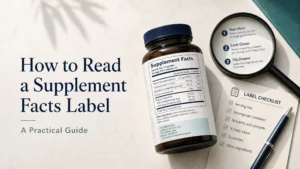
- Check the product name and the Supplement Facts panel for the ingredient name (for example, “hydrolyzed collagen”, “collagen peptides”, or a specific collagen type if listed).
- Look for the amount per serving and the number of servings per container. Manufacturers set these; they are not government-recommended doses.
- Use the Dietary Supplement Label Database (DSLD) to compare labels and see declared ingredient amounts and manufacturer contact information.
- Use the Dietary Supplement Ingredient Database (DSID) if you want analytical data about ingredients in some products. Both databases are public federal resources that can help you verify product content.
- Beware of claims that a product “prevents,” “treats,” or “cures” disease — such claims are red flags for noncompliant labeling.
Interactions and contraindications
Federal consumer guidance recommends caution because supplements can interact with medicines and health conditions. For collagen products specifically:
- Allergies: Some products are derived from fish, shellfish, eggs, or other animal sources. If you have food allergies, check the ingredient list and any allergen statements carefully.
- Pregnancy and breastfeeding: Federal guidance for dietary supplements in general advises consulting a health care professional before use.
- Medications and medical conditions: Supplements may affect or be affected by prescription medicines or underlying health issues. Talk with your clinician or pharmacist about potential interactions.
When in doubt, bring the exact product label or a picture of it to your health care visit so a clinician can review ingredients and amounts.
When to seek care
- Stop using a supplement and seek medical attention if you develop signs of a serious allergic reaction (such as difficulty breathing, swelling of the face or throat, or hives).
- Consult your health care provider if you experience new or worsening symptoms after starting a supplement, or if you’re considering a supplement for a medical condition such as osteoarthritis or an inflammatory joint disorder.
- Talk with your clinician before starting supplements if you are pregnant, breastfeeding, have chronic health conditions, or take prescription medications.
Bottom line
Collagen supplements are widely available and vary in source and processing. U.S. federal agencies note that supplements are not evaluated or approved by the FDA for treating disease, and authoritative dosing or efficacy recommendations for collagen are not provided by the listed federal sources. If you’re considering collagen for skin or joint concerns, verify a product’s label using federal databases, discuss it with your clinician, and be cautious about marketing claims that sound definitive.