In this guide
- What this guide covers
- Key points at a glance
- 1. Begin by clarifying your goal and baseline
- Quick baseline steps
- 2. Prioritize a short, evidence-informed set of options
- Common gaps worth considering
- When a simple multivitamin makes sense
- 3. Build a one-week, 3‑product example routine
- 4. Practical supplement checklist to avoid unnecessary supplements
- 5. How to avoid unnecessary supplements and marketing traps
- 6. Limitations and when to ask a clinician
- How to compare products later
- Bottom line
- Editorial note
- References
- Related VitaEvidence reading
Most people don’t need a long list of bottles to support health — a short, focused supplement routine can fill likely gaps without unnecessary expense or risk. This guide shows how to set priorities, pick just a few sensible products, and keep a checklist to avoid overlap and harm.
What this guide covers
- How to decide which supplements are worth considering for common goals
- A practical checklist and sample one-week routines for typical adults
- A framework to compare products later and when to consult a clinician
Key points at a glance
- Start with diet and lifestyle first; supplements should fill gaps, not replace healthy eating [3][4].
- Limit yourself to a few targeted supplements based on age, diet, lab results, or clinical needs — not every available product.
- Use a checklist to avoid duplicate ingredients, high total doses, and risky combinations; check third-party testing and label clarity [2][1].
- Ask a clinician before taking supplements if you are pregnant, breastfeeding, have chronic disease, take prescription medicine, or have kidney/liver problems.
1. Begin by clarifying your goal and baseline
People take supplements for very different reasons: fill dietary gaps, bone health, prevent deficiency, sports performance, or better sleep. The starting question is not “how many supplements should I take?” but “what specific need am I trying to meet?”
Quick baseline steps
– List your major goals (example: bone health, low energy, vegan diet).
– Check your usual food patterns against MyPlate and the Dietary Guidelines to spot likely shortfalls (iron, B12, vitamin D, omega‑3s) [3][4].
– Note any medications, allergies, or medical conditions that affect nutrient needs or safety.
2. Prioritize a short, evidence-informed set of options
Focus on a few supplements that have good rationale for your situation. Below are common, evidence-calibrated priorities — use them only when relevant to your diet, labs, or clinician advice.
Common gaps worth considering
– Vitamin D: many adults, especially with limited sun exposure, may benefit from testing or supplementation; follow NIH guidance and clinical advice [1].
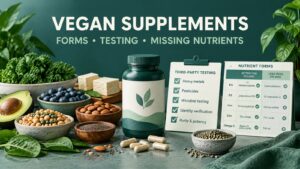
– Vitamin B12: people on strict vegan diets or with absorption issues may need B12 supplements [1].
– Iron: supplement only if deficient or at higher risk (e.g., heavy menstrual bleeding); unnecessary iron can cause harm [1].
– Calcium and vitamin D together for bone health in older adults or those with limited dairy — check clinical context [1][4].
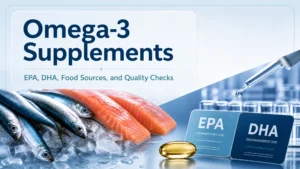
– Omega‑3 (EPA/DHA): consider if fish intake is low and your goal is cardiovascular or certain inflammatory benefits; evidence varies by outcome [1][6].
When a simple multivitamin makes sense
A moderate-dose multivitamin may be a practical option for some people for people who eat unevenly and have no specific deficiency — it’s often simpler than stacking many separate pills. Choose one with moderate doses (not megadoses) and clear labeling [1][2].
3. Build a one-week, 3‑product example routine
Below are compact, realistic examples. These are illustrative patterns, not universal recommendations.
H3: Basic adult focused on general nutrition
– Daily: One balanced multivitamin (morning with food).
– As needed/winter months: Vitamin D (if low or limited sun exposure; follow clinician/testing).
– If low seafood: Fish oil or algae-derived EPA/DHA (1 product, not stacked with other omega‑3 supplements).
H3: Vegan adult
– Daily: Vitamin B12 (or multivitamin containing B12).
– Vitamin D as above.
– Consider iodine only if diet lacks iodized salt/seaweed (check lab/clinician first).
H3: Older adult (65+)
– Daily: Multivitamin formulated for older adults or separate vitamin D + calcium if advised by clinician.
– Monitor B12 status and consider supplementation if absorption issues or low lab values.
H3: Recreational exerciser (non-elite)
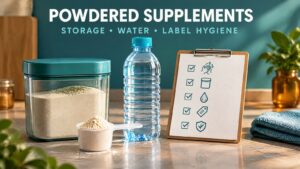
– Daily: Protein from food first; consider a single protein powder if dietary protein is insufficient.
– Creatine can be considered for strength and muscle maintenance in healthy adults (see NIH ODS guidance and consult clinician if kidney disease) [1][6].
Keep to 1–3 products unless a clinician prescribes otherwise.
4. Practical supplement checklist to avoid unnecessary supplements
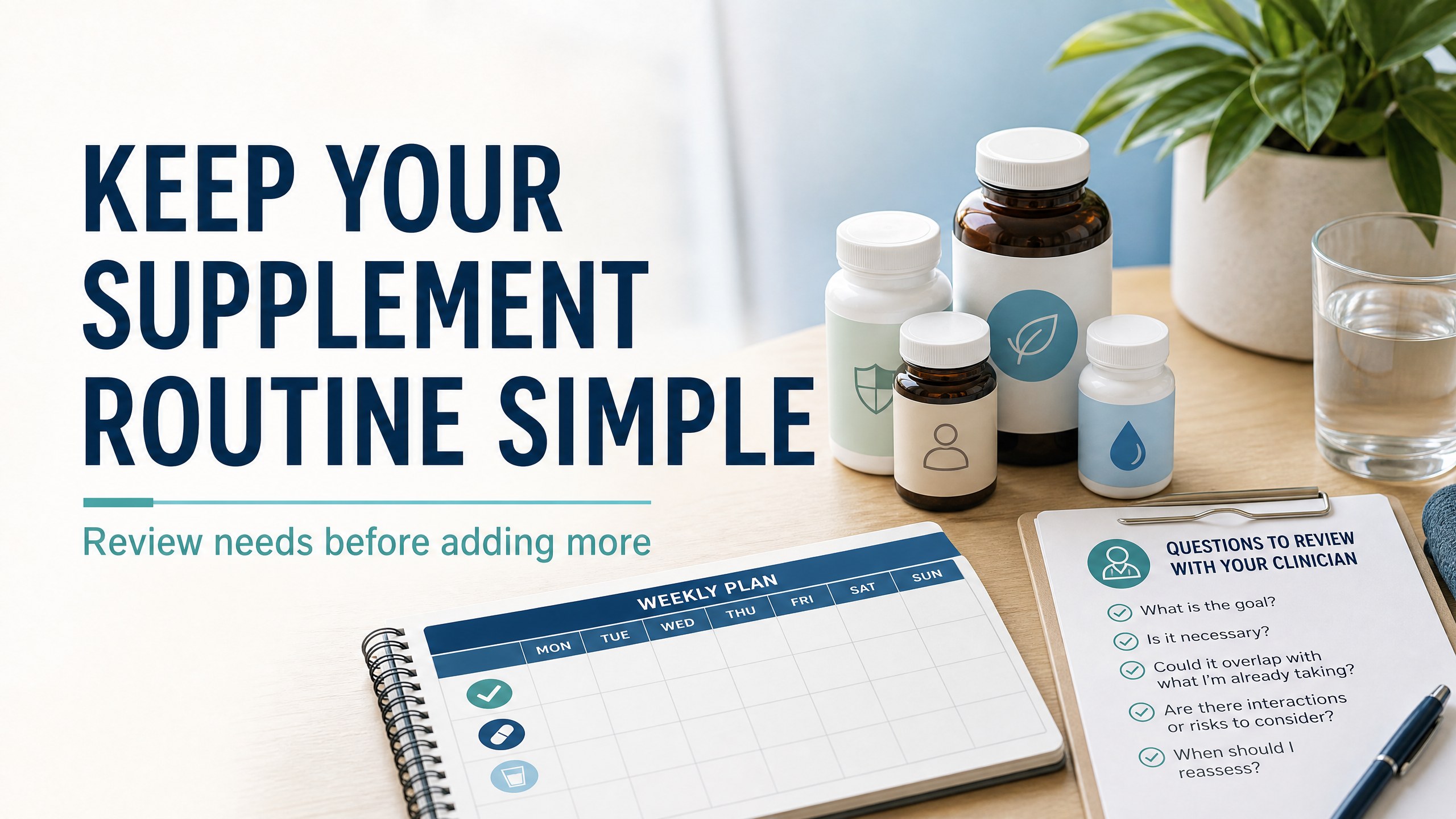
- Do I have a specific, evidence-based reason for this supplement? (deficiency, diet gap, age-related need)
- Is there a less risky or cheaper way (food, fortified foods, lifestyle)? [3][4]
- Could this duplicate another product I already take? Add ingredient totals to one list.
- Does the product contain high doses (multiple times the RDA) or a proprietary blend with unclear amounts? Avoid if unnecessary [2].
- Are there possible interactions with my medications? (Check with clinician or pharmacist) [2].
- Is the product third-party tested and labeled with batch or lot numbers? Prefer transparent labeling.
5. How to avoid unnecessary supplements and marketing traps
- Beware of “complete stack” pitches that encourage many products; most people don’t need specialized boosters or detox cleanses.
- Be skeptical of claims like “restore youthful hormones” or “detox liver” — these are frequently unsupported [2].
- Don’t combine multiple supplements that add the same nutrient (example: multivitamin + single-vitamin D + fortified beverage could exceed safe levels). Use your checklist to sum amounts.
6. Limitations and when to ask a clinician
Supplements can help in many situations, but they are not benign for everyone. Ask a clinician (or registered dietitian/ pharmacist) before starting or changing supplements if you are:
– Pregnant, planning pregnancy, or breastfeeding — prenatal needs are specific and should be clinician-guided.
– A child or adolescent — dosing and safety differ from adults.
– On prescription medicines (including blood thinners, antiepileptics, statins) — many interactions exist.
– Living with kidney or liver disease, autoimmune disease, diabetes, or a history of eating disorders — nutrient needs and safety change.
– Considering high-dose nutrients or treatment of a medical condition (e.g., high-dose vitamin D, iron replacement) — these should be monitored with labs and clinical supervision [1][2].
How to compare products later
When you’re ready to pick a supplement, compare labels and quality markers rather than marketing claims. Key attributes to check:
– Supplement Facts: exact nutrient names and amounts (% Daily Value).
– Ingredient forms (e.g., methylcobalamin vs. cyanocobalamin for B12) and whether amounts match established RDAs or therapeutic targets [1].
– Serving size and number of servings per container to calculate true cost and daily intake.
– Presence of allergens, fillers, added sugars, or unnecessary botanicals.
– Third‑party testing seals or certificates of analysis and clear batch/lot numbers.
– Avoid products that hide amounts in “proprietary blends.”
[Affiliate product comparison block—add verified iHerb links after approval]
Bottom line
A simple supplement routine usually means one to three thoughtfully chosen products that address clear needs (dietary gaps, age-related risks, or documented deficiencies). Start with diet and lifestyle, prioritize high-value supplements based on your situation, use a checklist to avoid duplication or excess, and consult a clinician for pregnancy, chronic disease, or potential interactions. Keeping it small and intentional reduces cost, complexity, and risk.
Editorial note
VitaEvidence Editorial Team. Last reviewed: August 2026. For general education, not personal medical advice. Read our Editorial Policy.
References
[1] NIH Office of Dietary Supplements — Fact Sheets and resources. https://ods.od.nih.gov/factsheets/list-all/
[2] U.S. Food & Drug Administration — Dietary Supplements. https://www.fda.gov/food/dietary-supplements
[3] USDA MyPlate. https://www.myplate.gov/
[4] Dietary Guidelines for Americans 2020–2025. https://www.dietaryguidelines.gov/
[5] Nutrients (2025) Mini‑review: Sleep, nutrition, and supplementation. https://doi.org/10.3390/nu17111779
[6] Nutrients (2025) Systematic review/meta‑analysis: Dietary supplement interventions and sleep quality. https://doi.org/10.3390/nu17243952
[7] Frontiers in Nutrition (2025) Systematic review: Supplements and elite‑athlete performance. https://doi.org/10.3389/fnut.2025.1675654