In this guide
- Key takeaways
- What batch numbers and expiration dates mean
- Why these identifiers matter
- Different regulatory contexts: drugs vs. dietary supplements
- Where to find batch numbers and expiration dates
- If you suspect a product is unsafe, adulterated, or mislabeled
- Limitations to traceability and what consumers should know
- When to contact a clinician
- Reporting and regulatory resources
- Safety disclaimer
- References
- Related VitaEvidence reading
Category: Consumer Protection and Product Verification
Consumers rely on product labels for information about safety, potency, and proper use. Batch (lot) numbers, expiration dates, and traceability systems are an important part of that information—especially for medicines and dietary supplements. This article explains what these identifiers mean, how to find them, why they matter, and practical steps you can take if you suspect a product is unsafe or counterfeit.
Key takeaways
- Batch (lot) numbers and expiration dates help manufacturers and regulators track and recall specific product groups when there are safety concerns.
- For drugs, manufacturers must maintain records that support traceability; for dietary supplements, regulatory oversight differs and consumers should use extra caution.
- If you experience an adverse effect or suspect a product is tainted, save the product label, packaging, batch number, photos, and purchase receipt—then report it to the FDA and your clinician as appropriate.
- The FDA maintains databases and notifications about tainted or fraudulently labeled products; the FTC provides guidance on misleading health claims.
What batch numbers and expiration dates mean
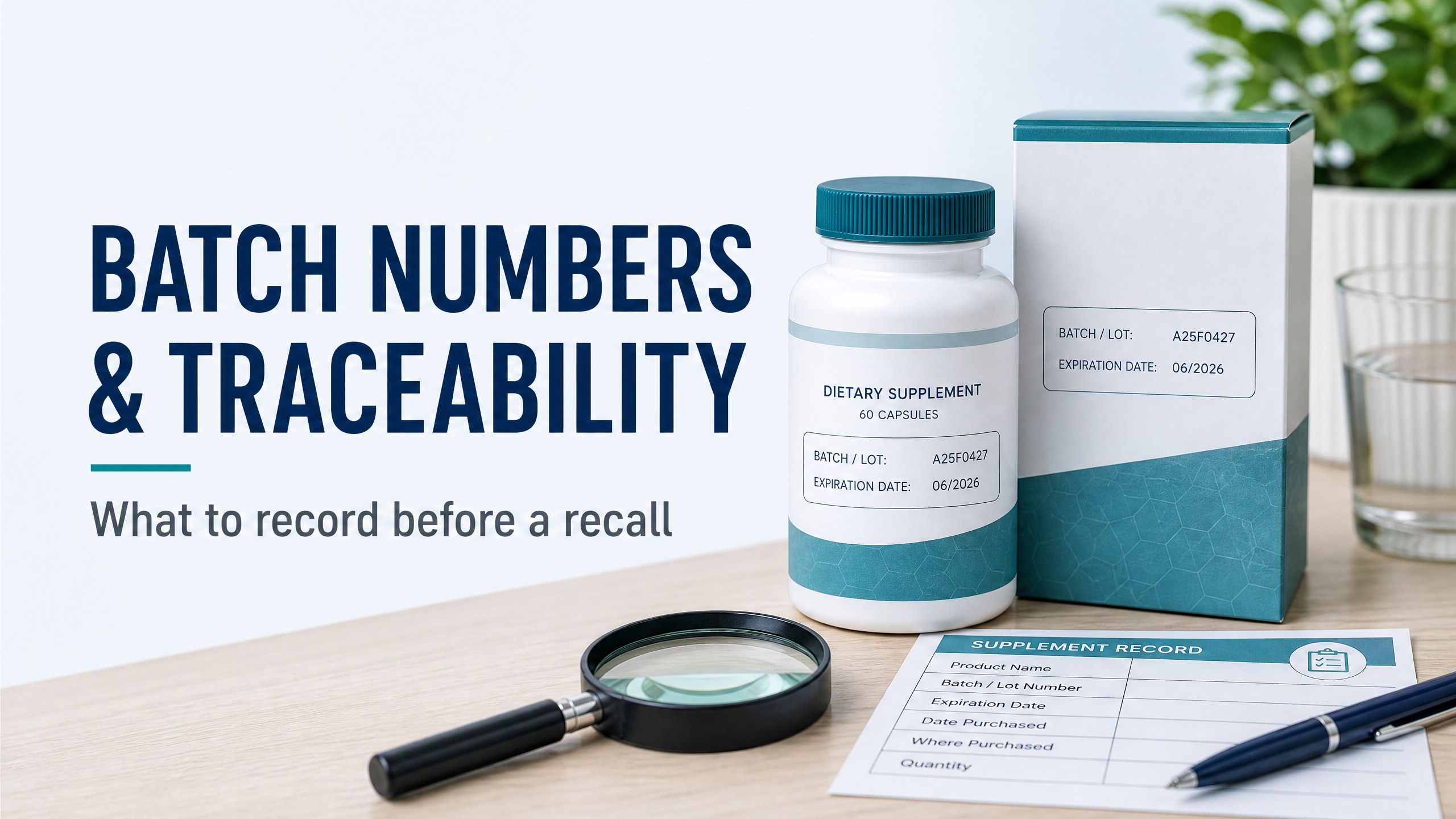
- Batch or lot number: A code the manufacturer assigns to a group of units produced under the same conditions. It links those units to production and quality-control records. If a quality problem is found, that code helps the company and regulators find and remove affected products.
- Expiration date (or “use by”/“best by”): A date associated with the manufacturer’s stated quality or stability expectations under specified conditions. Prescription-drug expiration dates are supported by stability testing; supplement labeling practices and stability evidence can vary, so an expired supplement should not be treated as automatically safe or unsafe.
Why these identifiers matter
- Targeted recalls: Batch numbers let companies and regulators issue recalls for only the affected batches, rather than removing all products with the same name. That minimizes unnecessary waste while protecting consumers.
- Adverse event reporting and investigation: Health professionals and agencies use batch/lot numbers to link clinical problems to specific production runs. Providing these codes speeds investigations.
- Counterfeit and adulterated products: Traceability information can help determine whether a product genuinely came from a named manufacturer or is counterfeit. The FDA has documented cases where products—particularly some sexual enhancement, energy, and certain honey-based products—contained hidden active drug ingredients or undisclosed substances (see References). These are reasons to be cautious about products that make unusually strong claims.
Different regulatory contexts: drugs vs. dietary supplements
– Drugs (prescription and over-the-counter): Manufacturing controls, labeling, lot tracking, and expiration dating are governed by federal drug regulations and good manufacturing practices. These requirements support traceability and product integrity.
– Dietary supplements: The FDA regulates supplements under a different framework than drugs. Manufacturers are responsible for ensuring safety and truthful labeling, but dietary supplements do not require FDA premarket approval. Labeling rules and good manufacturing practices apply, but oversight is different from that for drugs. Because of that, some supplement products on the market have been found to contain hidden drug ingredients or to be misbranded (see References). For general questions about supplements, the FDA offers consumer information and labeling guidance (see References).
Where to find batch numbers and expiration dates
- Packaging locations vary by product and manufacturer. Common places include the bottom of a bottle, the crimp or cap of a tube, the label near the Nutrition or Supplement Facts panel, the carton flap, or printed on the outer box.
Table: Typical places to check for batch/lot numbers and expiration dates
| Product type | Common places to check |
|—|—|
| Bottled supplements or medicines | Bottom of bottle, near the neck, printed on the label |
| Boxes or cartons | Flaps, side panel, near bar code |
| Tubes (creams, gels) | Crimped end, cap, or tube body |
| Blister packs | Printed on each cavity or on the backing foil |
| Prepackaged foods or honey-based products | Cap, neck, label, or outer carton |
Practical steps: what to do when you buy or use a product
– Inspect labels before use. Note the product name, manufacturer, batch/lot number, expiration date, and any contact information. For dietary supplements, also review the Supplement Facts panel and ingredient list; learn how to read those labels (see our internal guide: /how-to-read-supplement-facts-label/).
– Keep purchase records and photos. For online purchases, save order confirmations, screenshots of the product page, and images showing labels and codes. These are useful if you need to report a problem.
– Store products as directed. Temperature, humidity, and light can affect product stability and may change how long a product remains usable.
– Be cautious with products claiming rapid or dramatic health benefits, or products from unfamiliar manufacturers with scant contact information. The Federal Trade Commission (FTC) provides guidance on truthful health claims for marketers and consumers (see References).
If you suspect a product is unsafe, adulterated, or mislabeled
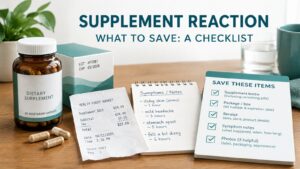
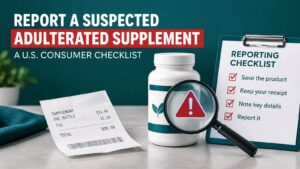
- Preserve evidence: Do not throw away the product, packaging, or receipt. Record the batch/lot number and expiration date, take clear photos of labels, and note where and when you bought it.
- Seek medical attention for urgent symptoms. If you or someone else has a severe reaction, call 911 or go to an emergency department. If symptoms are concerning but not emergent, contact your clinician and share the product details. For questions about supplement–medication interactions, see our internal resource: /supplements-medication-interactions-questions/.
- Report to the FDA: The FDA encourages consumers and health professionals to report adverse events, product quality problems, or suspicious products. Include batch/lot numbers, expiration dates, photos, and purchase information when possible. The FDA provides ways to contact the Center for Drug Evaluation and Research (CDER) for human drugs and has specific consumer-reporting resources (see References).
- Check FDA notices and databases: Before assuming all products with the same name are unsafe, check the FDA’s health fraud and product databases and medication health fraud notifications. The FDA posts notifications about sexual enhancement, energy products, and other categories when hidden active drug ingredients or contamination are found (see References). Use the FDA’s health fraud product database to look up product histories and prior warnings.
Limitations to traceability and what consumers should know
- Traceability depends on the manufacturer and category. While batch codes facilitate recalls and investigations, the level of regulatory oversight and recordkeeping can differ between drugs and dietary supplements. This means that not every product problem will have the same speed or clarity of response.
- Not all warnings apply to every product with a similar name. The FDA may identify a specific product or batch as problematic; do not assume every similarly named product or different batch is affected without checking official notices.
- The FDA does not preapprove dietary supplements for safety and effectiveness the way it does for drugs. That is why consumers should be vigilant and report concerns.
When to contact a clinician
- If you experience any unexpected or severe symptoms after using a product (e.g., difficulty breathing, chest pain, fainting, severe allergic reactions), seek emergency medical care immediately.
- If you have new or unexplained symptoms that are not emergent but may be related to a product (e.g., palpitations, persistent GI symptoms, rash), contact your primary care clinician or the clinician who manages your medications. Bring the product, label, batch/lot number, photos, and receipt if possible.
- If you are taking prescription medications, check with your clinician or pharmacist before starting supplements that could interact with your drugs.
Reporting and regulatory resources
- FDA guidance on avoiding products contaminated with hidden ingredients and what to look for.
- FDA notifications about tainted honey-based products and other items found to contain hidden active drug ingredients.
- FDA health fraud product database and medication health fraud notifications that list products previously identified as adulterated, mislabeled, or unsafe.
- For questions about dietary supplements, including labeling and regulatory status, review FDA consumer information and the dietary supplement labeling guide.
- The FTC offers guidance on truthful advertising and health-product claims.
- If you need to report a suspicious product or adverse event involving human drugs, the FDA provides contact paths and reporting options (see References).
Safety disclaimer
This article is educational and not medical advice. It does not diagnose, treat, or prevent any condition. If you have health concerns after using a product, contact a licensed clinician. Reporting suspected adulteration to the FDA helps public health investigations.
References
- https://www.fda.gov/drugs/medication-health-fraud/avoiding-products-contaminated-hidden-ingredients
- https://www.fda.gov/consumers/health-fraud-scams/tainted-honey-based-products-hidden-active-drug-ingredients
- https://www.fda.gov/consumers/health-fraud-scams/health-fraud-product-database
- https://www.fda.gov/food/dietary-supplements
- https://www.fda.gov/food/information-consumers-using-dietary-supplements/questions-and-answers-dietary-supplements
- https://www.fda.gov/food/dietary-supplements-guidance-documents-regulatory-information/dietary-supplement-labeling-guide
- https://www.fda.gov/drugs/medication-health-fraud-notifications/sexual-enhancement-and-energy-product-notifications
- https://www.fda.gov/drugs/medication-health-fraud/medication-health-fraud-notifications
- https://www.ftc.gov/news-events/topics/truth-advertising/health-claims
- https://www.ftc.gov/business-guidance/resources/health-products-compliance-guidance
- https://www.fda.gov/about-fda/cder-contact-information/ways-consumers-contact-fda-about-human-drugs
Last reviewed: August 2026
VitaEvidence Editorial Team