In this guide
- Key takeaways
- Why “too good to be true” claims matter
- Common red flags and what they may mean
- Table — Practical red flags and quick checks
- What the FDA and FTC say — and what that means for you
- Practical steps to evaluate and protect yourself
- Limitations and what regulators can and can’t do
- When to contact a clinician or seek urgent care
- Reporting concerns and staying informed
- Safety disclaimer
- Safety disclaimer
- References
- Related VitaEvidence reading
Category: Consumer Protection and Product Verification
Key takeaways
- Some supplements and “natural” products have been found to contain hidden prescription drugs or unapproved active ingredients. The FDA maintains a health fraud product database and posts specific notifications about tainted products.
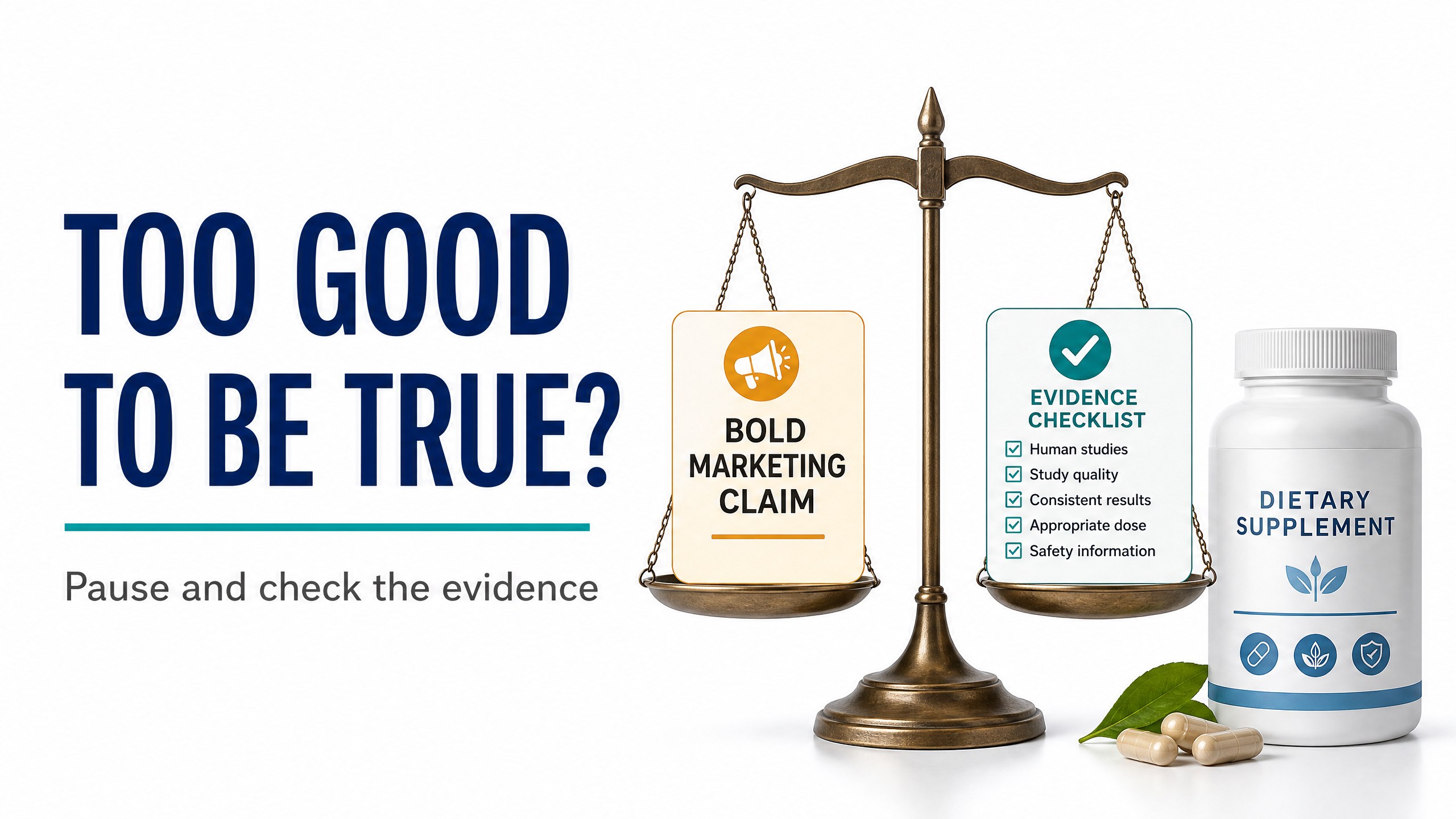
- Promises of quick, dramatic results (instant weight loss, erectile recovery, curing chronic disease) are common red flags. The FTC and FDA both advise skepticism of unverified health claims.
- Check labels carefully, use official FDA resources before buying, report suspicious products, and contact a clinician if you have side effects or medication concerns.
Why “too good to be true” claims matter
Dietary supplements and many over‑the‑counter “natural” products are widely available without pre‑market approval by the FDA for safety and effectiveness. That means products can be sold legally without FDA review, and the agency relies on post‑market actions if a product is unsafe, misbranded, or adulterated (FDA: Dietary Supplements). Because of that regulatory context, some products that promise rapid, dramatic improvements have been found to contain hidden active drug ingredients or other harmful contaminants (FDA guidance on products contaminated with hidden ingredients).
The FDA and FTC monitor and act against fraudulent and dangerous products. The FDA posts specific notifications when it identifies tainted or adulterated items (for example, some honey‑based products with hidden active drug ingredients) and keeps a searchable Health Fraud Product Database. The FTC enforces truth‑in‑advertising rules and provides guidance for health product claims.
Common red flags and what they may mean
- Claims of quick fixes: “Lose X pounds in Y days,” “restore sexual performance overnight,” or “cures diabetes/narcolepsy/arthritis.” These are classic marketing tactics that may indicate unsupported claims or adulteration.
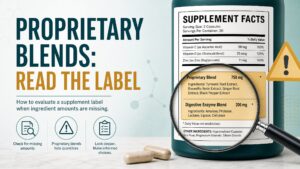
- “Secret” or proprietary blends: Vague ingredient lists that hide amounts can conceal drugs or stimulants.
- Imported or small‑label products sold through social media or non‑reputable marketplaces: Less regulatory oversight and harder traceability.
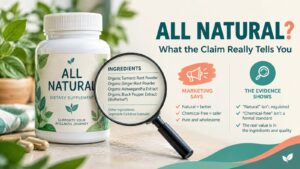
- “All natural” plus drug‑like effects: When a product promises the same effects as prescription drugs but claims to be entirely natural, the product may contain hidden active pharmaceutical ingredients.
- No manufacturer contact info or implausible clinical claims without citations.
Table — Practical red flags and quick checks
| Red flag claim or label feature | Why it’s suspicious | What to check/do |
|---|---|---|
| “Lose weight fast”/“miracle”/“cure” claims | Unproven, often marketing for adulterated products | Search FDA Health Fraud Product Database; be skeptical of dramatic promises (FDA & FTC guidance) |
| “Proprietary blend” with no ingredient amounts | Can hide stimulants or drug analogs | Look for full Supplement Facts panel; avoid products without clear labeling (/how-to-read-supplement-facts-label/) |
| “All natural” but drug‑like effects (e.g., immediate erectile improvement) | FDA has found sexual enhancement products containing hidden prescription drugs | Check FDA medication health fraud notifications and sexual enhancement product warnings |
| Honey, gummies, or “natural” forms claiming therapeutic effects | FDA identified some honey‑based products with hidden active drug ingredients | Review FDA notices about tainted honey products and the Health Fraud Product Database |
| Overseas manufacturer with no U.S. address | Harder to trace and harder for regulators to act | Prefer products with verifiable manufacturer contact info; report suspicious items to FDA |
What the FDA and FTC say — and what that means for you
- FDA: The agency has found hidden active ingredients in some dietary supplements and “natural” products. Examples and notifications are posted publicly, including alerts about honey‑based products containing undeclared drug ingredients (FDA: Tainted honey products; FDA guidance on products contaminated with hidden ingredients). The FDA also maintains a Health Fraud Product Database that lists products it has found to be unsafe, mislabeled, or adulterated (FDA: Health Fraud Product Database).
- FDA (general supplement oversight): Dietary supplements are regulated under different rules than prescription drugs; manufacturers are responsible for label accuracy and safety, and the FDA acts after problems are identified (FDA: Dietary Supplements; FDA: Questions and answers).
- FTC: Advertisers must have competent and reliable scientific evidence to back up health claims, and deceptive or unsupported claims are illegal (FTC: Truth in advertising; FTC health products compliance guidance).
Because of these realities, you cannot assume a product is safe just because it’s sold online or labeled “natural.” Use the FDA’s public resources to check whether a product or similar items have been flagged.
Practical steps to evaluate and protect yourself
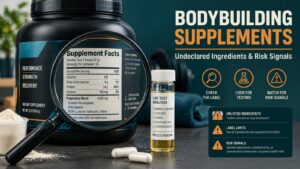
- Read the label carefully. Look for a full Supplement Facts panel with ingredient amounts, manufacturer name and address, and lot numbers. If key information is missing, consider that a warning sign (/how-to-read-supplement-facts-label/).
- Search official sources. Use the FDA’s Health Fraud Product Database and the FDA’s consumer alerts to see whether a product or brand has been subject to warnings or recalls (FDA: Health Fraud Product Database; FDA: Medication health fraud notifications).
- Be skeptical of dramatic clinical claims. The FTC and FDA advise that claims of cures, immediate performance boosts, or rapid weight loss usually lack reliable evidence and may mask adulteration (FTC: Truth in advertising; FDA: Medication health fraud).
- Consider product traceability. Reputable manufacturers provide contact information and batch/lot numbers. If you can’t verify the manufacturer, think twice.
- Watch for hidden ingredients. Avoid products that list “proprietary blends” without quantities or that promise effects similar to prescription drugs (FDA guidance on products contaminated with hidden ingredients).
- Ask your clinician about interactions. If you take prescription medications, talk with a clinician or pharmacist before starting any supplement—products with hidden active ingredients can cause harmful interactions (/supplements-medication-interactions-questions/).
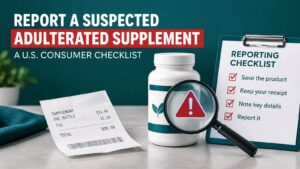
- Report suspicious or adverse events. If you suspect a product is adulterated, unsafe, or caused harm, report it to the FDA. The agency provides ways for consumers to contact CDER and report concerns (FDA: Ways consumers contact FDA about human drugs). Reporting helps regulators identify and remove dangerous products.
Limitations and what regulators can and can’t do
- The FDA does not pre‑approve most dietary supplements. Instead, it acts after safety problems are reported or discovered. Because of this, not all problematic products are identified immediately.
- A regulatory action against one product or batch does not mean every product with a similar name or ingredient is unsafe. FDA findings listed in the Health Fraud Product Database apply to specific items and lots; do not generalize a warning from one product to all similar‑named products (FDA: Health Fraud Product Database).
- Third‑party seals do not guarantee safety or efficacy. While independent testing can be useful, seals and certificates vary in scope and do not substitute for regulatory oversight.
When to contact a clinician or seek urgent care
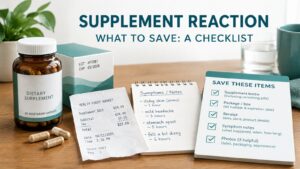
- Stop using any product that causes unexpected symptoms, allergic reactions, chest pain, difficulty breathing, fainting, severe gastrointestinal symptoms, confusion, seizures, or other severe signs.
- Contact your clinician right away if you develop new symptoms after taking a supplement, or if you suspect a supplement caused interaction with your prescription medicines (for help assessing interactions, see /supplements-medication-interactions-questions/).
- Seek emergency care for life‑threatening symptoms. If you can, bring the supplement container or label to help clinicians and public health authorities identify the product.
Reporting concerns and staying informed
- Check FDA notifications and the Health Fraud Product Database before purchasing a new supplement or when you see extraordinary claims.
- Report problematic products or adverse events to the FDA using the agency’s consumer contact options for human drugs and related products (FDA: Ways consumers contact FDA about human drugs).
Safety disclaimer
This article provides general educational information and does not replace personalized medical advice. If you have health concerns or questions about a specific product, talk to a clinician or pharmacist.
Safety disclaimer
This article provides general information and is not medical advice. It is not a substitute for professional medical evaluation. If you have health concerns, consult a licensed clinician.
References
- https://www.fda.gov/drugs/medication-health-fraud/avoiding-products-contaminated-hidden-ingredients
- https://www.fda.gov/consumers/health-fraud-scams/tainted-honey-based-products-hidden-active-drug-ingredients
- https://www.fda.gov/consumers/health-fraud-scams/health-fraud-product-database
- https://www.fda.gov/food/dietary-supplements
- https://www.fda.gov/food/information-consumers-using-dietary-supplements/questions-and-answers-dietary-supplements
- https://www.fda.gov/food/dietary-supplements-guidance-documents-regulatory-information/dietary-supplement-labeling-guide
- https://www.fda.gov/drugs/medication-health-fraud-notifications/sexual-enhancement-and-energy-product-notifications
- https://www.fda.gov/drugs/medication-health-fraud/medication-health-fraud-notifications
- https://www.ftc.gov/news-events/topics/truth-advertising/health-claims
- https://www.ftc.gov/business-guidance/resources/health-products-compliance-guidance
- https://www.fda.gov/about-fda/cder-contact-information/ways-consumers-contact-fda-about-human-drugs
Last reviewed: August 2026
VitaEvidence Editorial Team