In this guide
- Key Takeaways
- What a 30-minute routine can—and cannot—do
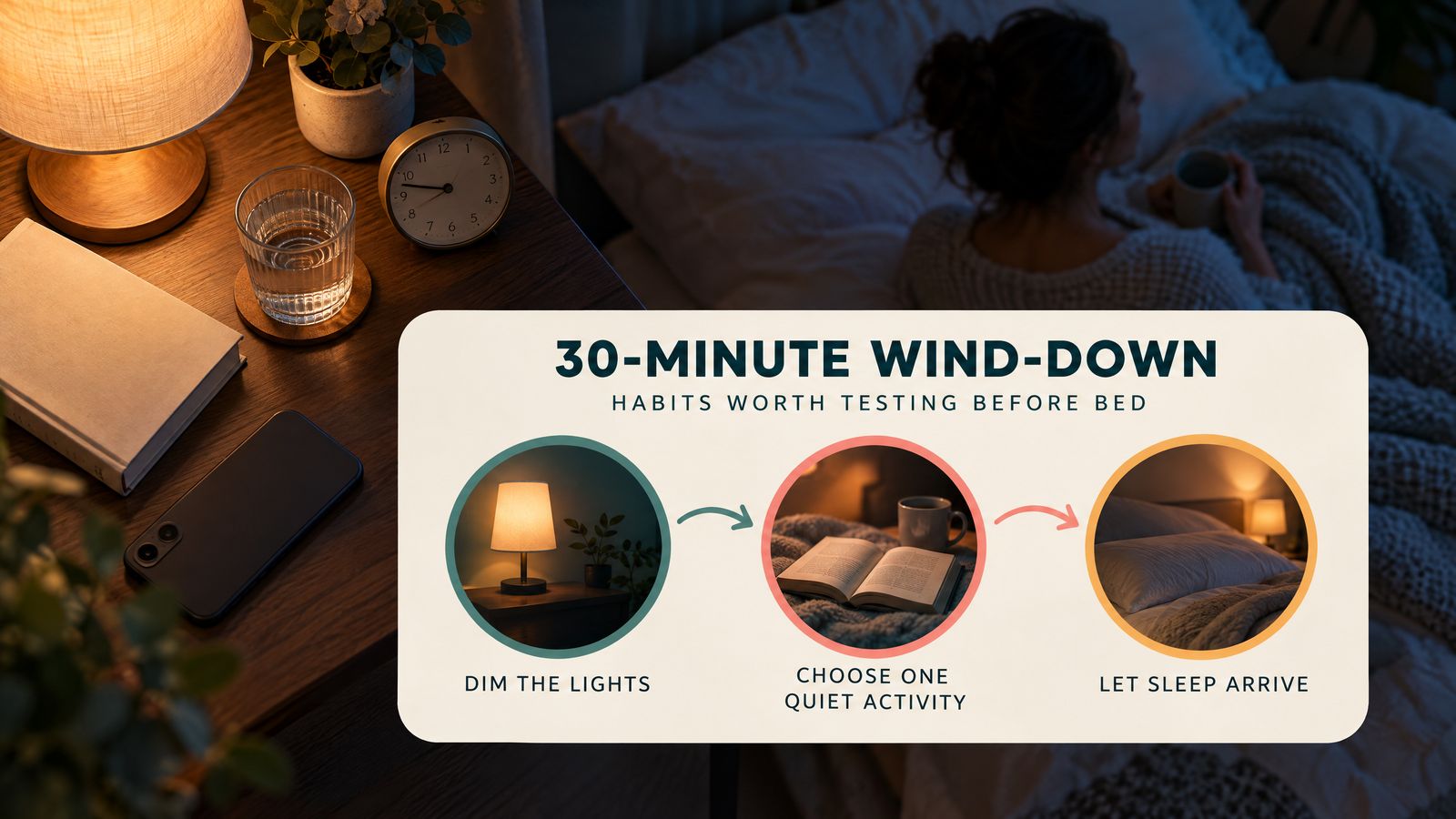
- A practical 30-minute sequence to test
- Minutes 30–25: Close the day
- Minutes 25–15: Choose one quiet activity
- Minutes 15–5: Make the room sleep-ready
- Minutes 5–0: Get into bed without demanding sleep
- Habits with stronger support—and habits with limits
- Worth prioritizing
- Reasonable to test, but not guaranteed
- How to run a fair personal experiment
- Safety/When to Seek Care
- Bottom Line: Keep the routine small and testable
- References
A bedtime routine does not need to be elaborate. A short transition from daytime activity to sleep may reduce stimulation and make the bedroom a predictable cue for rest. But a “wind-down routine” is not a guaranteed treatment for insomnia, and no single habit works for everyone.
A practical approach is to reserve the final 30 minutes for low-stimulation activities, then test one or two changes. The goal is not to force sleep, but to make it more likely without turning bedtime into another performance task.
Key Takeaways
- A 30-minute routine is a reasonable structure, not a medically proven magic number.
- The best-supported basics are a regular sleep schedule, a sleep-friendly bedroom, less bright light and stimulating screen use, and avoiding late caffeine, alcohol, and heavy meals.
- Reading, soothing music, a warm bath or shower, breathing, and gentle relaxation may be worth testing, but evidence for any one activity is less certain than general sleep guidance.
- Blue-light glasses and “sleep hacks” should not be treated as necessary. Research on light-filtering lenses is mixed, and the content, timing, and duration of screen use also matter.
- Ongoing or disruptive sleep problems call for evaluation rather than an ever-expanding bedtime routine.
What a 30-minute routine can—and cannot—do
The 30-minute label is a convenient container. The Centers for Disease Control and Prevention (CDC) advises turning off electronic devices at least 30 minutes before bedtime, while the National Heart, Lung, and Blood Institute (NHLBI) suggests using the hour before bed for quiet time. Neither establishes that exactly 30 minutes is optimal for every adult.
Sleep also depends on factors outside the final half-hour, including total time allowed for sleep, daytime habits, stress, medications, pain, and sleep disorders. A routine cannot compensate indefinitely for too little time in bed or an untreated problem.
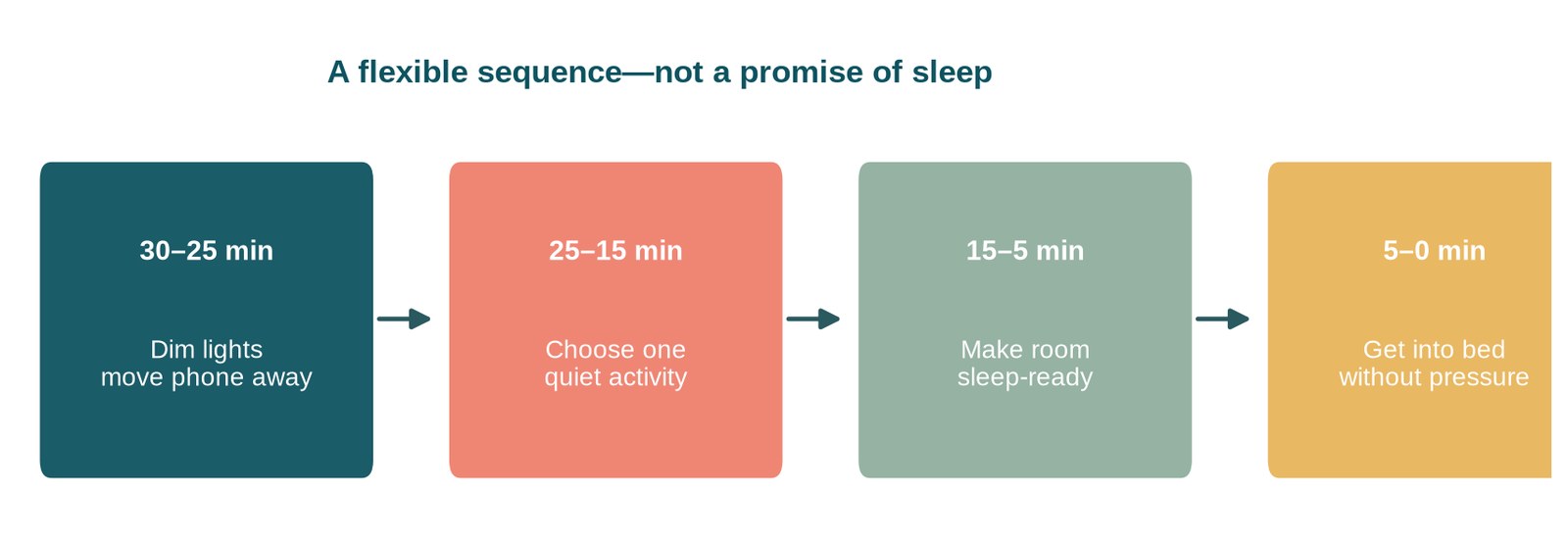
A practical 30-minute sequence to test
Minutes 30–25: Close the day
Use the first few minutes to set an alarm, prepare the next morning’s essentials, and make a brief to-do list if unfinished tasks keep circling in your mind. Then lower the lights and move the phone away from the bed or enable do-not-disturb mode.
This step is less about “detoxing” than reducing alerts, emotionally charged content, work, and bedtime delay. If a screen is necessary, choose a quiet, time-limited activity. Engagement, brightness, timing, and lost sleep time can all matter.
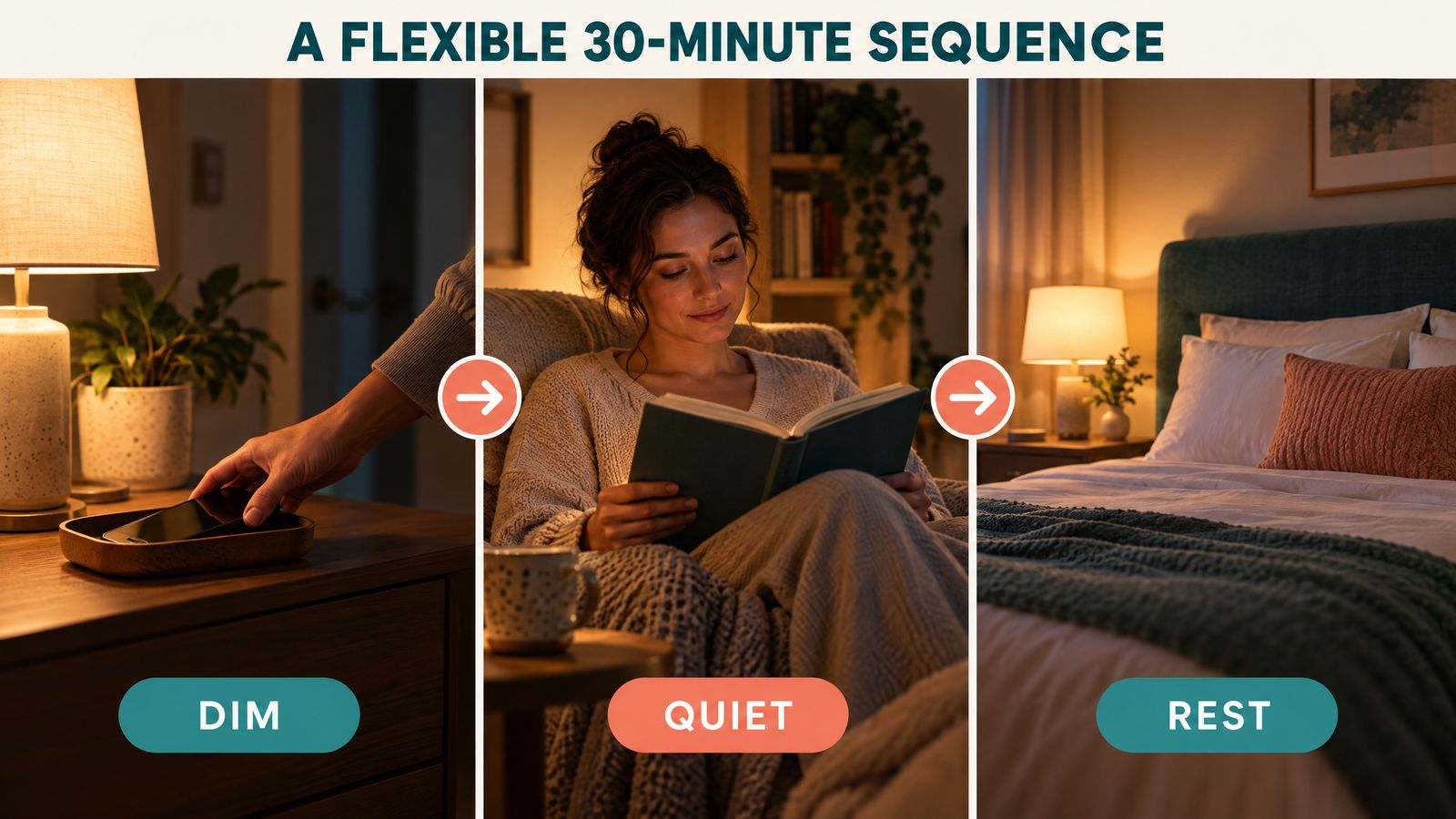
Minutes 25–15: Choose one quiet activity
Pick one activity that feels calming and is easy to stop:
- Read a paper book or an e-reader with low brightness and minimal notifications.
- Listen to quiet music or a familiar, low-intensity audio program.
- Take a warm bath or shower if it fits your schedule and does not leave you overheated.
- Practice slow breathing, mindfulness, or progressive muscle relaxation.
NHLBI and the National Institute on Aging (NIA) include quiet time, a warm bath, reading, soothing music, and relaxation techniques among reasonable sleep habits. These suggestions are practical, but studies of specific techniques often use small samples, varied protocols, and different outcomes. Feeling calmer is useful even when a routine does not reliably shorten sleep onset.
Choose what reduces stimulation rather than what looks most “perfect.” If meditation increases frustration, reading or music may be a better experiment.
Minutes 15–5: Make the room sleep-ready
Aim for a bedroom that is quiet, dark enough for comfort, and neither too hot nor too cold. Put away bright devices and address obvious noise or light sources. A dim night-light may be reasonable for safety.
The CDC and NHLBI emphasize a quiet, cool, comfortable sleep environment. Comfort and safety matter more than chasing a precise temperature.
Minutes 5–0: Get into bed without demanding sleep
Use the final minutes for easy breaths, a comfortable brief stretch, or a repeated phrase such as “rest is the task.” Do not use the clock to judge whether the routine is working. The purpose is consistency, not proof that sleep will happen on schedule.
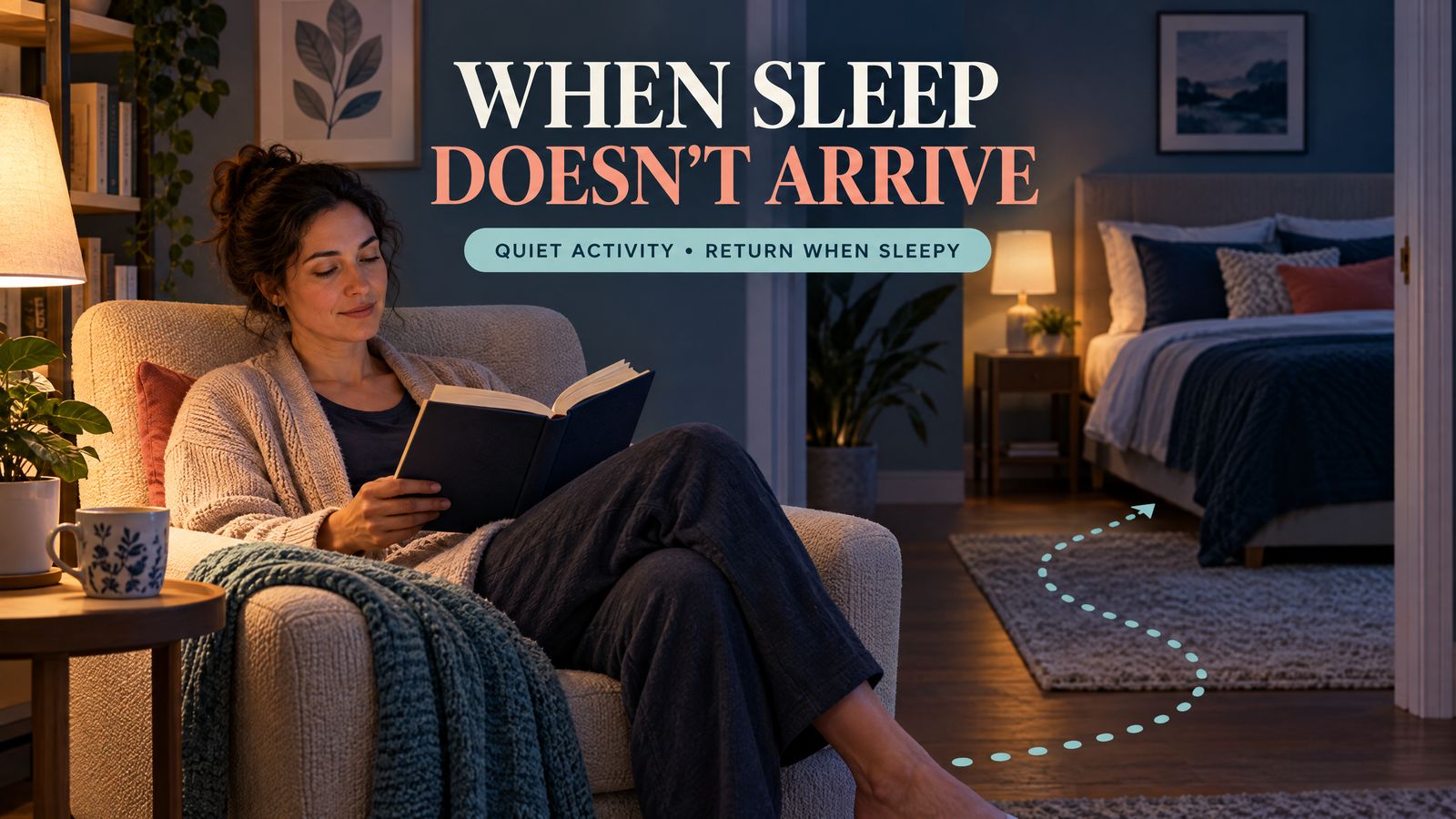
If you are wide awake and frustrated, CBT-I may include stimulus control—leaving the bed for a quiet activity and returning when sleepy. Because CBT-I involves coordinated techniques, a qualified program can explain how to use it.
| Habit to test | Potential role | Important limit |
|---|---|---|
| Dim bright light and reduce stimulating screen use | May reduce evening stimulation. | Content, timing, and lost sleep time still matter. |
| Paper reading, quiet music, or relaxation | Can provide a calming transition. | Specific effects vary; it is optional. |
| Regular wake time and enough sleep opportunity | Supports a predictable sleep-wake schedule. | A routine cannot replace evaluation for persistent problems. |
| Warm bath or shower | May be a comfortable cue for some people. | Avoid overheating or treating it as a cure. |
Habits with stronger support—and habits with limits
Worth prioritizing
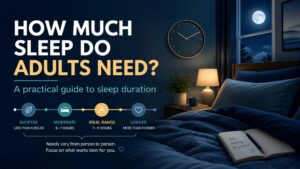
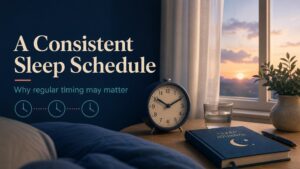
A stable wake time and adequate sleep opportunity. Similar bedtimes and wake times support the sleep-wake rhythm. NHLBI advises keeping weekend and weekday schedules close. Adults ages 18–60 generally need at least seven hours, according to the CDC, although individual needs vary.
Reducing late stimulants and sleep disruptors. Caffeine can remain active for hours, and NHLBI notes that its effects may last up to eight hours. Alcohol may initially cause drowsiness but can fragment sleep. Large meals may also be uncomfortable. These are variables worth observing.
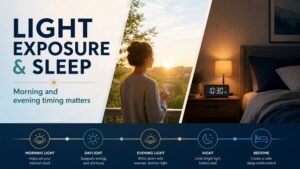
Reducing bright light and stimulating content. Evening light can influence the body clock, but research is more nuanced than “blue light is always harmful.” A 2022 systematic review found no clear overall effect from a single evening exposure on laboratory-measured sleep, although higher melanopic light levels showed dose-related associations. Dim bright light and reduce stimulating use when feasible.
Reasonable to test, but not guaranteed
Blue-light-blocking glasses. A 2020 systematic review and meta-analysis found mixed results across a small number of studies. Potential benefits appeared more plausible in some clinical groups than in healthy good sleepers, but better trials are needed. Glasses are optional and do not address late-night scrolling or lost time in bed.
Herbal tea, supplements, or special sleep products. A warm non-caffeinated drink may become a relaxing cue, but that does not prove an herb treats insomnia. Supplements can have side effects, interactions, variable quality, and misleading claims. This routine is behavior-focused rather than a recommendation to start a product.
How to run a fair personal experiment
Test one change for several nights while keeping the rest of the routine similar. Notice how easy it was to settle, whether bedtime drifted later, how often you woke, and how alert you felt the next day. A private paper note is enough; no app or health-data sharing is required.
Avoid declaring success or failure after one night. Stress, travel, illness, noise, and schedule changes can overwhelm an adjustment. If a habit makes you anxious, delays bedtime, or causes discomfort, stop testing it.
Safety/When to Seek Care
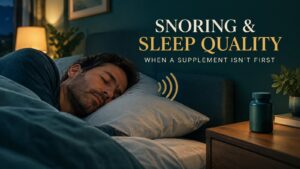
A wind-down routine is not a substitute for evaluation. Talk with a healthcare professional if you regularly have trouble falling asleep, staying asleep, or feeling refreshed, or if poor sleep affects driving, work, mood, or safety. Loud snoring, pauses in breathing, gasping, severe daytime sleepiness, uncomfortable leg urges, or unusual nighttime behaviors also deserve attention.
NHLBI describes chronic insomnia as symptoms occurring at least three nights a week for more than three months that are not fully explained by another problem. The American College of Physicians recommends CBT-I as initial treatment; sleep hygiene alone is not the whole treatment. Do not start, stop, or combine sleep medicines or supplements based only on this article. A clinician can consider medical conditions, medications, substances, and other sleep disorders.
Bottom Line: Keep the routine small and testable
A useful 30-minute wind-down routine is a gentle handoff, not a promise. Start with a stable schedule, dimmer and less stimulating evenings, a comfortable bedroom, and a quiet activity you genuinely tolerate. Treat reading, music, a warm shower, breathing, and light-filtering glasses as optional experiments—not universal prescriptions. If sleep remains persistently poor or affects daytime safety, move beyond self-help and seek evidence-based care, especially CBT-I for chronic insomnia.
References
- CDC: About Sleep
- NHLBI: Healthy Sleep Habits
- NIA: Sleep and Older Adults
- American College of Physicians: CBT-I as Initial Treatment for Chronic Insomnia
- Shechter et al., 2020: Interventions to Reduce Short-Wavelength (“Blue”) Light Exposure at Night—Systematic Review and Meta-analysis
- Cajochen et al., 2022: Influence of Evening Light Exposure on Polysomnographically Assessed Night-time Sleep—Systematic Review with Meta-analysis