In this guide
What this claim or alert can show
The phrase in this article should be treated as a starting point for verification, not as a conclusion. In the United States, dietary supplements are regulated differently from medicines, and a marketing statement may not mean that a product was reviewed or approved by the FDA before sale. The central question is whether the exact product, seller, batch, and claim can be independently traced.
For this topic, the most defensible interpretation is that a refund problem is separate from proof that a product is effective or safe. An official alert, recall, or enforcement document should be read for its exact scope. It should not be expanded to cover every product, ingredient, company, or category that merely sounds similar.
How to evaluate the product record
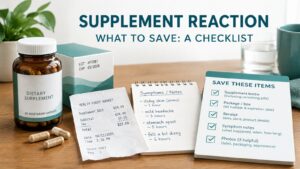
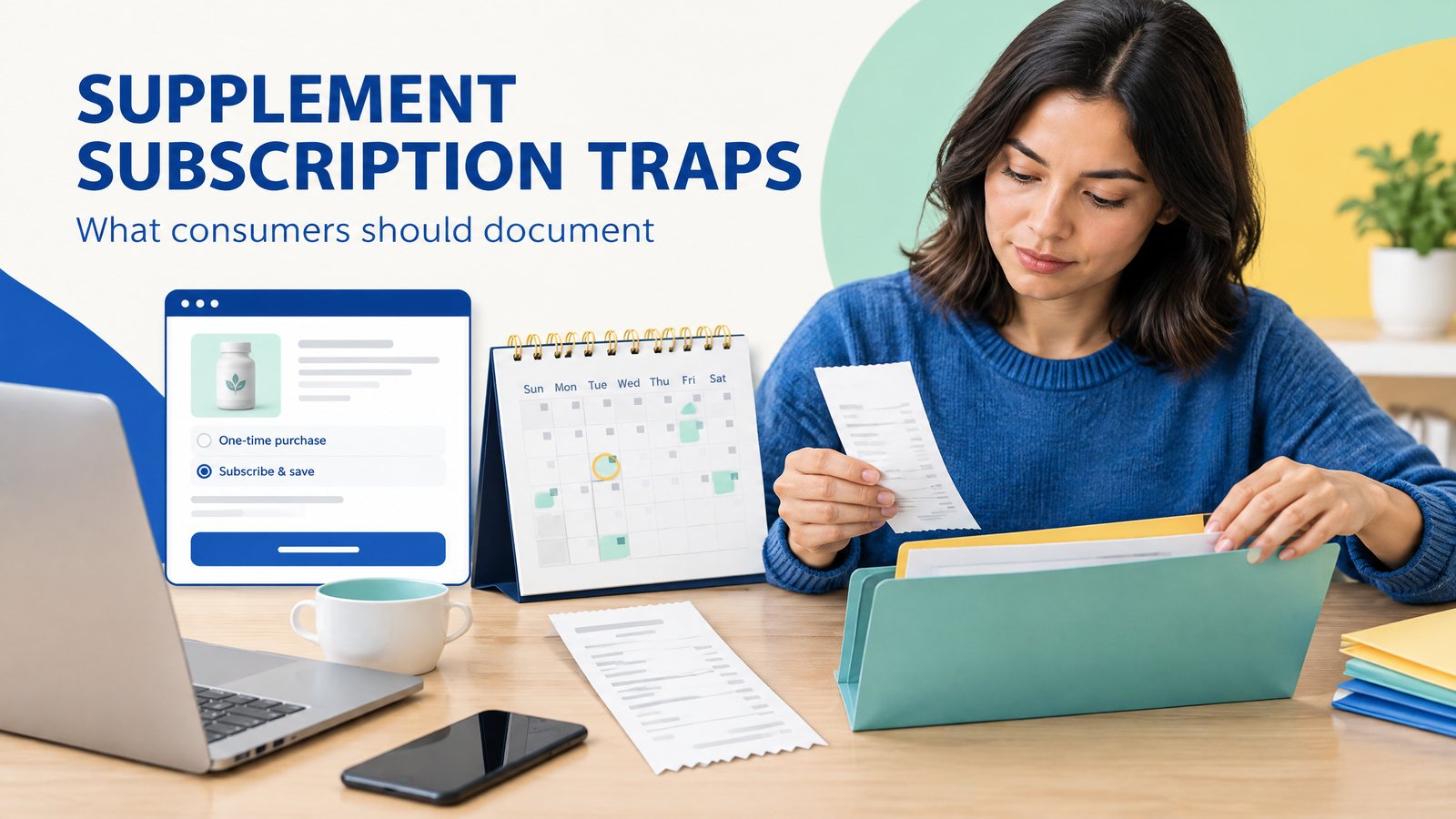
- Save the offer, checkout page, terms, shipment records, emails, charges, and cancellation attempts.
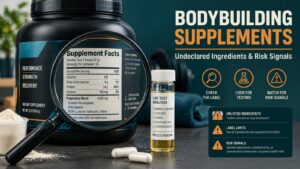
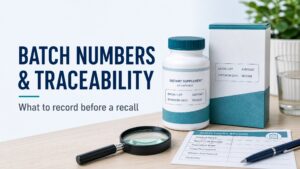
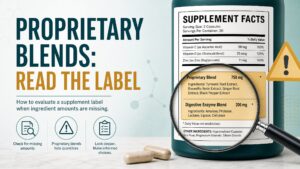
- Save the complete Supplement Facts panel, other ingredients, warnings, serving size, package size, expiration date, and lot or batch code.
- Record where and when the product was purchased, including the seller shown at checkout. Do not assume that a marketplace listing or review verifies the product.
- Search the FDA alerts and recalls pages directly rather than relying only on a social-media post or a cropped screenshot. Match the exact product details before drawing a conclusion.
What the label or advertisement does not establish
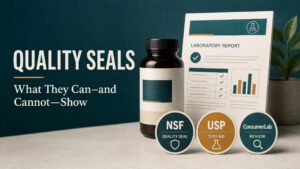
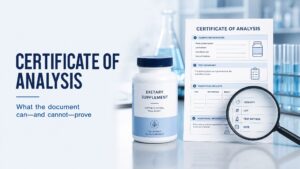
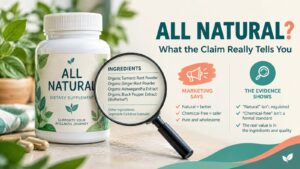
A quality seal, certificate, testimonial, “clinically tested” phrase, natural claim, professional endorsement, or large number of reviews does not independently establish that a supplement is effective for a particular person. A certificate of analysis may describe a sample or a specific batch, while third-party certification programs have their own scopes and criteria. Consumers should ask what was tested, when it was tested, by whom, and whether the document belongs to the product in hand.
Health advertising also requires context. Before-and-after images and testimonials may omit typicality, time frame, concurrent changes, or adverse effects. The FTC advises that health claims and endorsements must not be misleading, and material connections or qualifications may matter to how an ordinary consumer interprets an advertisement.
Practical safety checklist
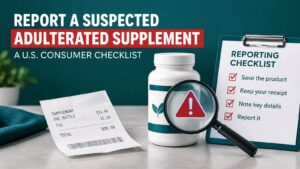
- Use the exact product name, lot code, date, and seller when checking an official notice.
- Do not consume a product that is the subject of an applicable recall or alert until the notice gives clear instructions.
- Do not treat a missing warning as proof of safety, and do not treat a warning about one product as proof that all similar products are affected.
- Ask a pharmacist or clinician about interactions, pregnancy, breastfeeding, surgery, allergies, and medical conditions before using a product when those factors apply.
- Keep screenshots and receipts, especially when a product was purchased online or through a subscription.
When to seek care or report
Seek prompt medical advice for severe or persistent symptoms, breathing difficulty, facial or throat swelling, fainting, chest pain, severe vomiting, jaundice, or other urgent concerns. For a suspected supplement reaction, preserve the product and packaging and record the timing of use and symptoms. A consumer report describes a concern; it does not by itself prove that the supplement caused it. Use the appropriate official reporting route and follow medical advice.
Bottom line
Evaluate the exact product and evidence, not the slogan. A careful record of the label, seller, lot, date, claim, and official notice is more useful than relying on a badge, testimonial, or search-result snippet. This article is educational and does not replace individualized medical or legal advice.
How to interpret evidence and uncertainty
Evidence should be matched to the exact question being asked. A laboratory document may describe a sample, a certification program may address selected manufacturing or testing criteria, and an official warning may address a specific product, date, or distribution channel. None of these items should be treated as a universal guarantee. It is also useful to separate identity from effectiveness: knowing what is in a container does not show that the product improves a health outcome, and a positive testimonial does not replace a controlled study. When information is incomplete, the safest conclusion is limited: pause, preserve the record, ask a qualified professional when personal risk factors matter, and check the primary agency notice for updates.
For readers comparing products, the most reliable workflow is to document the exact item first and interpret the claim second. This reduces confusion caused by similar names, changing sellers, copied reviews, and screenshots without dates. It also makes a later conversation with a pharmacist, clinician, manufacturer, or regulator more useful.
References
FDA: Dietary Supplements FDA: Alerts, Advisories & Safety Information FTC: Health Products Compliance Guidance